

What Happens To Unsold Or Returned Kitchen Appliances At Costco?
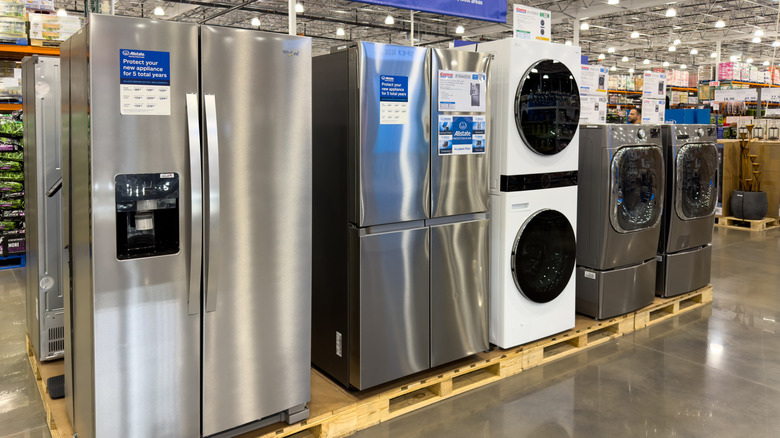
Costco is known for making returns easy. You can return just about anything for a full refund if you're dissatisfied, with just a few exceptions like airplane tickets and gift cards. It's just one of the many reasons people love shopping there, especially for things like kitchen utensils and appliances. But while you can return just about anything, you might be wondering what Costco does with those items, whether it's a kitchen utensil set you are disappointed with or a microwave that doesn't work. And those items that never get sold to begin with? Don't worry, we'll cover those too.
Some big brands, like Amazon, are very transparent about their return practices, but Costco doesn't make this information quite as readily available so we had to do a bit of digging. What we discovered was a behind-the-scenes world of resale. Returned items, damaged items, and unsold items like kitchen appliances are bundled up to keep the stockrooms from filling up with unwanted items. They are then sold by the pallet at online auctions known as Costco Liquidation Wholesale Auctions to the highest bidder and from there, the proud new owners determine how best to profit off those items. So, if you want to score one of Costco's most expensive knife sets, you might be able to find one without having to have a Costco membership to get it — or paying the hefty price tag.
How it works might surprise retail world outsiders
To move its unsold and returned stock, Costco uses an online platform known as B-Stock Solutions, a B2B (business-to-business) site that manages auctioning off its returned or unsold products. That means you have to have a resale license in order to purchase anything direct from auction. The items are auctioned off in categories, such as cookware or small appliances, and bidders can select pallets from distribution centers across the country. With this approach, Costco is mitigating its losses by directly selling off its overstock, returns, and damaged items — just not directly to consumers. For the average consumer to get their hands on this inventory, the items have to make it to the next step.
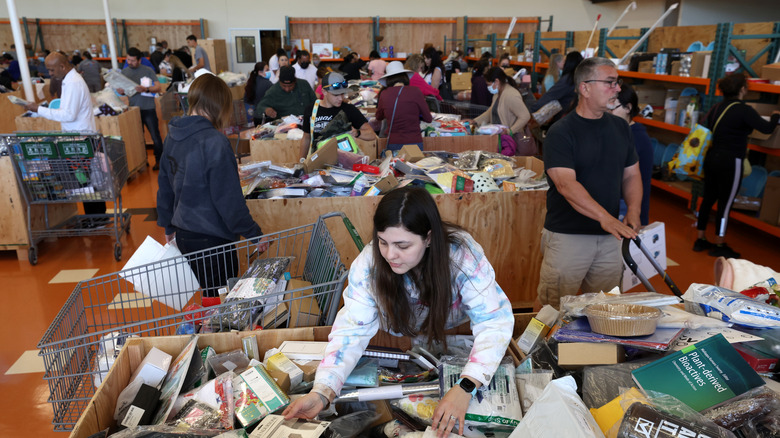
Once the items are auctioned off in bulk, whoever purchases the pallets can resell the items, but there is one caveat: when pallets are purchased through auction, the items can't be resold within five miles of any operating Costco location. The items could end up on resale websites like eBay or Poshmark, or they could wind up in what is known as a bin store at greatly reduced prices. These are liquidation stores that typically sell overstocked, discontinued, damaged, or returned items from retailers like Costco and Amazon. It's not only a great way to score big discounts but it helps keep things out of landfills. These stores usually dump items into large bins and follow a flat-pricing system in which customers pay a set price per item or per category depending on the day of the week — restock days are usually more expensive because you get better pickings.