

The Right Oven Temperature For Perfect Roasted Asparagus Every Time
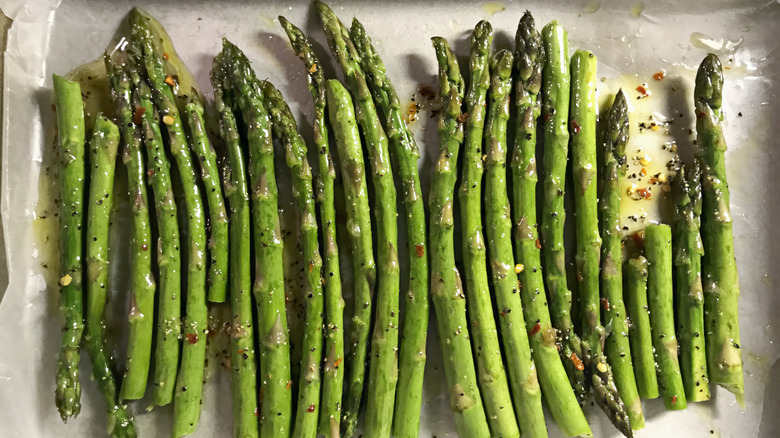
There is a fine line between perfectly roasted asparagus and pulling some sad green strings out of the oven, and it usually come down to cooking temperatures. If the oven isn't hot enough the asparagus runs the risk of steaming and going soggy, not crisp. And on the other side of the coin, if it's too hot then the tips can burn before the rest has even softened. Yes, there is a sweet spot for roasting asparagus, and it's 425 degrees Fahrenheit.
You need the stalks to soften but you don't want them to lose too much of their bite and snap in the process, which is the reason for this reasonably high temperature. The goal is crispy edges not burnt — and not limp either. At a temperature of 425 degrees, the water inside the asparagus will evaporate fast, and the stalks can roast in as little as eight minutes if they are on the thinner side. Although, it is important to be wary of thin asparagus because the delicate stalks can lose texture quickly at high heat. In fact, a big mistake is treating every bunch of asparagus the same, as thicker stalks will need longer cooking times than thinner ones, up to twenty minutes. Overcrowding the pan is another surefire way to end up with soggy, steamed stalks so keep your asparagus in a single line in the tray with space between each one. And keep an eye on the stalks as they cook instead of timing them too precisely; you can simply pull them out of the oven the moment the tips start to crisp.
Small details that make roasted asparagus better
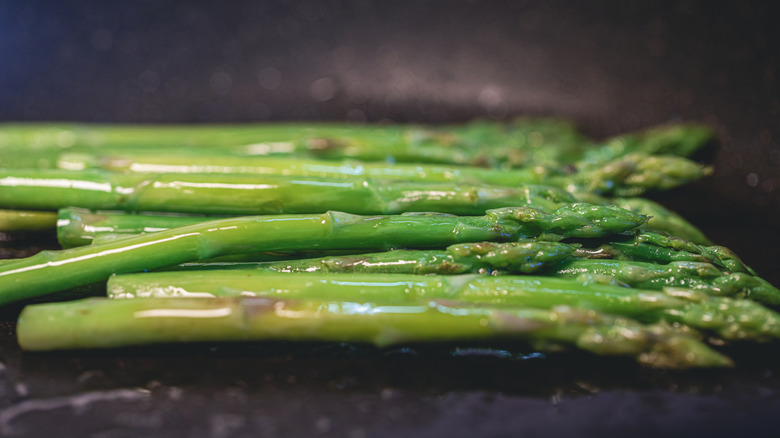
In addition to achieving the perfect temperature, there are extra steps you can take for the perfect roasted asparagus. In fact, some of the mistakes standing between you and perfect asparagus are ones you might have easily overlooked. The first tip is that the bottom of the asparagus stalk does tend to stay quite unpleasantly hard and fibrous even after cooking, so snap or slice the bottom off if that is not to your liking.
From there, the timing of your seasoning is also key — adding salt to anything that is high in water before roasting is what helps draw out extra moisture, and this encourages the asparagus to brown in the oven. Then, more delicate ingredients like lemon juice, parmesan, or fresh herbs are best added later in the process as they are more likely to burn at that high temperature. And whether you're eating the stalks on their own, tossing them through pasta, or wrapping asparagus in something else like prosciutto or puff pastry, none of this should change the initial roasting temperature too drastically.