

What Exactly Is A Texas Tornado Cake And Why Was It So Popular In The 1940s?
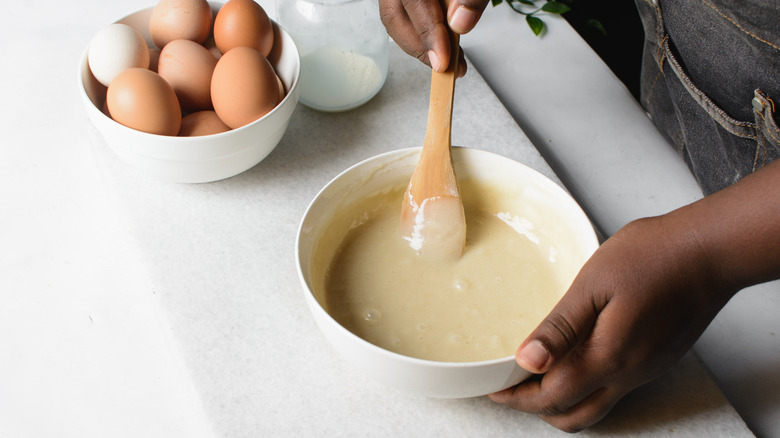
Imagine a super-moist, tender cake heaving with a gooey topping that almost reads like a coconut layer bar, and you've got yourself a Texas tornado cake. It was originally popularized in the 1940s when cakes were historically labor-intensive, requiring multiple steps and special equipment like a mixer. This cake flew onto the scene because you could literally whip it up in a flash (hence the name) and in a single bowl, which was a novelty in this era before the advent of readily available cake mix.
Anchored by flour, sugar, eggs, vanilla, pecans, and, on occasion, warming spices like cinnamon or nutmeg, the surprise element that makes Texas tornado cake stand out is actually canned fruit cocktail. This old-school mash-up of pears, peaches, grapes, pineapples, and cherries brings a hearty punch of moisture and sweetness to the cake that is hard to deny. Once baked, you poke holes in the top as Ree Drummond does for her favorite tres leches cake, allowing the thick, rich glaze to permeate its tender crumb. This gooey glaze comes together quickly on the stovetop with butter, sugar, and evaporated milk, along with the toothsome combo of shredded coconut and pecans (the latter of which are beloved in Alabama, but mostly grown Stateside in New Mexico).
Is this the same thing as a do nothing cake?
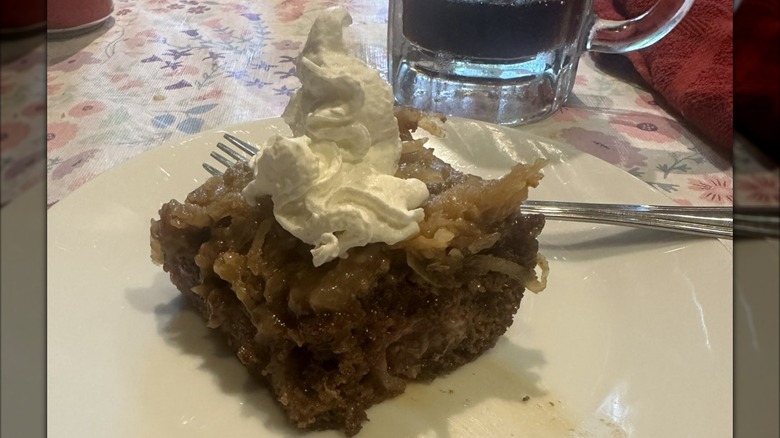
Texas tornado cake is rooted in the South, but the version that became popular in the Midwest is more often called do nothing cake. The do nothing name is another nod to how quickly and easily this satisfying dessert comes together. Much like a Texas tornado cake, the ingredients are mixed in one bowl, but the main difference in the do nothing version is that it typically calls for crushed pineapple instead of fruit cocktail.
Whether you opt for the Southern or Midwestern variation, there is plenty of leeway to make these vintage cakes your own. You can swap out the pecans in the glaze for other nuts (walnuts are a popular choice) and adjust the sweetness to your liking. Or, for an extra layer of flavor, you can broil the finished cake for a minute or two to toast the pecan-coconut topping and add an extra nutty flavor profile. What's more, both regional interpretations of the dessert keep well in the fridge for a few days and can be served hot or cold. While kitchen conveniences may have come a long way since the 1940s, the Texas tornado cake has stood the test of time for good reason.