

The Fruit With The Most Plastic Pollution Is Shockingly Popular

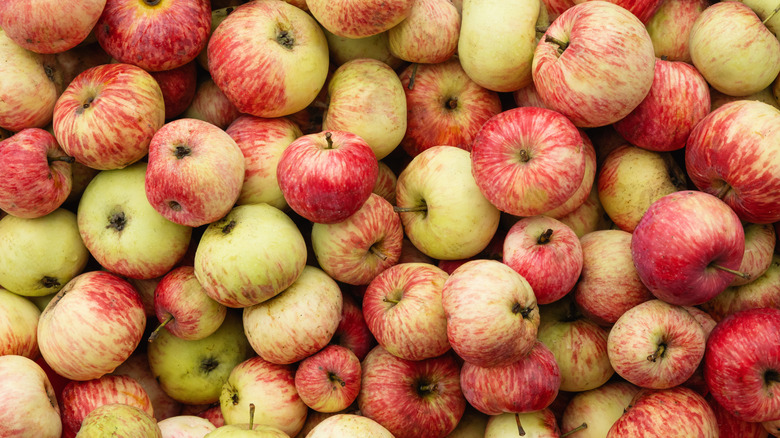
Apples are like the golden child of the fruit world. They're everywhere — whether you slice them into lunchboxes, blend them into smoothies, or bake them into pies. In fact, they are one of the most commonly eaten fruits in the United States. And that is precisely why the results of a 2020 study published in Environmental Research are so surprising: apples contain extremely high levels of microplastics.
According to the research, apples had the highest median concentration of microplastic particles per gram, making them the most contaminated fruit of all those evaluated. This concern possibly isn't surface level either. Microplastics are present in agricultural soil and water, coming from sources such as tire particles and sewage sludge, and other studies suggest that they can actually be absorbed by the plants' root systems and make their way inside the fruit or vegetable as it grows. So even washing or peeling your apples may not get rid of microplastics – how scary. Even scarier is the degree to which these plastics have worked their way into almost every corner of our food system. And while we are still trying to understand exactly what long-term exposure to microplastics might mean for human health, it is certainly not good, possibly leading to inflammation and other health concerns. That apples are so synonymous with health is what makes this feel exceptionally surprising.
At this point, avoiding microplastics is probably impossible
What was once an ocean pollution problem has gone way beyond that now. There are many overlooked foods with microplastics in them; it's been found in drinking water, canned goods, sea salt, tea bags, and even the air in our homes. However, even with all this in mind, the advice from the experts is not to panic, and it is certainly not to avoid fresh produce, since the benefits of eating fresh fruits and vegetables are bigger than any known risks that come with microplastic exposure. Apples may contain microplastics but they still also contain a lot of fiber, vitamins, and minerals that are essential for our health.
It's more about reducing plastic exposure where possible –- which some may already do. It's advisable to avoid drinking plastic bottled water, you should never put your leftovers in plastic containers, and it's a good idea to get rid of plastic cutting boards as well. When it comes to apples, when possible pick loose ones over those that are wrapped in plastic, since the packaging itself can release additional microplastics onto the surface of your fruit. While you can't avoid the microplastics that are absorbed into the apples, you can certainly avoid those that land on their surface due to packaging. It may seem astonishing that apples are caught up in the conversation about plastic pollution, but in the bigger picture, nothing is a surprise anymore.