

The Best Way To Poach Eggs Effortlessly Is With This Reusable Baking Tool

We may receive a commission on purchases made from links.
Some corners of the internet love to assert how easy it is to poach an egg. It's easy to believe them, until all the talk of water whirlpools begins. You're just trying to make eggs Benedict, not preside over the seas like Poseidon. Once you get the knack for it, traditional egg poaching does seem simple, but there's also a reason tips and tricks for poaching eggs abound. One such trick that provides a fast track to poached eggs involves the silicone baking cups you might be more used to breaking out for muffins and other treats.
Just crack an egg into a greased silicone baking cup, lower it into a shallow pan's simmering water, cover, and wait a few minutes until it reaches your desired doneness. Once the white has barely begun to set, the interior yolk should still be plenty runny. You can also give the cups a little shake with tongs to test for firmness (you want them to jiggle a little).
Every great shortcut has its downsides, and silicone-cup-poached eggs are no exception. They don't look like the luxurious, round, room service poached eggs of rom com imagination, but like cupcake-shaped poached eggs. If you use butter or oil to prevent sticking, it imparts a bit of flavor, unlike poaching in water alone. However, there are ways to minimize these frankly minor perils, plus plenty of silicone egg poaching perks.
More ways to get great poached eggs from silicone baking cups
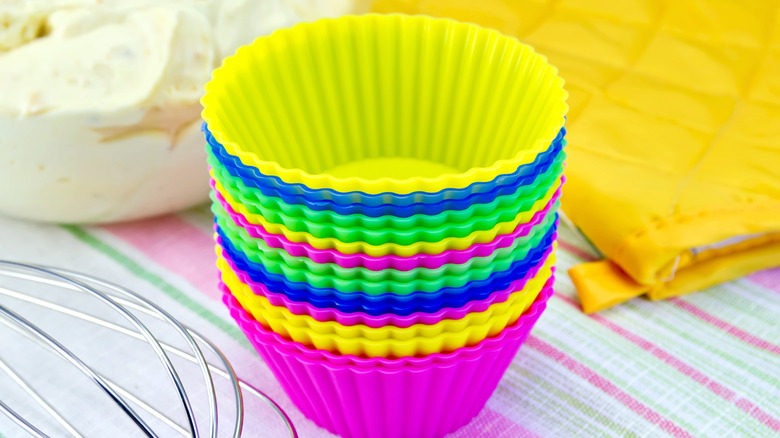
If you're dousing your poached eggs in hollandaise sauce for classic eggs Benedict or to accompany some fresh asparagus, a tiny amount of butter or olive oil flavor shouldn't break through. You're more likely to notice these flavors when enjoying your eggs less adorned. Neutral oils, such as canola and vegetable, are more subtle in either case. You can also swing in the opposite direction and poach with a swipe of the chili oil we love for fried eggs (the hot pop is great with avocado toast). Poaching in silicone cups also eliminates the risk of any water breaching your eggs. As most who've tried the whirlpool method can attest, this is a disappointing risk. Here, you have a built-in barrier against any unwelcome H2O.`
One of the great things about this poaching method is it uses the silicone baking cups you might already have, but you may tire of the cupcake-like shape and telltale perimeter zigzags should this egg preparation become a bigger part of your routine. As you may imagine, there are dedicated silicone egg poachers, such as the Eggssentials Poached Egg Cups, that get closer to the classic shape. We bet you'll find additional uses for those, too.