

This Classic Candy Was Once Advertised As A Digestive Aid

The idea of chewing gum being used for medical purposes seems far-fetched. But for one old-school brand, Beemans, that was the original sales pitch. The wintergreen-flavored candy was created by Ohio doctor Edwin E. Beeman. His specialty was the digestive system, and he discovered that pepsin, an enzyme that comes from hogs' stomachs, was a possible remedy for indigestion. He founded a company to sell it as a medication. His initial idea, a pepsin powder, didn't land with consumers, but a chewing gum that he launched in 1890 was more of a success, at least after the company ditched the picture of a pig that was featured on the gum's packaging. (Beeman invent chewing gum, though: It had been around several decades, at least.)
The company very much leaned into the medical side of the chewing gum: Advertisements from the era boasted that it would be a "delicious remedy for all forms of indigestion", claiming that one piece of gum would be enough to digest "1000 grains of food," although it's unclear what volume of food this actually is. Beeman didn't hold onto the company for long: The company's directors chose to sell it to a chewing gum manufacturer in 1899. However, the idea that the gum was a digestive aid stuck around, appearing on ads in the 1930s and the 1960s.
If you're looking to get your hands on Beemans gum, it still exists: like many old-school candies, it faded from popularity and was off the market for a few years from 2015, but candy company Gerrit J Verburg bought the rights, and now sells three varieties. That said, it doesn't contain pepsin anymore.
Can chewing gum really be medicine?
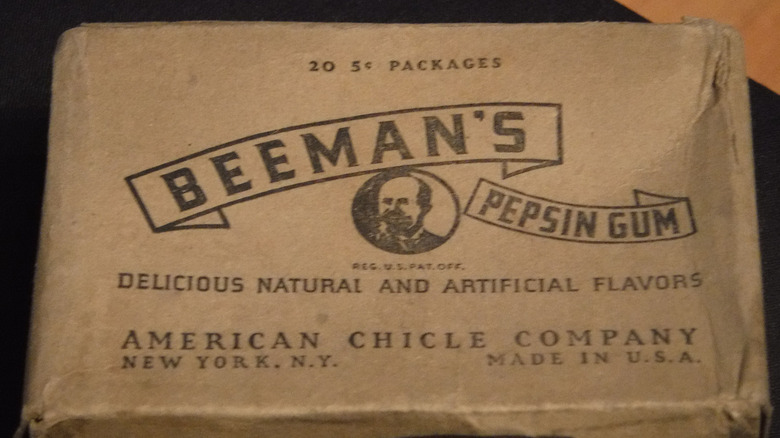
The burning question here is obvious: Considering that the company used it as a selling point for decades, did Beemans gum (or pepsin in general) actually serve a legitimate medical purpose? It seems that Dr. Beeman wasn't totally off the mark, as pepsin is still used today for certain stomach conditions such as hypochlorhydria, a condition where your stomach isn't producing enough acid. However, it's usually used with another supplement, and experts note that this approach isn't ideal for everyone.
That said, the idea that pepsin would generally solve indigestion is questionable: There aren't many studies on its effectiveness. Beyond the one situation just mentioned, it's not commonly used as a treatment for indigestion. Plus, if you suffer from excess stomach acid, pepsin may actually exacerbate the situation. So, it's probably good that it's no longer used in chewing gum. That said, there are still medical uses for chewing gum, just not involving pepsin. Chewing gum can help keep your intestines running, and it's often used after surgery to help reactivate the digestive system after it's been slowed down. That said, sugar-free chewing gum can also cause bloating, so don't rely on it for stomach ailments.