

The Best Oven Temperature For Juicy And Flavorful Brisket
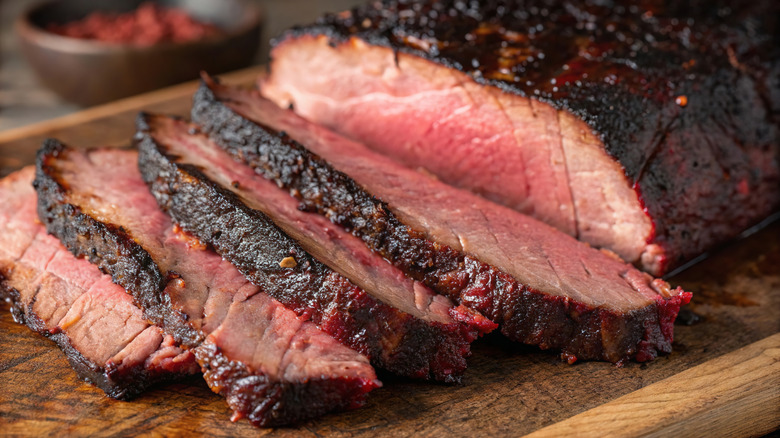
A beautifully prepared brisket is one of the world's most marvelous meats. The problem is that not every brisket is beautifully prepared. This big slab of beef butchered from the cow's breast starts out mighty tough, and it needs considerable care and attention to cook to the tender finish that folks expect. Make even a few ruinous brisket mistakes, and all of that precious protein will end up dry and unyielding. So Chowhound asked Dagan Lynn, executive chef of Beef. It's What's For Dinner., for his tips on how to get it right every time — and that starts with the cooking temperature.
If you're preparing brisket in the oven, a temperature of 225 to 250 degrees Fahrenheit is key for ensuring properly rendered fat and maximum moisture, according to Lynn. Slow, as you might already expect, follows that low heat. He said that you should plan to leave your brisket in the oven for 13 or more hours for the best results, depending on its size. "Brisket is a tougher cut of beef that contains a lot of collagen, which breaks down best when it's cooked low and slow," Lynn said. "This method allows the collagen to convert to gelatin, which gives you a tender brisket."
Thankfully, patience and the slight turn of your oven's dial are pretty low-lift requirements to achieve the most successful brisket. Still, it's crucial to know precisely when your brisket's done the very first time you make it. According to Lynn, your brisket ought to reach an internal temperature of 195 degrees Fahrenheit, but he recommended making two adjustments before it gets to that point. "Once it reaches 165 degrees Fahrenheit, wrap in butcher paper or foil, increase heat to 275 degrees Fahrenheit, and let it cook to perfection," he suggested.
Potential detours on the road to a perfect brisket
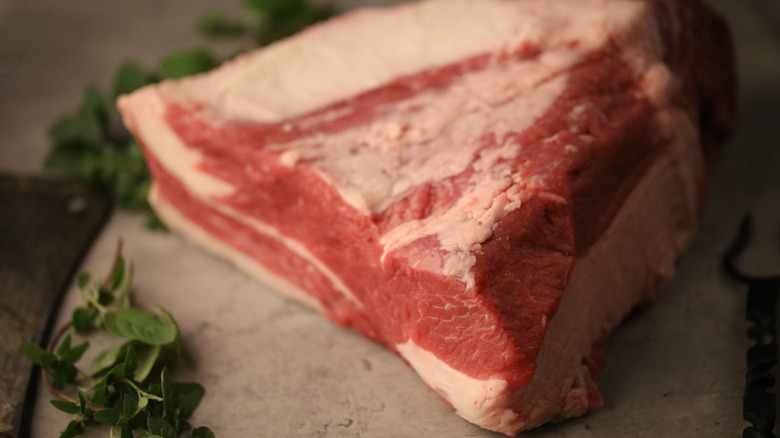
Terrible tales have been told of those who've gotten their time and temperature just right, and still ended up with inferior brisket. So you really need to get off to a good start and pick the best brisket to begin with. "Look for a brisket with a great top fat cap and no holes, which helps promote even cooking and reduce the risk of drying out." Dagan Lynn said. "Also, check the color. Look for bright, ruby red or pink meat with uniform striations of fat." Trimming too much of the fat is another mistake that could affect your brisket's cook, according to Lynn. Aim to leave an even layer to best avoid chewiness.
There have also been years of debate about whether to cook a brisket with that fat cap up toward the ceiling or down, touching the pan. Some people even flip it! We feel that keeping that fat at the top just feels right, and "cap" implies this very configuration. Some top-fat proponents believe that this positioning helps the fat render down through the meat. Fat-side-down fans might tell you that getting the fat out of the way makes the brisket easier to slice through, when all is said and done. Your preference might also depend on whether you're making the brisket in the oven or in a smoker, and/or factor in the angle of your heat source. Regardless, setting that heat to 225 to 250 degrees Fahrenheit and turning it up a tad towards the end is still your best option. You can practice additional brisket acrobatics once you've mastered this critical foundation.