

Forget The Pan! For The Best Grilled Cheese Sandwiches, Use This Cooking Method
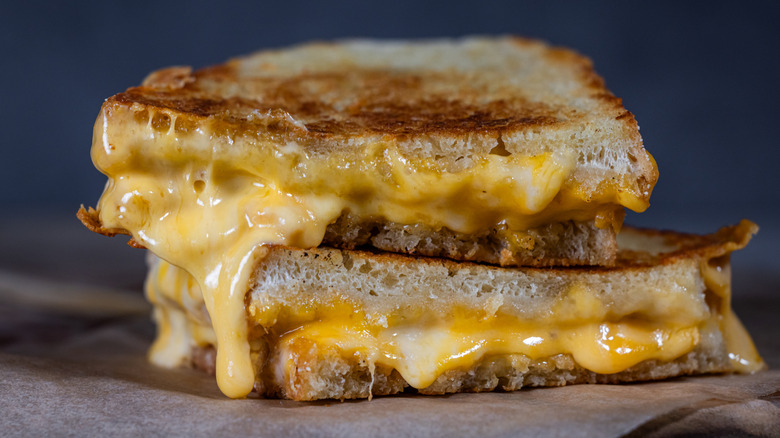
I spent four years running a sandwich business, more specifically a sandwich business revolved heavily around cooking grilled cheese sandwiches — or toasties, as we call them in the U.K. And of the many things that experience taught me, one thing I now know to be true is that a grilled cheese just tastes better from a grill than it does from a pan. Of course, we all know that a pan gets the job done when you're in a rush, but melting a sandwich over a grill adds a whole new level of smokiness and crispiness that is impossible to replicate.
Most of that flavor and texture difference comes from the fact that a hot grill heats to a different level than a pan and gives the bread a more evenly toasted, golden exterior. In other words, a grill can give you the crispiest grilled cheese of your life. The smoke plays a role here, too. Even a gas grill can add a subtle charred flavor that makes everything taste that little bit better. And of course, it creates those grill marks which, aesthetically, just make for the best looking grilled cheese.
The enemy of crispiness is moisture, and that's exactly the problem that stovetop grilled cheeses often run into. A grill gives you a much bigger surface area than a pan, so there is more airflow and more ability for moisture to escape instead of seeping back into the bread. The only thing to watch out for here is cooking at a heat level that is too aggressive, because butter has a low smoke point – once it hits the grill, there's always a risk of burning. Keep things at a nice medium heat for best results.
Tricks for the best grilled cheese on the grill
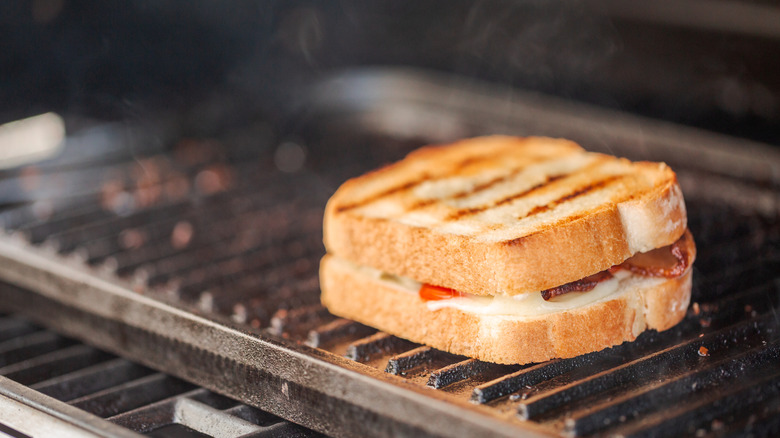
There are some things to consider to make your grilled cheese work at its best. My sandwich business in particular used exclusively sourdough bread cut into thick slices, as they could handle the heat without totally falling apart. Other rustic or country loaves can also work if they're cut thick, you just need to avoid thin and flimsy slices.
Next, consider your cheese, because these smokier cooking methods mean that you can get away with more than just your standard American slice. Once you open up your grilled cheese world to some of the best cheeses for a grilled cheese, like aged cheddar, smoked Gouda, Gruyère, fontina, and even mozzarella, you'll be able to take it in all kind of new directions. For example, mozzarella with pesto and tomato can feel quite pizza-inspired, while a melted brie with fig jam adds a very special balance of sweet and savory.
Some recipes online argue for using a lid when grilling, especially for thicker sandwiches, as that traps the heat and helps the cheese melt. While I prefer leaving the grill open to create a crispier exterior and slightly more charred flavor over a meltier inside, this is of course personal preference and either approach can work. Don't get me wrong, a pan can still make a good grilled cheese, but once you've tasted a sandwich from the grill, you'll realize it is a little flat by comparison.