

Is It Safe To Eat Sprouted Sweet Potatoes?
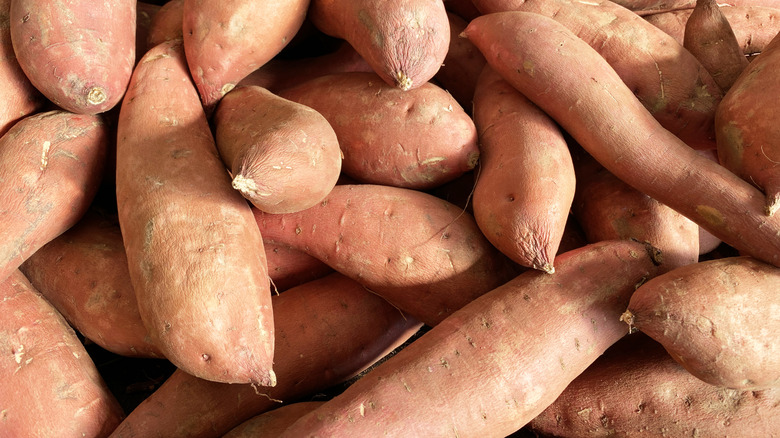
While some vegetables should never be eaten once you find a few sprouts, luckily sweet potatoes don't always fall under that category. Sprouted sweet potatoes are generally safe to eat as long as the potato looks fine otherwise. The thing is, despite seeming similar, sweet potatoes are not part of the same nightshade family as white potatoes which means they do not develop solanine, the toxin that make sprouted white potatoes potentially dangerous to consume. Eating sprouted sweet potatoes is more like eating sprouted carrots – safe, as long as the vegetable itself looks good.
What a few sprouts on a sweet potato really tells you is that the vegetable is at a specific stage in its aging process and that all you need to do is trim the sprouts away before you get on with cooking it. Sprouts alone are not a concern, but if you notice the potato is also soft, shriveled, moldy, slimy, or develops a bad smell, then that's when it needs to be thrown out.
Texture changes are usually the bigger issue
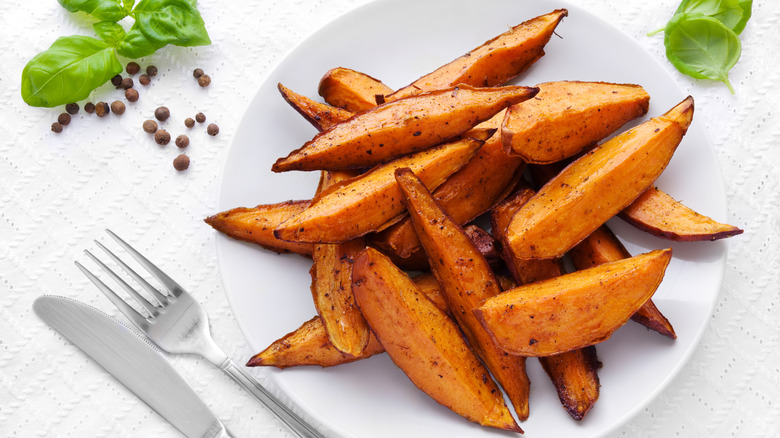
While it's clear that sprouted sweet potatoes are in fact safe to eat, they might not be as enjoyable. This is because as the sprouts grow, the flesh of the potato can become much drier and more fibrous. Instead of a soft and creamy inside, an older sprouted sweet potato may end up a little stringier once cooked. You might notice this difference in quality if you're using sweet potatoes in a dish where the tuber is the star ingredient. So skip the sweet potato fries or the baked sweet potato — instead, use older or sprouted sweet potatoes in recipes like bulky soups or in something like a vegetable red curry. That way you're less likely to notice the change in texture.
It really just comes down to the old-fashioned method of checking your food with your five senses. Feel it for firmness, check it for mold or other signs of spoilage, and smell it for any off or rancid smells. If the sweet potato passes your olfactory sense test, it's most likely fine. If it looks like it's halfway to decomposing, well, that's a different story, and this time around it might be destined for the compost bin after all.
You can actually keep your sweet potatoes safe to eat for longer by just storing them in a cool and dry space with good ventilation (not the refrigerator). This applies to all types of this root vegetable — whether you're a fan of American or Japanese sweet potatoes, they will all sprout eventually if they're not kept in the right conditions.