

How Alton Brown Achieves A Perfect Crust On Prime Rib
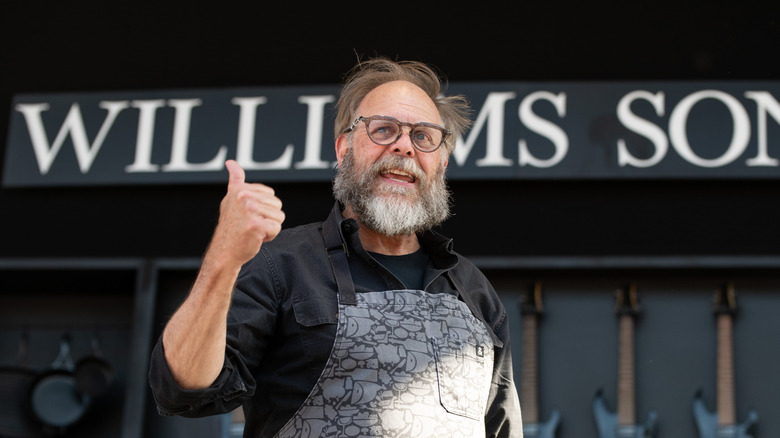
As its name suggests, prime rib is prized for its tenderness, offering plenty of fat and generous marbling. To make the most of this special cut, quirky and encyclopedic food guru Alton Brown has a tried-and-true method: drying it in the refrigerator for four to five days, which helps reduce moisture to create the ideal crisp, browned exterior. Brown is a repository of handy cooking tips, and during an episode of "Alton Brown Cooks Food" on YouTube, the chef waxed poetic about preparing prime rib this way, noting that he starts the process as soon as he brings the roast home.
While Brown illustrates cooking a standing rib roast, it is important to note that although the cut of beef is essentially the same (coming from the favored top mid-section of the cow), the bones that feature in a standing rib roast are removed in prime rib. That being said, the same preparation technique can be used for both. Though cheesecloth usually comes to mind for its intended purpose of making cheese, it's perfect for this application because it's porous enough to allow air in and absorb moisture, while protecting the meat from becoming too hard and brittle on the outside.
Tips for a top exterior
Alton Brown is known for getting hyper-specific about the nuances of various cooking methods and tools, with the ultimate goal of producing the most flavorful results. His prep-ahead showstopper prime rib starts with wrapping the raw meat a couple of times in cheesecloth — once horizontally and a second time rotated 90 degrees for optimal coverage — then setting it on a cooling rack in a baking sheet and leaving it in the refrigerator to dry. Always a stickler for details, Brown is clear that this isn't about aging the meat, which requires different conditions and more deeply impacts the flavor of the beef; rather, it's about drying out the exterior to control moisture and create an enviable crust. He also recommends tying the roast with butcher's twine so it can be positioned vertically in the fridge to save space.
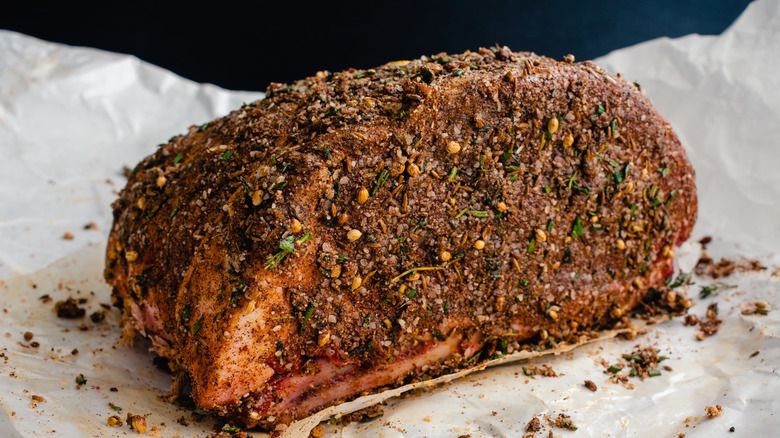
Brown is no stranger to cooking with beef tallow, so once the roast is ready to be unwrapped, he recommends coating it with the suet-rich rendered fat and liberally sprinkling it with kosher salt and freshly cracked black pepper. He also embraces reverse searing, meaning you cook the prime rib through in the oven at a low temperature, then crank it up to broil and cook for 10 minutes to perfectly char the exterior (Brown notes that this will produce some smoke). It's relatively foolproof, meaning the most difficult part of this method is the patience required to let your prime rib hang out in your fridge for the better part of a week.