

These 7 Companion Plants Will Help Your Zucchini Grow Bigger Than Ever
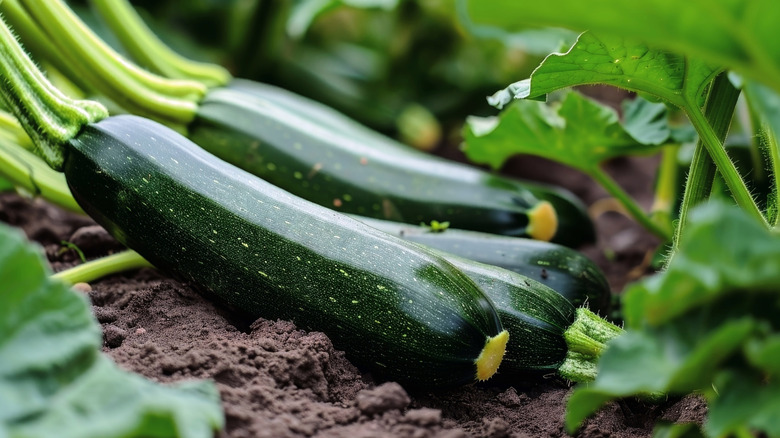
Companion planting is a great way to get more out of your garden, but choosing the right companion plant pairings requires an understanding of the complex ways plants affect each other when grown in close proximity. "An easy way to think of it is this: Instead of growing one crop all by itself, you mix in a few helpful neighbors that do some of the work for you—bringing in pollinators, confusing pests, or improving the soil—so the garden becomes easier to manage overall," says Burpee Horticulture Specialist Nancy Awot-Traut. "When done well, it can lead to healthier plants, fewer pest problems, and improved yields without relying heavily on chemicals."
But there are no magic species that will do all these jobs for all of the different vegetables you might want to grow in your garden. Certain species are natural companions for certain other species, but can cause problems when paired with the wrong companions. For example, potatoes do well with brassicas like cabbage and kale because a shallow root system won't compete with the potato's deeper root system. But if you're planning to grow zucchini, you should plant it away from your potatoes. Zucchini also has a deep root system, and if planted too close, neither is likely to thrive since they'll always be in competition for resources.
If you're planning to grow zucchini in your garden this year, we've compiled this list of some of the best companion plants to help you get the most out of your zucchini crop.
1. Dill
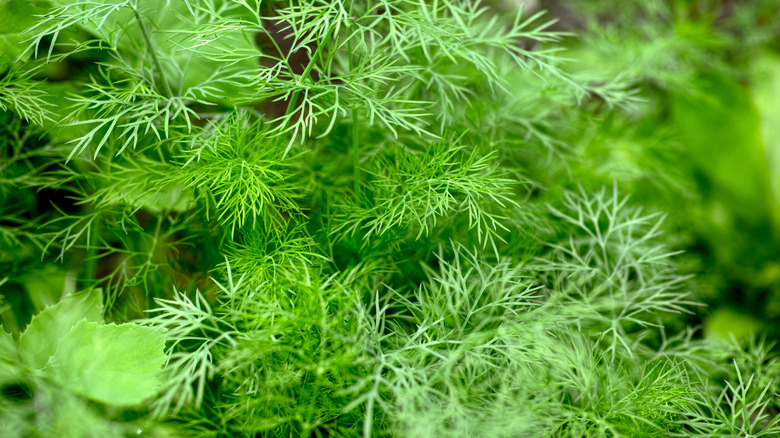
One of the most important roles companion plants play is helping repel harmful insects that can ruin your garden. Dill is a great choice for zucchini because it attracts beneficial insects that prey on some of the pests that target your zucchini. "It acts like a magnet for beneficial insects such as parasitic wasps," says horticulturalist, speaker, and author Steven Biggs of Food, Garden, Life. Parasitic wasps lay their eggs inside the eggs of the squash bug, a common zucchini pest, which prevents the nymphs from developing.
Dill also attracts predators that feed on aphids, those tiny insects that eat the nutrient-rich sap in zucchini leaves and reproduce faster than rodents. If your zucchini is developing dry, discolored, or curling leaves, it might be because of aphids. Nancy Awot-Traut says planting dill with your zucchini can help attract ladybugs, which are enthusiastic consumers of aphids.
Another reason to choose dill over other herbs is the speed at which it grows. "Zucchini gets big—it doesn't politely share space," says Biggs. "So instead of trying to tuck in slow-growing herbs that will get buried, choose faster crops like dill. Dill will finish up early ... So it earns its keep before the zucchini takes over." And as a bonus, dill is easy to grow and is great for adding a bright, herby flavor to dips, deviled eggs, or your summer potato and cucumber salads. And it's easy to dry, so you can use it all year.
2. Basil
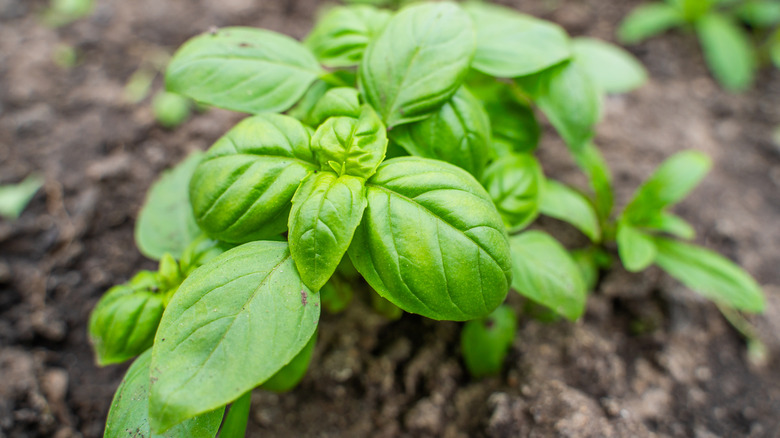
Some plants, like basil, repel harmful insects because they have a strong odor. "Strong scents can confuse or repel certain insect pests," says Nancy Awot-Traut. "These plants either mask the scent of zucchini, repel pests directly, or lure pests away from the crop." Awot-Traut says basil in particular is a good choice because it helps repel pests such as aphids. And because it is compact and easy to grow, it fits easily into small garden spaces, so it's also a good choice if space is at a premium.
Basil contains estragole and linalool, compounds that repel insects and act as fumigants. Linalool is an ingredient in some products that repel human-hungry pests like mosquitoes and ticks. It disrupts these parasites' nervous systems and has the same effect on the bugs that are coming for your zucchini. Basil is also good for the soil, so you can plant it even if you're not a huge fan of the flavor. When mixed in, it increases the availability of nutrients like manganese, zinc, and potassium and can even help suppress weed growth and the proliferation of harmful bacteria.
If you do like basil, it's a versatile herb that you can use up by the handful. Making pesto is a great way to use a lot of basil, or add it to tomato-based Italian sauces. You can also use the whole leaf on a Margherita pizza with mozzarella cheese and tomatoes or add it to Thai recipes like Thai basil beef.
3. Borage
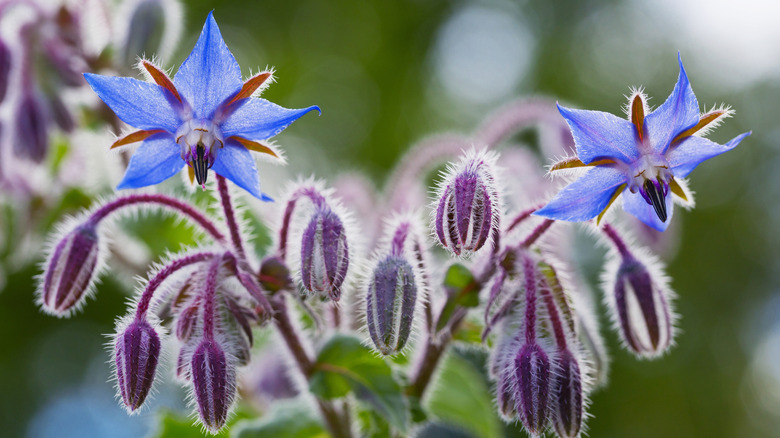
Borage is a Mediterranean native that's also called bee bush, a name it has definitely earned. Nancy Awot-Traut calls borage "a standout companion that attracts pollinators like bees and beneficial insects." She says borage "also helps improve pollination of zucchini, which directly supports better fruit set and yields."
You probably don't need anyone touting the importance of attracting honeybees and other pollinators to your garden, but if you want to maximize your pollinator appeal, borage is an excellent choice. Borage plants resupply themselves with nectar every two to five minutes, so a single plant can feed a lot of pollinators. Borage also attracts bumblebees as well as honeybees and will keep producing nectar even during the colder months, so it can continue to support pollinators long after you've harvested your zucchini.
Borage doesn't get a lot of attention in popular cookbooks or food blogs, but it has edible leaves and flowers and can add some color to your garden and to your summer recipes. Borage tastes a little like cucumber and has star-shaped periwinkle-blue flowers that can be added to salads or used as a savory garnish to pair with your favorite cocktail. Not only that, an article with Nutrients suggests that borage has anticancer properties, so not only is it nice to look at, but it can potentially provide added health benefits to you as well (just be sure to consult your doctor first).
4. Beans
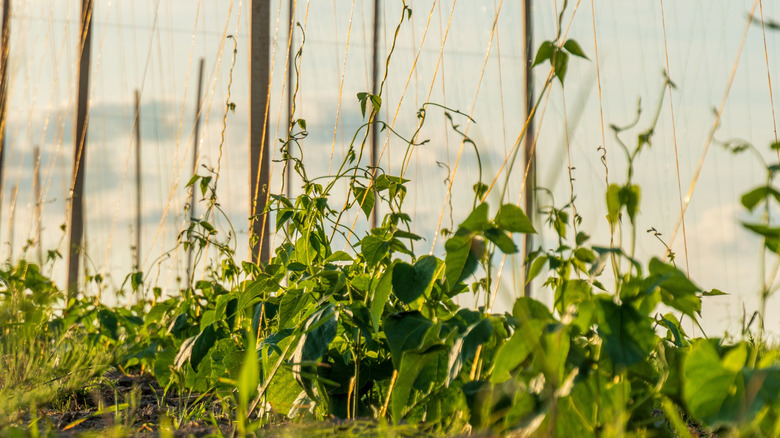
Zucchini and beans make good partners because they have learned what so many human partners have not, that living things thrive when they aren't being suffocated. "Zucchini works well with something that isn't smothered by it," says Steven Biggs. "It's a bossy plant. Pole beans or vining peas on a trellis are a good match—they grow up and away while zucchini spreads out below."
Beans are easy to grow, forgiving, and will keep on producing even if you don't stick to a regular harvesting schedule. They're also good for the soil. According to Nancy Awot-Traut, they help fix nitrogen, which supports leafy growth of your zucchini plants. And that also reduces the need for fertilizer, which saves you money and reduces your environmental footprint, since fertilizer can be harmful to human health when its compounds get into drinking water or the air. And your zucchini plants can help your beans flourish because their large leaves make it hard for harmful weeds to get enough sunlight to take root.
You don't even need a trellis for climbing plants like pole beans. Instead, try the nearly one thousand year old "three sisters" practice taught to us by Indigenous peoples where you plant squash and beans with corn. The beans will climb the corn stalks, the corn will benefit from the increased nitrogen in the soil, and the zucchini will have the space it needs to be the prolific producer it was always meant to be. (Three sisters soup's originates from this planting tradition.)
5. Blue hubbard squash
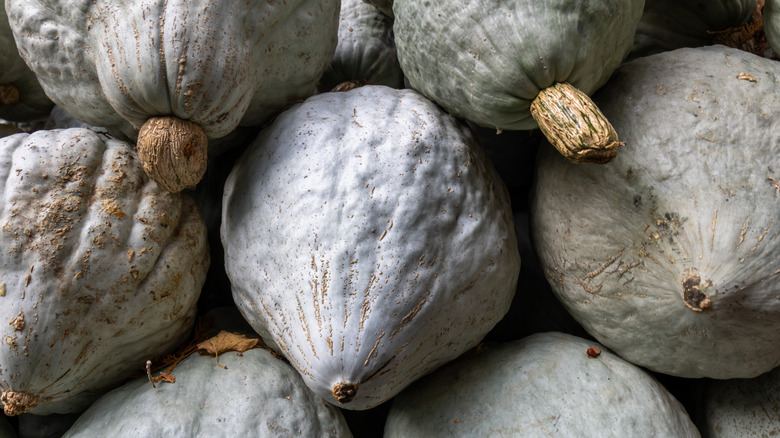
Moving on down the list are "trap crops like Blue Hubbard squash," says Steven Biggs. Blue Hubbard squash is a large, blue-green squash with a lumpy surface that's famous for its unique appearance and long shelf-life. Though blue Hubbard squash is just as edible as your zucchini, if you want to be ruthless about protecting the star of the show, you can plant blue Hubbard squash as a kind of sacrifice to the cucurbits gods.
"These don't repel pests," Biggs says, "instead, they act like a decoy. Squash vine borers and squash bugs choose them over your zucchini." If you're going to use blue Hubbard squash as a trap crop, time your plantings so your blue Hubbard seedlings have at least a two week head start on your zucchini. Spotted cucumber beetles are about 55 times more likely to choose blue Hubbard squash over zucchini, and squash bugs are about 20 times more likely to choose them. Lincoln University's Integrated Pest Management Program has found that you only need one blue Hubbard squash plant for every 14 zucchini plants, but plant it three to eight feet away from your zucchini. This keeps the pests a long way away from your zucchini and also stops the blue Hubbard's aggressive vines from encroaching on your zucchini's territory.
One you've lured these pests away from your zucchini, it's important to finish them off so they don't move on to your zucchini when they're done with mauling the blue Hubbard squash. You can do this with insecticides or non-chemical methods like hand-picking.
6. Marigolds
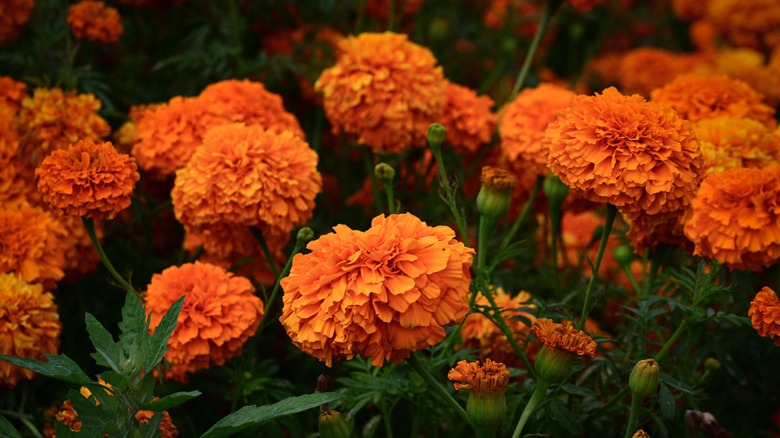
Aside from herbs and other crops, you can also mix ornamentals in with your vegetables. "[Ornamentals] make the garden more pleasant to look at," says Steven Biggs. "Second, they help bring in pollinators, which zucchini absolutely depends on. No pollinators often means no zucchini, or at least far less of it."
"Some ornamentals also deter pests or attract beneficial insects that prey on harmful ones," says Nancy Awot-Traut. "In addition, they improve garden diversity." Awot-Traut says Marigolds are a good choice since they are easy to grow, integrate well into vegetable gardens, and can help deter pests that live in the soil, such as nematodes. Root-knot nematodes, for example, are attracted to the marigold's roots, but marigolds produce a phytochemical called alpha-terthienyl that gets into the larvae, induces oxidative stress, and ends their villainous careers. Marigolds may also help control other nasty microbes like fungi and bacteria.
Some marigolds are better for this than others. The most commonly used anti-nematode species are African marigolds, which come in a variety of colors from orange to gold, and French marigolds, which you can also get in different shades of red and bicolors. If you do plant marigolds with nematode control in mind, however, it's worth noting that some experts are doubtful about their value for nematode control; though there is evidence that they help control nematodes, these experts warn that the effect isn't significant. And some also say that marigolds can attract pests like spider mites, which you do not want on your zucchini plants.
7. Nasturtiums
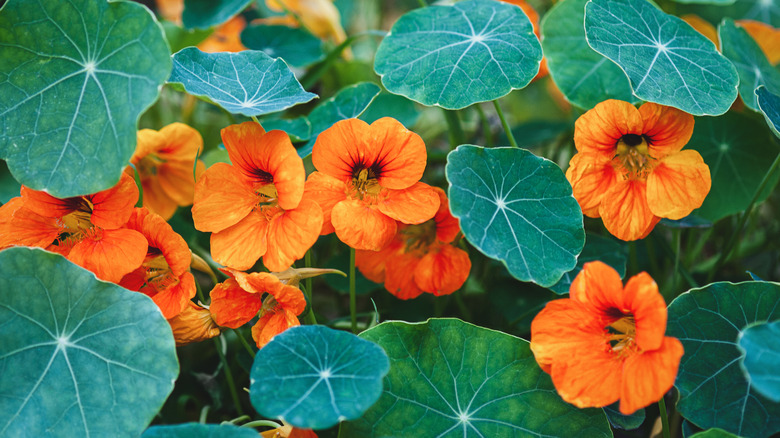
Last on our list is nasturtiums which also pair well with zucchini, doing double duty as trap crops for aphids and deterrence for squash bugs. "Nasturtiums don't so much repel squash bugs as confuse them," says Steven Biggs. "They can mask the scent of zucchini, making it harder for pests to find their target. And the flowers are edible, which is a nice bonus. They attract pollinators, look good, and tend to self-seed—so they quietly come back next year and make your life easier. Hard to argue with that."
Nasturtiums come in a range of colors, including sunny oranges and yellows that will complement your marigolds as well as reds, pinks, purples, and speckled and shaded bicolored varieties. They attract bees, butterflies, and hummingbirds, so if you want your garden to be pretty, zucchini-friendly, and a hub of pollinator activity, nasturtiums will give you all of those benefits. And, if you prefer to fill your garden with plants you can eat, nasturtiums also have must-try edible flowers and edible leaves. Use them in salads or as edible garnishes. You can even pickle the seed pods and use them like capers.
If your nasturtiums do their job as aphid attractors, though, you may not reap as much of those other benefits from them. Aphids will choose them over zucchini and may proliferate on them, which doesn't do much for their longevity. If you do get an aphid infestation on your nasturtiums, spray them with an insecticide to keep them from migrating to your zucchini.