

The 1930s Restaurant Strikes That Highlight How Tough The Industry Has Always Been
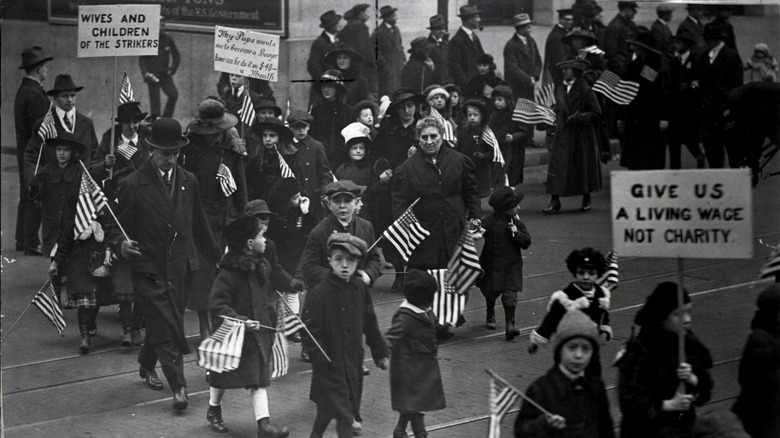
Working in restaurants is tough (if you know, you know), but things used to be far, far worse. Restaurant worker strikes in the 1930s showed that some of the issues with working in a restaurant — including long hours and low wages — have been problematic for ages. While there wasn't a nationwide strike, waiter and waitress unions both worked to fight for higher wages and a shorter workweek (some strikes fought for a six-day workweek, others fought for eight-hour workdays, and still others fought for a 54-hour work week).
There were several different strikes that occurred among restaurant workers in the '30s, with some of the most notable taking place in New York City. According to The New York Times, a strike of 40 waiters took place against Schleifer's Fashion Center Restaurant. It took a whopping 14 months for staff and management to come to an agreement of a 54-hour workweek, a wage boost from $9 to $15 per week. For context, $15 in 1936 carries the purchasing power of about $360 today. In the same year, a servers union in New York City banded together and organized a strike against eight restaurants, demanding a wage increase to $15 per week (previously, waiters earned $5 to $6 per week, and waitresses earned $4 to $5 per week).
How some of employment issues that plagued restaurants in the 1930s are still around today

Low wages are still a serious issue at restaurants in the U.S. While some generations tip better than others (baby boomers have been found to be the worst tippers, according to data), it can still be tough for servers to make a living wage. If you're not familiar with the way tip-earning servers are paid, here's how it works: Servers are paid a minimum of $2.13 per hour in addition to tips, though this varies state by state, as some have increased the minimum wage for tipped employees. Servers have to claim their tips, and tips count toward their wages. If, after claiming their tips, a server's hourly income falls below minimum wage, the restaurant must make up the difference.
This can make it hard to make a living as a server, especially for restaurant employees who work in an area where there are on- and off-seasons. When income is unpredictable, some servers feel the need to work longer hours, including double shifts. Servers on Reddit say that working so many hours can be hard on both mental and physical health, resulting in exhaustion and burnout. We're hoping that restaurants take a turn and start paying servers a living wage — but some are less than optimistic that this approach could ever work in the U.S. due to the financial effect such a change would have on small, non-chain restaurants. While there are some old-school dining etiquette rules no one follows anymore, tipping is still very much encouraged. And on top of being generous, there are small gestures that servers seriously appreciate.