

Here's Why You'll Never See Prime Pork At The Grocery Store
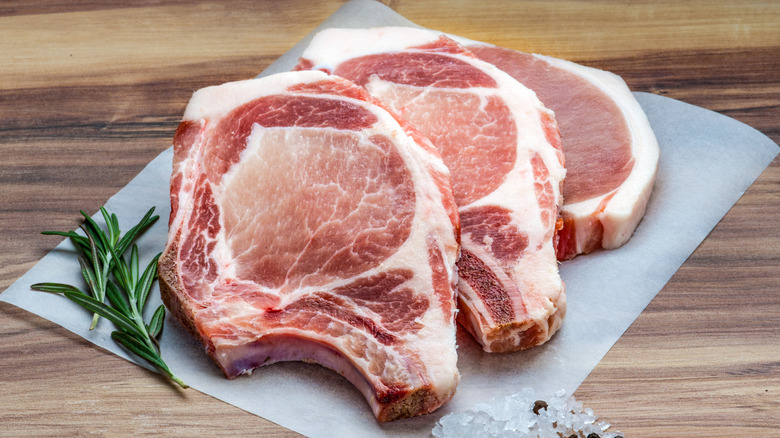
Pork is a meat you may tend to forget about in your dinner rotation, but you can do just about anything with. Whether you're cooking up pork chops, pulled pork sandwiches, or even a soup made with pork snout, the options are endless. However, if you're looking to grill up a restaurant-worthy Prime pork at home, you may be disappointed to find that it isn't available in grocery stores. The reason for this — pork grading is done a little differently.
While beef is graded by Prime, Choice, and Select, the grading of pork isn't the same. As stated by the USDA, pork is graded by either Acceptable or Utility grade. Acceptable grade is what you will find in the grocery store, while Utility grade is used in processed foods and not available to the public. The Acceptable grades are split into different yields of 1, 2, 3, or 4, with Utility being the lowest grade. These levels are based on how much usable meat comes from the pig and how much fat there is in the carcass. U.S. No.1 is going to have lean meat with little fat, while Utility grade is going to be mostly fat. When buying pork, you won't be able to tell exactly which USDA grade the cut falls under, but know that if it's in the supermarket, it's been labeled as Acceptable.
So is Prime pork a real thing?
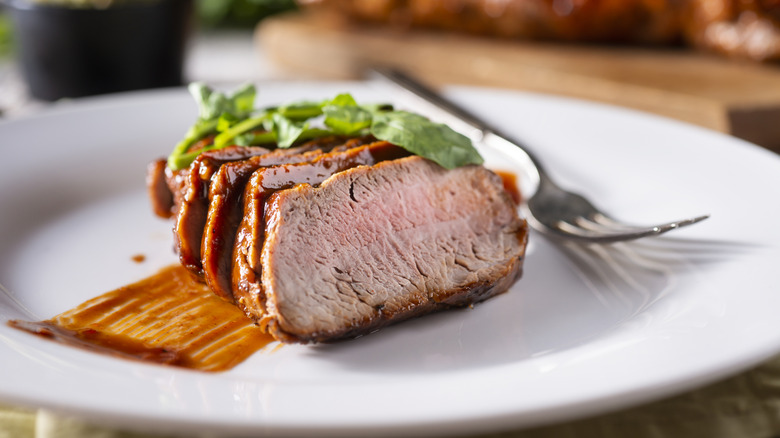
If you've ever been to a restaurant with an entree labeled as Prime pork, this title doesn't necessarily have to do with the grading. When pork is labeled as Prime, this is a marketing tactic to emphasize a brand's high-quality meat, rather than the actual USDA grade. While this can be misleading, there are other ways to check your cut of pork at the grocery store to be sure it's fresh. One of the main telltale signs of good pork is the color — pork should always be pink, never gray. Texture and marbling also play a factor in high-quality meat, as fresh pork will be firm and turn tender and juicy when cooked. Packaging and labels are also important; sell-by stickers, USDA certifications, or organic labeling can all point to premium pork.
There are many ways to cook up pork, and it's even the best meat to pair with vinegar-based BBQ sauces. While the Prime label on pork may not have much meaning, it's still important to double-check the meat you're buying. The quality of your pork can greatly affect the final product, so choosing carefully is crucial.