

12 Boomer Restaurant Habits That Are Hard To Ignore
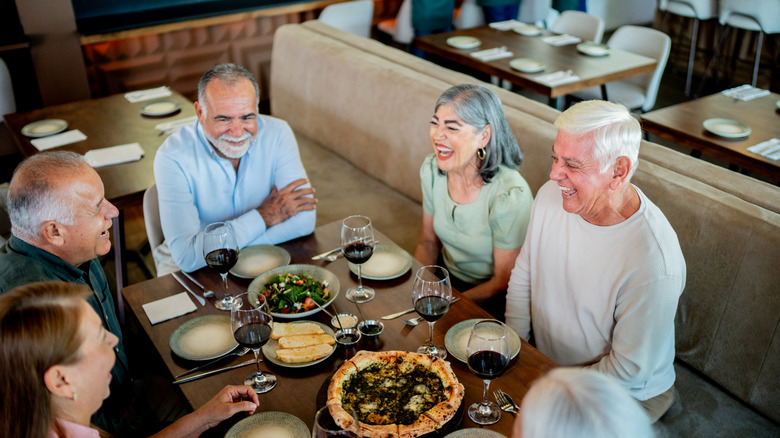
I grew up with boomer parents, born in 1952 and 1959, so I've come to realize a lot of the stark cultural differences between my generation, Gen Z, and theirs. As a whole, boomers have a strong connection to family values, hard work, and frugal living (while also balancing consumerism). These values don't just affect big-picture perspectives on how they see the world and what they want from life; they also influence more everyday behaviors, like how and why they choose to dine at restaurants and what they expect from those experiences.
I thought that living with boomers all my life was a good enough example of the disparities between my generation and my parents — and then I started working in restaurants, both as a back-of-house and front-of-house staff member. I worked at an upscale pizza restaurant (like, $25 to $30 a pie — no cheap Domino's pizza here) that attracted as many older diners as college-aged folks. And the difference between these two generations in terms of how they interact with staff, one another, and the space itself was like night and day. The interactions I've been involved in while working in the food industry, as well as while eating at restaurants with boomer parents, made me wonder: Where do these dining habits actually stem from, and how are they impacted by values, accessibility (or lack thereof), and other similar considerations? As such, I've curated a list of some of the most common boomer restaurant habits I've noticed — and how they set them apart from other generations — as well as ponderings about where they come from.
1. Demanding paper menus rather than electronic ones
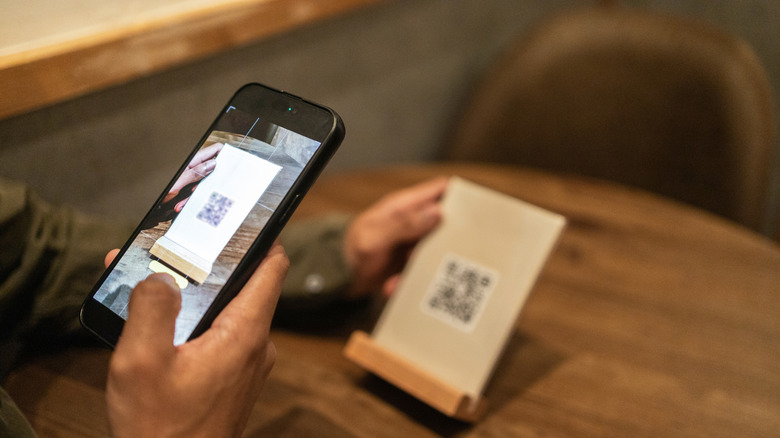
It shouldn't be surprising to say that we live in a tech-filled world, and that certainly extends to the restaurant industry as well. Not only is technology used by staff to send tickets to the kitchen and track sales, but it's also customer-facing, which is especially evident through the release of QR code menus. Staff need not wipe down plastic-covered menus or print paper menus that either change or get thrown away; customers can just scan the menu themselves. Though boomers haven't really warmed up to the idea.
From a technology and accessibility angle, I get it. My dad just learned how to use a smartphone in the last few years (and he barely knows how to operate it aside from texting, calling, and watching YouTube), so I wouldn't expect him to know how to scan a QR code. If you struggle with reading small print on a phone screen, as some older adults do, you may also be less inclined to use a QR code. At restaurants I've worked at and visited, I've found that the only people who ask for paper menus (or complain about digital-only ones) are boomers — which definitely has something to do with how comfortable people are with technology and its accessibility.
2. Claiming that they 'know the owner'

If you walk into a restaurant with someone who says that they "know the owner," you should be mortified. It was perhaps my biggest pet peeve when I worked at a restaurant, as it usually implies that a customer is going to tattle on you to upper management or that they're expecting some sort of special treatment — drinks on the house, a special dessert, expedited service, VIP seating, etc. As a staff member, I wrote off every one of these requests and didn't pay them much attention because I don't feel that some patrons are worthy of different or "better" experiences than others just because they were in a fraternity with the owner 40 years ago. Sorry, not sorry.
This is only something I experienced with older diners. I find younger folks tend to leverage existing relationships for transactional benefits (or at least not in restaurants), while older generations aren't shy about letting staff know they're a VIP customer. I get that boomers are thrifty (and saving a quick buck isn't a bad thing), and they may not understand how awkward it makes everyone at the table feel, but it's still worth pointing out as a restaurant faux pas.
3. Complaining about rising prices
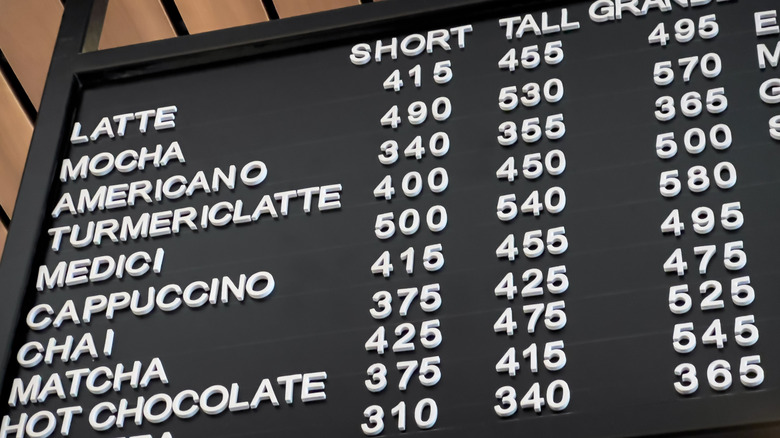
I practically get sticker shock every time I leave the house, let alone visit a restaurant. Not only are menu prices increasing, but restaurants are trying to make do in a business with already thin margins. The universal experience of rising restaurant costs has not stopped boomers from complaining about said prices, though.
When I worked in a restaurant, I got a lot of raised eyebrows whenever I mentioned surcharges for extra toppings or dipping sauces — and they never seemed to come from younger people. It was always older adults, likely boomers, who lamented times when burgers cost less than $1 and penny candy was still a thing.
Maybe it's because younger generations never experienced price changes that drastic, but I do think a big part of this gripe from boomers has to do with a generational perception of value. Boomers visit restaurants where they feel that they're getting a good deal (often at the expense of food quality), while younger diners are willing to spend more for experiences, special occasions, or restaurants that they genuinely want to visit. This is supported by research as well; according to a 2025 study by Vox Media Insights and Research, via Eater, a survey of 2,000 U.S. diners found that boomers considered fair and reasonable prices among their top deciding factors when choosing a new restaurant.
4. Only visiting restaurants that offer large portions
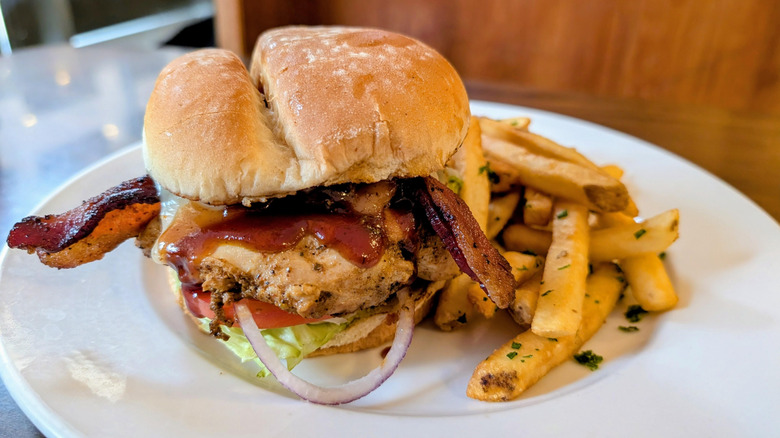
If you have older parents or older folks in your life, think about the chain restaurants they frequent that you might not understand the appeal of. These are places that serve up classic country breakfasts that spill over the edge of the plate or burgers that are too large to eat in one sitting, and where boomers are pulling up their chairs — despite the food never being that good.
Generally, the food at these restaurants tends to be quantity over quality every single time. Despite this, I assume boomers frequent them because of their perception of value. The prices may not be as high as those at the new-age concept down the road, and you get a ton of food with your order — so you're getting better bang for your buck, right? Technically yes, which is why boomers may be inclined to overlook things like flavor, overcooked pasta, and fries that aren't that crispy. There's also a sense of nostalgia and loyalty associated with these chains that, as I've found, members of the younger generation see right through.
That said, I've also found that boomers don't appreciate small-plate-style dining (like tapas) in the same way that younger folks do. Younger diners are looking for a snack to share and accompany their dirty martinis before they go out, but boomers are all about big plates — likely because it's seen as a better value.
5. Voicing aggravation about noise and lighting
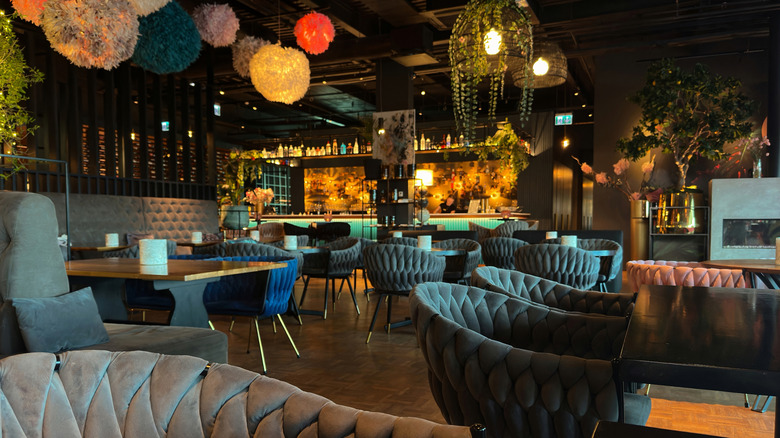
Everything has its place in a restaurant — including noise and lighting. Dark settings are more intimate, accent lighting draws the eye, and the amount — and type — of noise can influence diner perception. While complaints about these things do come from younger diners as well as older ones, at least in my experience, the lion's share comes from the latter. Younger diners may find a dimly lit restaurant to be part of the experience, while boomers tend to find it annoying.
Boomers will return to restaurants with good acoustics and complain about restaurants that are loud or dark. And from an accessibility angle, yes, dark restaurants where you can't read the menu or see the person you're sitting across from are a problem, and may be less optimal for an older diner with bad eyesight. And, since older diners are more apt to voice concerns to staff (more on that later), it would make sense why most complaints about it come from boomers.
6. Being stingy with tips
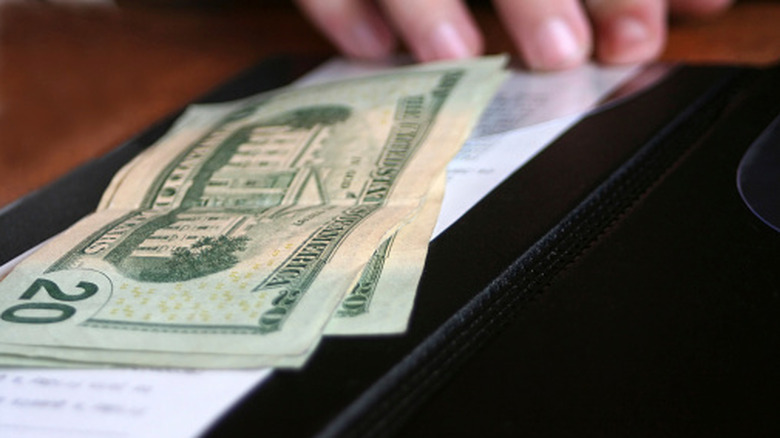
Boomers are thrifty. Some would say cheap, but I'll be polite and say thrifty. My dad is one of them, and getting him to tip more than 18% on a restaurant bill is like pulling teeth. I, on the other hand, have no problem dropping 22% to 25% on a bill.
Now, I am biased because I worked in restaurants, and I know that the staff make very little outside of tips. But across the board, older generations tend to be the worst at tipping, while younger generations tend to be more generous. Older folks (especially boomers) tend to tip more based on their experience, so they may not be willing to tip the bare minimum if they feel as though they have not been attended to. I do think that some of this difference has to do with younger diners being surrounded by friends and acquaintances (and possibly themselves) who worked in the service industry — which is supported by 2026 National Restaurant Association data asserting that a statistically higher amount of Gen Z adults than baby boomers have worked in restaurants. Therefore, younger generations might tip more generously because they know that it plays a critical role in income.
7. Not wanting to adhere to restaurant policies
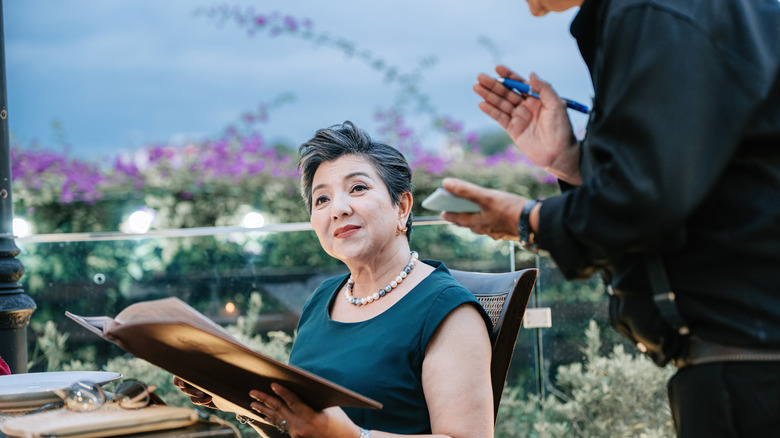
Have you ever heard the phrase, "The customer is always right?" Well, in the restaurant world, the customer is always right — until they're not. There are policies in place for a reason, and in my experience, restaurants don't put together protocols on seating, organization, and ordering for the sake of it.
One "rule" the restaurant I worked in would often get feedback about — almost entirely from boomers — was the half-and-half pizza policy. We didn't do them because it's hard to keep the toppings on the right "half" and prevent them from shifting when we pulled the pie from the oven. Despite posting this policy everywhere — on the menus and around the restaurant — boomers still demanded their half-and-half pies and suggested ways we could accommodate their requests. I've also seen this while seating customers as a host. The "Please Wait to be Seated" sign read as "Sit at an Open Table, Any Open Table is Fine. In Fact, Pull Those Tables Together and Violate Fire Code," to many boomer diners.
I don't know whether not wanting to adhere to policies stems from issues with authority — especially when that authority is a 20-something college student who really doesn't want to be working – or from them thinking they own the place, but it's annoying regardless. Younger generations, on the other hand, are the ones I can tell something to, and they respect it without question simply because they don't want to make my life harder than it has to be.
8. Ordering coffee after a meal

I can confidently say that I have never, in my life, ordered a coffee at a restaurant that wasn't a coffee shop. But if I go out to dinner with my parents to a moderately upscale restaurant, decaf coffee is usually on the docket for them, in lieu of or in addition to dessert. Some people see it as a way to encourage digestion or make themselves sleepy. And some cultures, like Italians, normally drink espresso after dinner. But I find the practice of ordering an after-dinner coffee at a non-coffee shop odd and not something non-boomers do.
For one, the coffee at a non-coffee shop usually isn't good — and there's no telling how long it's been sitting in a carafe. The reason a generation that has built itself on thrift would be willing to tack subpar coffee onto the check eludes me. Part of it may be cultural, as drinking coffee after meals sparks something communal for some diners, but it's not a practice that I feel younger folks partake in as much as members of older generations.
9. Sticking to the same thing they've always ordered
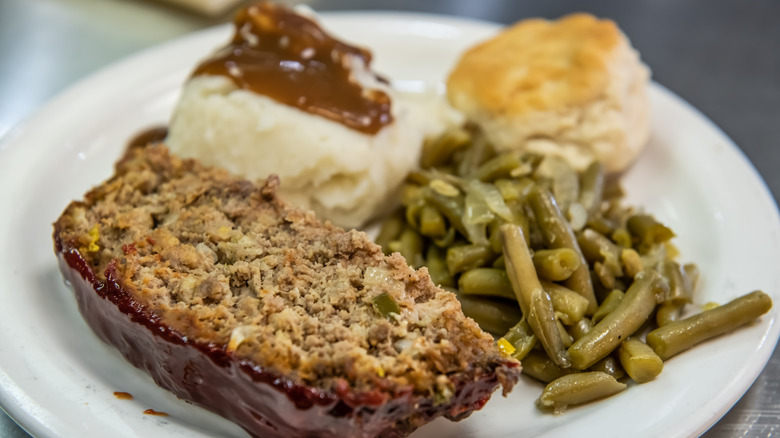
My family has been visiting the same ice cream shop since I was very young, and while I like to jump around between flavors, my dad always orders the same thing: chocolate on a sugar cone. On a menu with 100 flavors, he picks plain chocolate every time. When we go to the local shoddy Italian joint, where you could, quite literally, order anything vaguely Italian-American? It's always seafood fra diavolo, hold the garlic, for him.
My dad is a prime example of the predictability that boomers value. They tend to visit the same restaurants and order the same things because they know what they're getting. After all, according to research performed by Vox Media Insights and Research in 2025 (via Eater), a study of 2,000 U.S. diners found that 90% of boomers rank comfort and relaxation as some of the things they look for most when they go out to eat, while Gen Z tends to gravitate more toward cultural and culinary exploration.
This leads me to assume that when boomers travel, they also tend to visit chain restaurants where they know what's being served and that they'll like what's on the menu. I, on the other hand, will order whatever piques my interest, whether I'm visiting a new spot or the same spot several times in a row.
10. Asking specific questions about sourcing
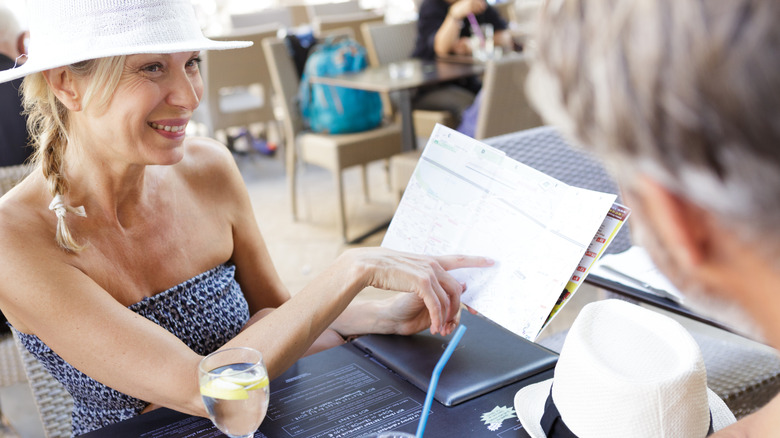
"Where are your scallops from?" The walk-in fridge. "Are the carrots organic?" No, probably not. "Is the salmon fresh or frozen?" Well, it looked fresh when it arrived. These are questions that restaurant staff are used to getting, especially from older customers. And on one hand, I do get it; customers should be well-informed about what they're ordering and have a right to know where the components of their plate come from. But is a customer really going to be able to understand the differences between organic and conventionally-grown meat, and are farm-raised and wild-caught fish really all that different? And who defines what "authentic" meatballs even are?
Restaurants, like grocery stores, like to throw labels on items on the menu in order to get customers to buy something because they perceive the quality as better. Over the years, I've found that boomers tend to order items on the menu with specific product claims (fresh over frozen, organic over non-organic, and local versus unspecified) and ask more about these claims than younger diners. These small details seem to carry more weight in their decisions about what to order than they would for a younger diner.
The same can be said about food that's marketed as being "authentic." Research shared by the Food Institute found that boomers were more inclined to trust menu items and restaurants that marketed themselves as "authentic," while Gen Zers overall reported that this distinction was actually a turn-off.
11. Confronting staff about orders
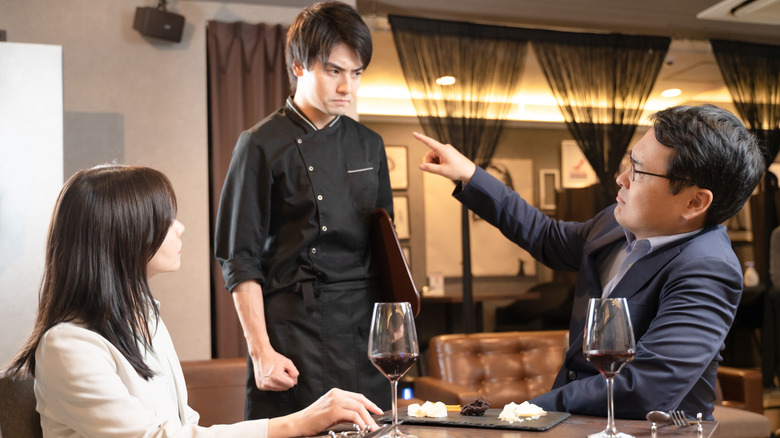
I consider myself to be a very non-confrontational person. If my order came out incorrect at a restaurant, I would cut my losses and just eat it, since the thought of talking to a staff member — or even worse, asking to speak to a manager — mortifies me. But the same can't be said for boomers, who appear to have no problem voicing their discontent with a dish or a staff member. While this isn't the same as the so-called "Karen generation" (Gen X), I will say I have had more confrontational experiences with older diners than with younger ones. Boomers value predictability, so when something goes haywire — whether the issue is minor, like forgotten ketchup, or an incorrect order — they will make it known to staff that they aren't happy.
Related to this, I've also found that the thing that sets boomers apart from other generations is not only that they're frustrated by these mistakes, but that they will speak openly and directly about their experience. Younger generations, on the other hand, would rather leave a negative review on Yelp about it. In a world where restaurant reviews and social media are so critical to restaurant success, this is one occasion where I would rather be scolded by a boomer about undersalted fries than see a scathing review on social media.
12. Not wanting to wait for a table
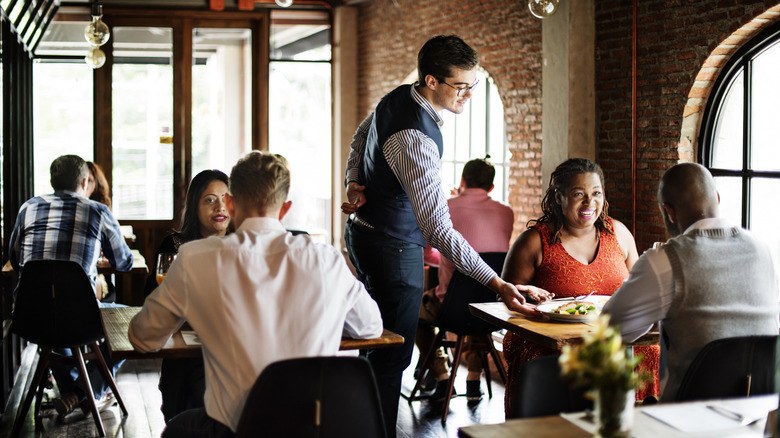
Reservations can be hectic for a restaurant to manage as a host. You think you have everything figured out, then a 12-top shows up and ruins your expectations for an easy night. Some patrons, especially boomers, tend to make this process even harder, especially when they question wait times — or worse, try to seat themselves. In my experience, older diners are less willing to wait for a table than younger ones who make the most of their wait time by chatting with their party, ordering at the bar, or, more often than not, scrolling on their phones. Meanwhile, my dad is the one who's pacing, checking his watch, and acting like he's going to turn into a pumpkin if the table isn't ready in five minutes.
Older customers may not understand that there are folks ahead of them, and it can be hard for them to see an open table that's being strategically held off for some reason and understand that it's not their table. Sure, older customers are more likely to make reservations in advance, but I do think there is an undercurrent of expectations and immediate service among older diners that cannot be said for younger patrons.