

Almond Butter Or Peanut Butter: Which Has More Protein?
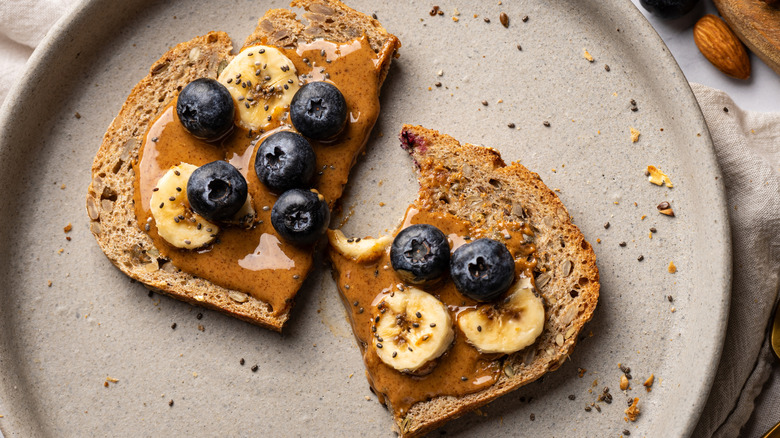
If you're a big nut butter fan, you're in good company. If you're wondering which between peanut butter and almond butter helps you hit your protein goals faster, peanut butter is most often the protein contest winner. But — and there is a but — it's not by any significant amount. 2 tablespoons of peanut butter contains roughly 7 grams of protein, whereas 2 tablespoons of almond butter contains around 6 to 7 grams. Since it comes down to 1 gram's difference or less, peanut butter technically wins, but not in a way that makes any real difference to your daily protein intake.
Almond butter is a winner in other ways: It contains more vitamin E, magnesium, and fiber, plus it has a slightly sweeter flavor that works especially well if eating almond butter for breakfast. Peanut butter is a bit richer and saltier, which is perhaps why it appears more in savory recipes, such as satay sauce and dressings.
More than focusing on protein, the real trick is to look at the label; many jars of nut butter are full of sugar, oil, and stabilizers that have no bearing on the nuts inside. Even if you go all natural, some natural peanut butter brands are better than others when it comes to taste and nutrition.
The protein difference matters less than you think
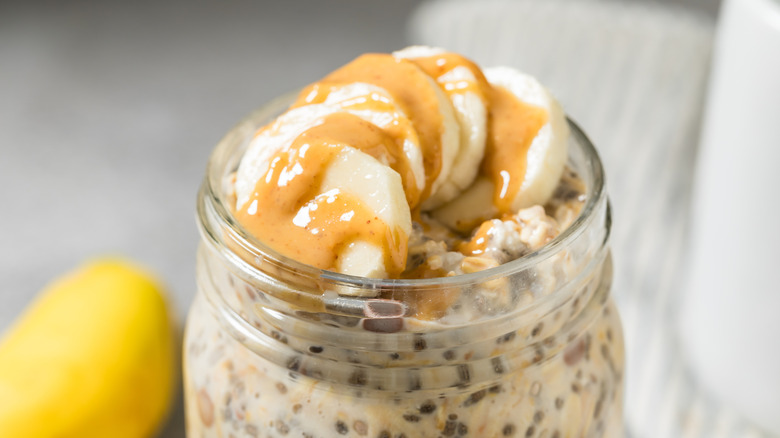
When the protein gap comes down to only 1 gram per serving, if that, it disappears pretty much the second you mix it into your meal. It's often the rest of the ingredients – especially sourdough toast and Greek yogurt — that contribute more protein than nut butter. Nut butters are also primarily a source of fat and should be treated as such, even if they do bring a little protein to the meal (which certainly doesn't hurt).
The notion that nut butters are protein sources and health foods you can eat unlimited amounts of is where things can quickly go wrong. Both peanut and almond butter are good for you, filling, and nutrient-dense, but they're also calorie-dense, which is is why nutritionists and dietitians are often more concerned about portion size and overall eating habits than counting a 1-gram difference in protein content. While the protein rule for everyday eating does matter, it doesn't come down to which nut butter you spread on your morning toast. In this case, you can eat the one you like best.