

Why The Food At The White House May Not Be All It's Cracked Up To Be
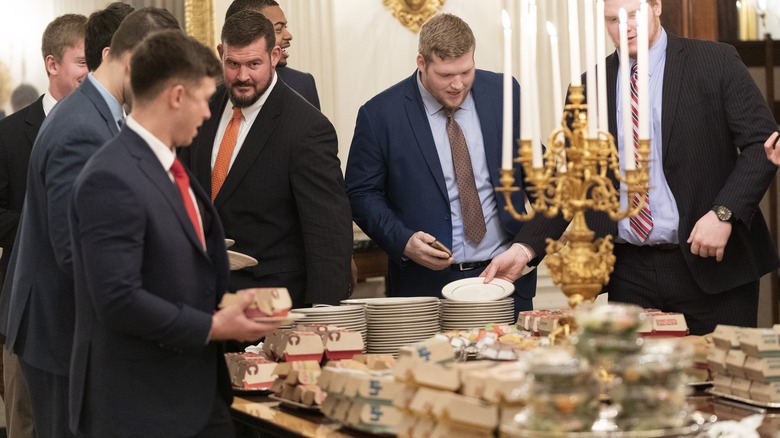
It's the home of the President of the United States, so you'd imagine the food served at the White House would be exceptional. Well, according to multiple sources, it's surprisingly not. In a November 2025 episode of The Daily Beast's "Inside Trump's Head" podcast, Donald Trump biographer Michael Wolff stated that "a sort of untold story is that actually the food in the White House is terrible." He went on to describe it as being like banquet food, a cuisine that sounds fancy, but is much lower quality than would be served in a Michelin-starred restaurant. This is largely due to the fact that it has to be mass-produced to accommodate so many people.
According to Wolff, Trump barely even eats the banquet food served at state dinners, opting instead for simple hamburgers before events. He has a steady diet of fast food and even served McDonald's, Wendy's, and Burger King when he hosted the Clemson Tigers football team in honor of their national championship in 2019. Catering to the whims of the commander-in-chief is one of the many rules White House chefs have to strictly follow. For example, Trump prefers his steak well-done and likes to eat it with ketchup, so, although this is widely viewed as a culinary faux pas, his kitchen staff makes it that way. And, many other presidents have reportedly had simpler tastes, too, preferring humble fare over gourmet cuisine. Aside from the kitchen traditions U.S. presidents brought with them to the White House, additional factors have contributed to subpar dining, including economic conditions, post-war rationing, and the mass production of food.
A history of poor or mediocre White House fare
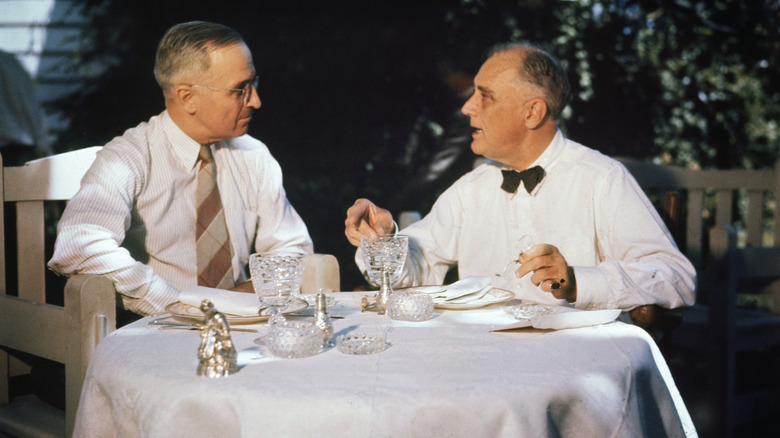
The trend of lackluster food goes back to Franklin D. Roosevelt's presidency. Until that point, the White House had been known for high-quality, decadent meals, but then came the Great Depression. First Lady Eleanor Roosevelt wanted to demonstrate solidarity with the American people by taking a more economical approach. Cutting the budget drastically while providing adequate nutrition resulted in barely edible meals, like gelatin-filled salads, cold, jellied bouillon, and spaghetti and boiled carrots.
When Harry Truman succeeded FDR, global post-war food shortages and continued solidarity with the American people yielded food that was still simple and economical, but somewhat better than in FDR's days. As he wrote in a journal entry recorded by the National Archives, Truman's breakfast was one slice of plain, unbuttered toast with a singular egg and bacon strip plus fruit and a half glass of skimmed milk on the side. Lunch and dinner included more fruit, nonfattening vegetables, and a meat, like ham, steak, or liver and bacon.
The international hunger crisis improved during the 1950s and 1960s, so quality of White House cuisine began to be dictated more by the tastes of the commander-in-chief and first family than economic conditions. This trend would continue to the present day. As a prime example, kitchen staff had to adapt to Nixon's enjoyment of cottage cheese with ketchup, while George H.W. Bush, famously eschewed many vegetables , typically opting for more traditional comfort food, including corn pudding and an apple-cranberry brown Betty.
Those heady days when the White House food was good
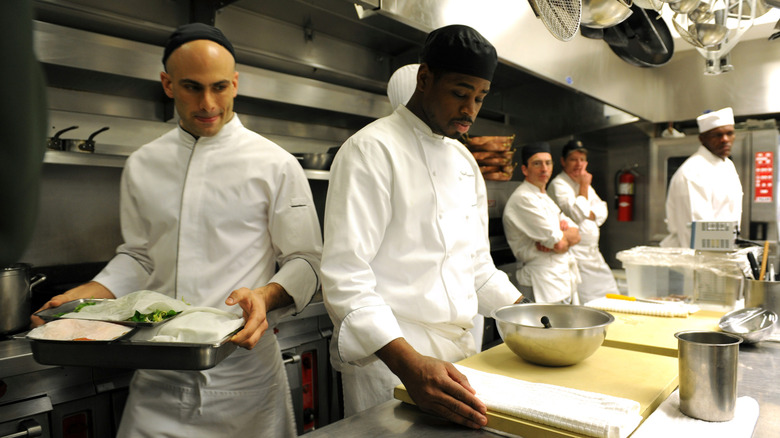
The Kennedy Administration in the early 1960s saw a return to abundance and gourmet meals, with First Lady Jackie Kennedy bringing in executive chefs and French-style cooking. Menus included salmon, lamb chops, and salad with brie. And, although Jimmy Carter and family pivoted away from the extravagance of his immediate predecessors, opting instead for lots of southern comfort food, state dinners often featured a mix of more modest cuisine, such as shrimp gumbo, with upscale offerings, like Alaskan king crab.
Throughout his White House years, Bill Clinton also had a love of simple, rustic fare. State dinners, though, typically provided more gourmet fare, and overall, the food in the presidential residence was considered quite good, often including snapper, salmon, and chicken enchiladas. While Bill Clinton had an undying love of fast food, First Lady Hillary Clinton, and the kitchen staff, influenced him to eat a healthier, higher-quality diet.
While Barack Obama and the First Family enjoyed their share of comfort food, including homemade macaroni and cheese, burgers, and pizza, it was thanks to First Lady Michelle Obama's national nutrition initiatives that the overall caliber of food in the presidential residence was widely considered among the best and healthiest in history. Gourmet meals at state dinners, from seafood to poultry to beef, often included organic ingredients, like produce from the White House garden, and even the Obamas' casual meals reflected a shift away from processed foods towards more wholesome choices.