

Quit This Grocery Store Habit — It Could Be Ruining Your Rotisserie Chicken Before You Even Get Home
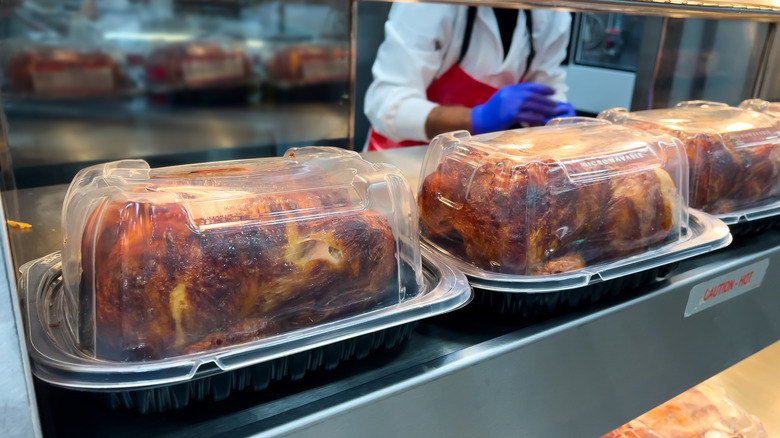
When you're making your way through the grocery store, you likely have a path that you stick to. Maybe you get your order at the deli out of the way first so you don't have to wait in line at the end, for instance. While it may not be the most convenient thing, it's smart to consider temperature and food safety when you're grocery shopping — especially if you're loading up on hot foods like rotisserie chicken. It makes sense to toss one in your cart (grocery store rotisserie chickens are cheaper than raw chickens, after all), but when you grab it matters. Rotisserie chicken is the last item you should pick up when you're at the grocery store, even if that means you need to backtrack to go get it.
According to the USDA, it's important that hot food is kept at or above 140 degrees Fahrenheit and cold food at or below 40 degrees Fahrenheit to inhibit bacterial growth. You've got a two-hour food safety window once you leave the 40- to 140-degree Fahrenheit window, and that clock starts ticking as soon as you pick up your rotisserie chicken from the warming station at the store. If you happen to be in a particularly hot climate, your window is even shorter — if your food is in temperatures between 90 and 140 degrees Fahrenheit, you've only got an hour to get it into temperature-safe storage. Since you'll want to minimize the amount of time your rotisserie chicken is at room temperature, it's smart to pick it up last, just before you head up to the checkout counter.
More rotisserie chicken food safety tips to keep in mind
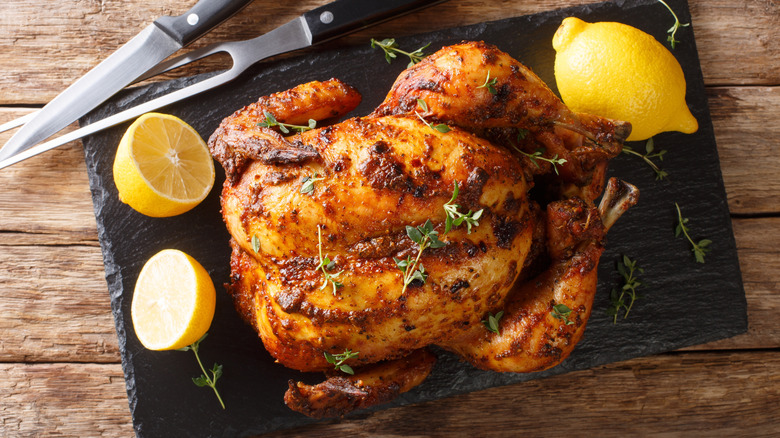
When you're nearing the end of your shopping trip and eying up the rotisserie chicken, choosing wisely is key. Your chicken's bag or container should definitely feel warm when you pick it up. Remember, as soon as you take the chicken away from the heating element, you need to start your mental two-hour timer. Going straight home after you check out is smart, so you can either eat your chicken first thing, or immediately remove it from its bag. (Rotisserie chicken bags can leak, which can lead to bacteria growth on your countertops or in your fridge). Be sure to break the chicken down, and portion it into shallow containers — this makes it easier for your fridge to cool it rapidly, reducing the chance of it staying in the temperature danger zone too long.
It's also important to be aware of its storage life. Rotisserie chicken lasts three to four days in the fridge — any longer, and you risk exposing yourself to pathogens that could make you sick. When yours is nearing the end of this range, use what you have left to top salads, fill tacos, or add protein to a stir-fry. No matter how you're using your chicken, be sure to only take out what you need and pop the rest back in the fridge right away to keep it in the food-safe temperature zone. Then, if you're still within your three to four days, use the bones and skin to create some homemade chicken stock, and store it in the freezer so you have it on hand to use for soups, stews, and more.