

Your Complete Guide To Building Your Home Bar
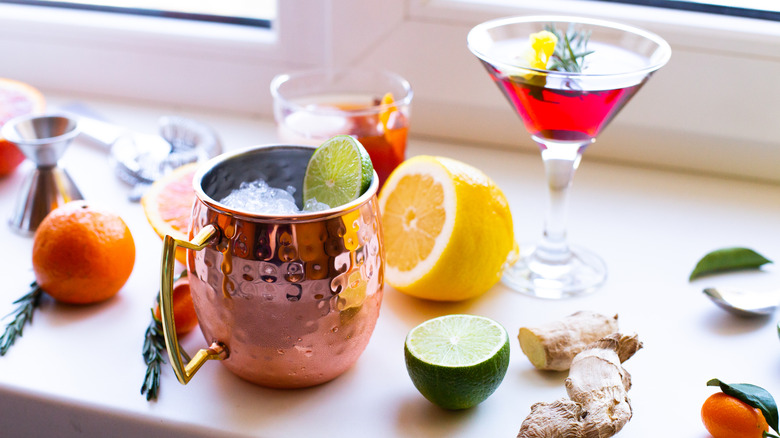
A home bar is, in short, an entertaining essential. Canned cocktails will only get you so far, and if you want to explore more niche libations, play with different garnishes, and woo your guests with your cocktail skills, you're going to have to integrate one into your space. A great home bar makes cocktail making easy, allowing for a fluent workflow from ingredient to glass, and is something a home mixologist should be proud of. However, the question of how to go about doing so — especially from scratch — is certainly a big one.
We wanted to get the scoop on creating an efficient and well-stocked home bar. So, we went straight to the experts: mixologist Sanwar Mal Khokhar from Texas' Sanjh Restaurant; Robert Lang, bar manager at Mama Tried in Miami; cocktail expert Camille Wilson; and Yu Jiang Zhao, founder of Kobayashi Bar. Here's what they think you need to know about building a home bar.
Think about its location carefully
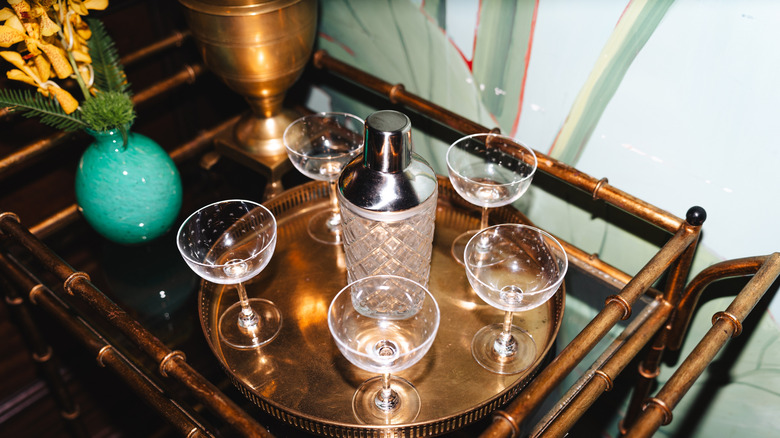
If you are building out your home bar, chances are you are going to be using it to entertain yourself, your family, or guests. As such, it's important to keep it in an accessible location. Bar manager Robert Lang says that kitchen islands often become the de facto spot, as it's central to everything going on in the home. However, if you're working in a small kitchen or don't have any space on your island to spare, you may need to get creative and look for other potential spots.
"If you're creative enough, you can turn almost any corner into a home bar. A section of your kitchen counter, a makeup vanity table, a bookshelf, a spare room, and even a closet can be transformed into a home bar if you want," says cocktail expert Camille Wilson. Yu Jiang Zhao of Kobayashi Bar says that one of the most underrated spots for a home bar is a hallway console. "You get a back bar, drawers with tools, and a working area without crowding a living room corner," he says.
If you have a stairway in your home, you may want to turn the spot underneath it into a home bar alcove. Mixologist Sanwar Mal Khokhar suggests adding features like a reclaimed wood counter with a pendant light or even investing in a custom-built bar built into a dining table. Of course, you'll want to consider how much space you have and what you'd like to spend when deciding where to put it.
Be intentional about how you organize it
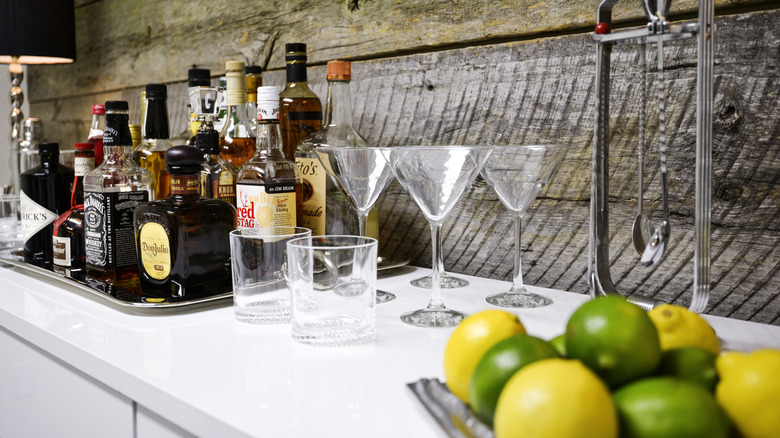
Your home bar can be a disorganized pile of bottles, glasses, and jiggers, or it can be a purpose-built and methodologically organized space that makes it easy to grab the bottles, glassware, and tools you need. Of course, keeping your home bar neat also has its aesthetic perks, especially if you frequently serve drinks to guests from it. "I think having small containers, jars, and cups to corral smaller items like cocktail picks, garnishes, small tools, etc., really helps. I also think decorative trays are a really beautiful way to anchor and group bar tools, bottles, and glassware together so things look less messy and more 'designed,'" says Camille Wilson.
Less is more when it comes to building your home bar. "Personally, my bar cart is a small, curated collection of bottles and tools I like to have on display, not my entire collection," says Wilson. Sanwar Mal Khokhar agrees. "A good looking bar is less about how decorative it is. It is more about [restraint]," he says.
Yu Jiang Zhao suggests grouping bottles together by type and height, rather than keeping them alphabetically — opting to keep clear spirits on one side and dark ones on the other. "Displaying good-looking tools and hiding sticky mixers (such as syrups and bitters) behind cabinet doors," he says. This will give guests the perception that your home bar is neater than it actually is.
Prioritize your workspace
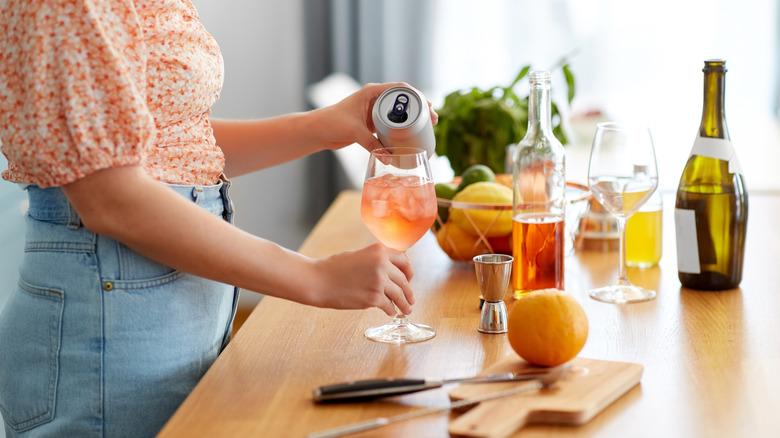
Don't let your excitement about buying spirits, garnishes, and glassware distract you from prioritizing your actual workspace. In fact, Sanwar Mal Khokhar says that not building a workstation into your home bar is one of the biggest mistakes you can make. Once you start mixing, you may quickly realize that you have no room to work, forcing you to find a completely different space where you can make your drinks. Yu Jiang Zhao would agree. "No working surface is the primary problem. You build a gorgeous shelf for your bottles and have [nowhere] to mix a cocktail," he says.
One suggestion that Robert Lang offers is to build shelves so that you don't have to keep bottles on the bar itself and you'll have a bit more space to work. If you are working on something like a bar cart, you may consider getting risers or stands so that you can build your home bar upward rather than outward. Khokhar recommends thinking about the size of your shelves when building, since you can fit both tall bottles and short bottles on shelves.
Make bar mats and towels your BFFs
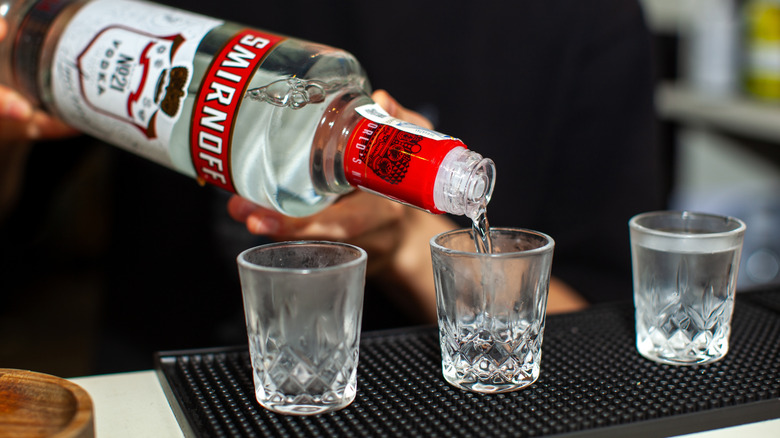
There's no use crying over spilled ... vodka. Seriously, spills are going to happen on your home bar, and the best thing that you can do is to be prepared for them. There are several tools that our bar experts recommend for this. The first are bar mats. These flexible mats can be washed in the sink and hold liquid, allowing you to corral spills before they have a chance to drip onto the floor or stain your workstation or your clothes. "A silicone bar mat is a great investment that costs $15. It prevents from spillage, serves as a non-slip surface for mixing, and protects your table underneath," says Yu Jiang Zhao. Camille Wilson agrees. "Bar mats are great for spills and also for ingredients like bitters that can stain countertops," but she shares that they are not a must-have. If you don't like the industrial look of these mats, you may want to stock up on highly absorbent towels in case of spills.
Sanwar Mal Khokhar says that constant spills may be a sign of other issues. "If spills are happening often it is usually a workflow issue, not a surface issue," he says. You might need to give yourself some more elbow room, or find new ways to maximize your workspace so that you aren't clinking bottles together or accidentally knocking them over.
Buy only essential tools
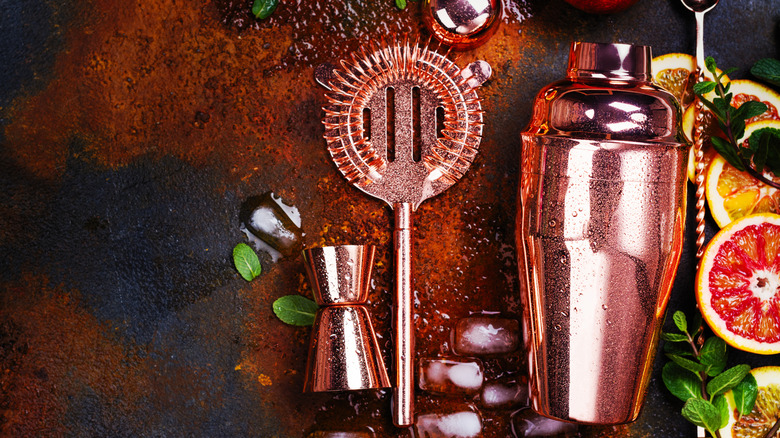
Liquor and spirits are not the only thing you need when building a home bar; you also need to stock up on tools for mixing and preparing your drinks. Like bottles and bar items, less is more is the way to go when buying bar tools. Yu Jiang Zhao recommends buying a Boston shaker, Hawthorne strainer, fine mesh strainer, and a jigger, along with a bar spoon and citrus peeler. "These tools will provide you with 95 percent of cocktail-making possibilities. Do not buy expensive 20-piece sets found on Amazon, using only four tools," he says.
Camille Wilson says that a cocktail shaker with a strainer is a must-buy, as well as a jigger and a three-piece shaker. Other essentials will really depend on the cocktails you prefer to make; she suggests a muddler if you work with herbs or macerated fruit often, and a juicer and a knife for cutting fruit for citrusy cocktails (like this classic Hurricane recipe). Other items that are nice-to-have but not essential, per Wilson, include mixing glasses, which can be made otherwise in a shaker tin or in the glass you plan on serving them. "Pour spouts can make pouring spirits easier but not absolutely necessary in my opinion," she says. Robert Lang recommends picking up a cobbler shaker, which he shares is compact enough for a home bar and offers a "classic aesthetic" that's sure to elevate any bar.
Don't neglect your mixers
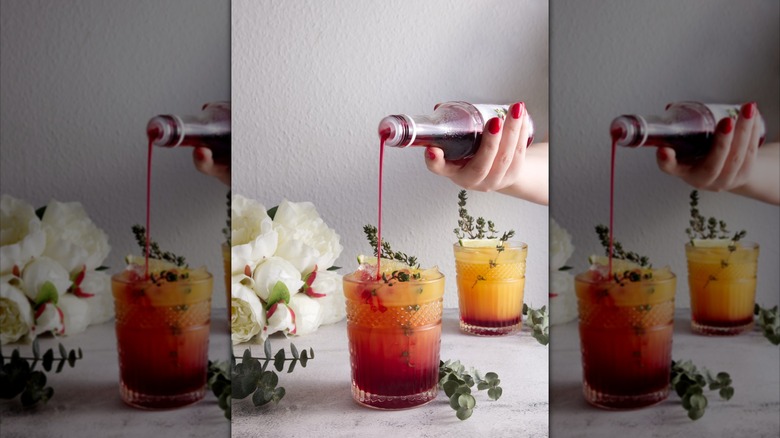
What would a classic White Russian be without heavy cream, or a whiskey sour without simple syrup? Not their respective cocktails, that's for sure. That's to say that mixers play a very important role in cocktail making, so you'll want to make sure that you have a good, versatile selection of them in your home bar. "All mixed cocktails require three basic mixers: soda water, tonic water, and fresh citrus juice," says Yu Jiang Zhao. He also suggests buying grenadine — which should taste like pomegranate — for your cocktail making.
Camille Wilson suggests carbonated sodas — including ginger beer, tonic water, and club soda — which can be added to a bunch of different drinks and bought in cans, so you can crack one open when you need it. She also makes a batch of simple syrup every week and recommends having plenty of lemon and lime juice on hand.
While you might be tempted to grab pre-made sour mix or margarita mixes (the latter of which we tried and ranked), Zhao cautions against it. "It will require two seconds to make a simple syrup and squeeze citrus juice," he says — and it will arguably taste much better in your perfect homemade margarita recipe.
Consider ice storage and preparation
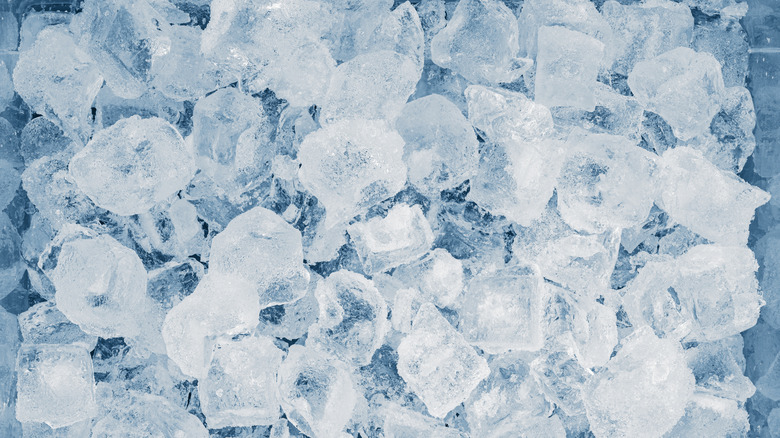
Now we have to talk about what might be the most annoying — and essential — part of building a home bar: ice. Ice is an ingredient in many cocktails, so it can't be treated as an afterthought. As a whole, our experts suggested buying ice elsewhere, simply because it takes so much patience and is difficult to make at home — at least at the same caliber as you would get from a bar. "Producing good, clear ice also takes up a lot of space. I would recommend outsourcing," says Robert Lang. Camille Wilson too gets her cocktail ice at a supermarket. "It's convenient for me and makes my life easier when I have guests over," she says.
Even if you buy ice, you will still need to find a way to keep it frozen and clear. "Do not place ice in the open bucket on your bar station, as melted ice forms the puddle that is going to ruin your next cocktail," says Yu Jiang Zhao. Instead, invest in a fully insulated ice bucket that will keep your ice chilled, per Wilson's suggestion. Sanwar Mal Khokhar also recommends a small insulated box or cooler, which can prevent the ice from taking on odors. "Also only bring out what you really need. The quality of ice drops the longer it sits out," he says.
Stock up on versatile garnishes
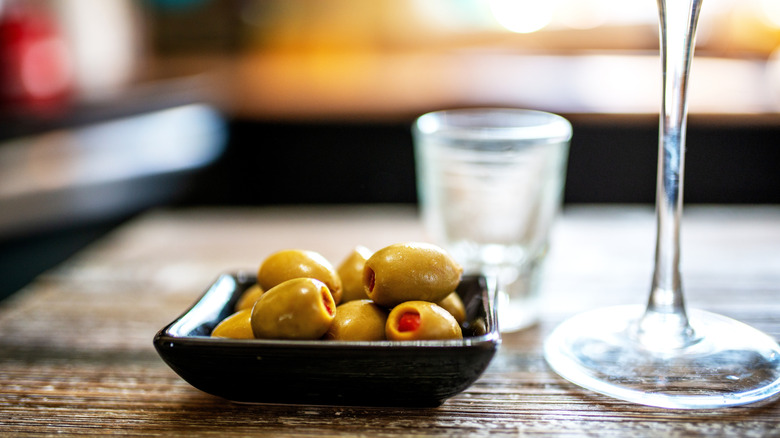
Garnishes are the literal cherry on top of your cocktail-making experience, making them a must for any home bar owner. "The main reason for the garnish is it is part of the [drink] not just decoration," says Sanwar Mal Khokhar, who offers citrus peels as an example. Their oils and aroma can change how a drink is perceived, which is likely why he recommends it as being one of the most common and useful garnishes to keep in a home bar.
Like the other considerations on this list, the best piece of advice is "less is more." "Lemon, lime, orange, mint, Luxardo cherries, and good-quality green olives will cover nearly 90 percent of cocktails you can prepare at home," says Yu Jiang Zhao. He also recommends stocking up on fresh citrus and avoiding things like dried flowers and fruit wheels, which may not stay fresh for long.
That said, not everything you buy has to be fresh. "Dehydrated fruit is great! They last a long time and are an easy way to elevate a drink," says Camille Wilson, noting that these fruits are also excellent for displaying on your home bar. "I also love edible flowers, citrus peels, and maraschino cherries." Of course, if you're not experimenting with springtime libations, you may not need to spend money on these kinds of things.
Don't overwhelm yourself with bottles
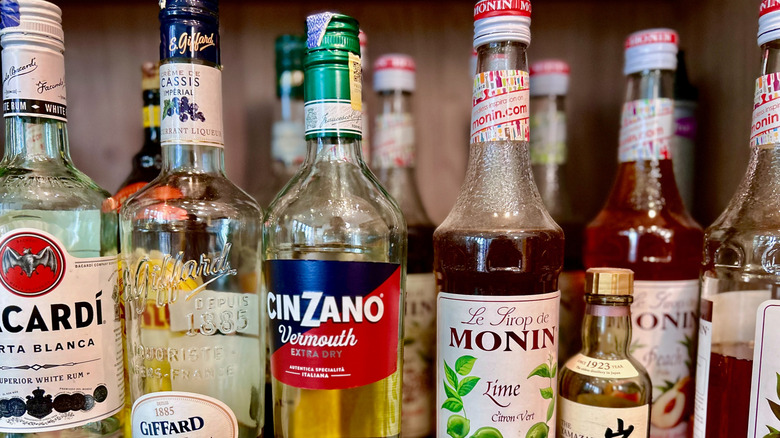
There are simply so many different types of spirits and liquors out there that deciding which ones to buy can be overwhelming, to say the least. How are you supposed to know what to have on hand, especially if you are entertaining guests at it?
Our experts highlighted one pertinent tip: Think first and foremost about what you like to drink. "This might be an unpopular opinion but I always recommend that beginner home bartenders pick one or two cocktail recipes that they like and buy the spirits and ingredients they need to create those recipes. That way, you always have what you need on hand," says Camille Wilson. She suggests a beginner home mixologist have three to five bottles, depending on the recipes they like to make. Robert Lang's core bottles include vodka, rum, gin, tequila, and whiskey — which have more uses than niche ones, like a one-off amaro.
Yu Jiang Zhao's rule of thumb is to keep about six to eight bottles with two or three modifiers. "Home bars with 30 unused bottles are even worse than home bars with eight well-used ones," he says. You should also think long and hard about what bottles you are adding to your collection, especially if they are just going to take up space. "Not being able to state what you'll prepare in the next two weeks using this bottle, think twice before purchasing it," says Zhao.
Know when to save versus splurge on bottles

No matter how you face it, having a home bar isn't cheap. Not only do you have to construct it, but you also have to stock it with mixers, garnishes, and one of the most expensive parts: the liquor. As such, we asked our experts which spirits were worth splurging on, and which ones could be done on a budget.
"I'd say anything that you're going to sip neat without any mixers or modifiers, is something you might want to splurge on though you can find quality options at every price point," says Camille Wilson. So, if you're a bourbon or whiskey drinker, you may be better off spending more here. "Good Bourbon for old-fashioned and straight serving should cost around $40-$60," says Yu Jiang Zhao.
But if you're making a lesser-known tiki cocktail loaded with syrups and mixers, you might be able to save a bit by opting for something less-premium. "Vodka is the one spirit that is pretty interchangeable however it's still important to have something of quality," says Robert Lang. Zhao would agree. "For the spirits used just as carriers, like vodka in a vodka soda or rum in a Daiquiri, you need cheaper versions since vodka is just a means to carry flavors," he says.
Store your bottles correctly
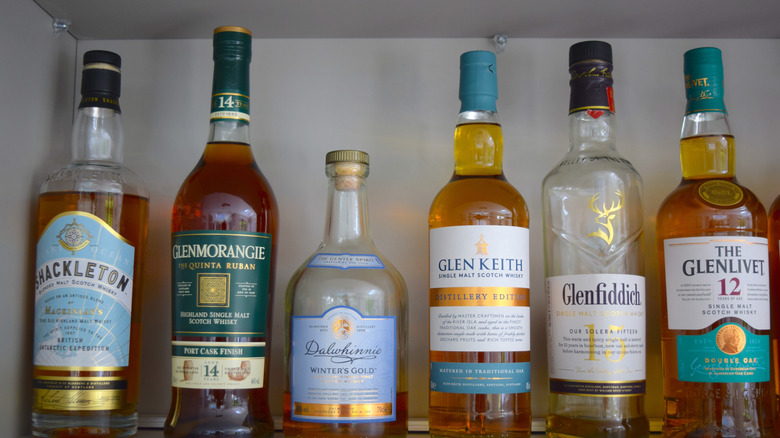
If you're buying top-shelf spirits, the last thing that you want to risk happening is for them to go bad. Luckily, many home bar staples do not spoil, but their quality may not be the same if they are not properly kept. "It is less about safety and more about preserving aroma and flavor," says Sanwar Mal Khokhar.
He says that wine-based spirits, like vermouth, should be refrigerated, as they will preserve the flavor and curb oxidation. Camille Wilson says that this storage method also goes for low-ABV spirits as well (both sweet and dry vermouth being examples). Yu Jiang Zhao notes that vermouth, Lillet, Aperol, sherry, and port may only last a few weeks after opening — so factor this in when deciding how large of a bottle of each to buy. That said, there are some spirits that people just like drinking cold. "I keep a bottle of [Patrón Silver] and [Patrón XO Cafe] cold because that was something everyone used to have in the fridge. Mainly because of nostalgia," says Robert Lang.
Refrigeration — and consideration for how you're going to keep things cold and nearby — is worth considering when constructing your home bar. If you like drinking soda cocktails — rum and Cokes, tequila with soda water, or Moscow mules — you may want to invest in a tiny beverage fridge to store cans in.
Opt for versatile glassware
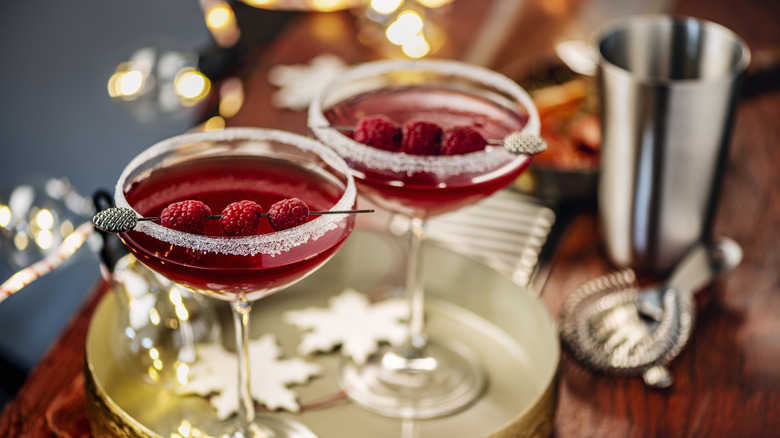
You can probably guess what our experts' main point of advice will be here. The old adage that less is more also rings true when it comes to glassware. Having the "right" ones is ideal, but don't fill up every square inch of home bar space with glassware in every shape and size.
Instead, stick to the basics. "I recommend a lowball glass, a highball glass, and a coupe glass. With those three, you can serve a wide variety of drinks in a stylish way," says Camille Wilson. Yu Jiang Zhao recommends double old fashioned glasses that can hold between 12 and 14 ounces. "They serve for neat, on the rocks, old fashioned, [Negronis], and sours," he says. His second pick, like Wilson's, is a coupe. "The second glass that perfectly suits both stirred and shaken cocktails and won't look obsolete as a V-shaped martini glass," he says. Sanwar Mal Khokhar reminds us that it's not about how many types of glassware you have, but rather "how comfortably it supports your different styles of drinks."
Don't forget the paper goods
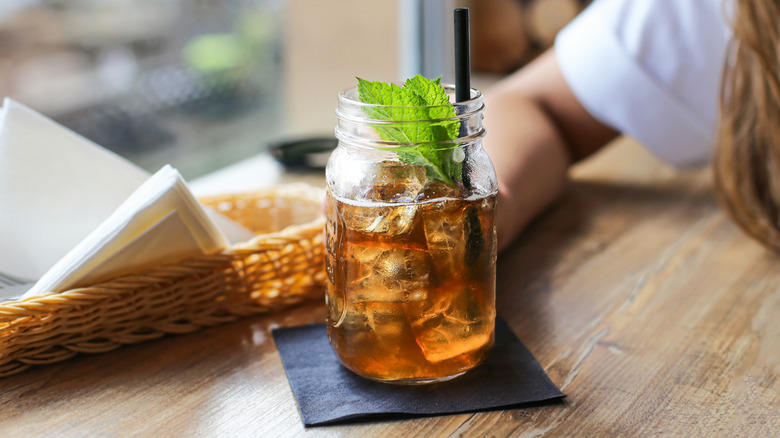
Paper goods — a broad category that includes cocktail napkins, stirring utensils, and straws — are the last thing that you want to forget about when you're entertaining, and the same can be said about your home bar. "Related to garnishes, I think cocktail picks are good to have on hand as an accessory because they can help anchor or keep your garnish in place in your glass," says Camille Wilson. Aside from serving, even keeping a roll of paper towels on hand, per Yu Jiang Zhao's suggestion, can make your life easier.
"These small touches make a home bar feel considered rather than improvised," says Sanwar Mal Khokhar. "These elements do not affect the liquid directly but they shape the overall drinking experience. A well prepared bar feels intentional from the [first touch], not just the first sip."