

The Lesser-Known Italian Herb That Adds Flavors Of Basil, Mint, And Oregano All In One
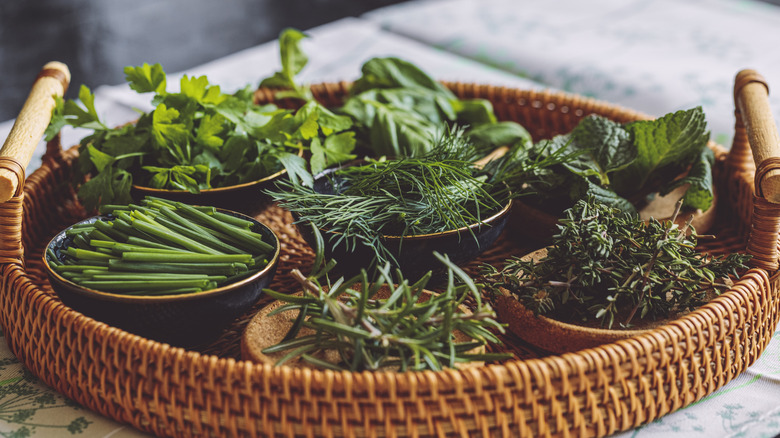
Herbs let you season your food in creative and delicious ways, bringing intricate nuances and depths of flavor to otherwise basic dishes. And there are so many at your disposal that there are probably at least a few that you may not have even heard of, like nepitella. This crafty herb, which is as aromatic as it is delicious, hails from Italy and combines the flavors of oregano, basil, and mint all in one small package. Some would even add licorice and thyme to that list, making it a powerhouse ingredient that is common in Italian cuisine but virtually unknown in North America.
You're probably quite familiar with popular Italian herbs like various types of oregano, basil, and mint, so being able to get them all in one herb gives you a great shortcut for cooking. Also known as calamint or lesser calamint, it's a member of the mint family and has traditionally been used in Tuscan dishes that feature mushroom and artichoke. From stuffed mushrooms and braised artichokes to pasta dishes that need a boost, nepitella brings a touch of Italian flavor to your cooking. The combination of flavors that this single herb produces also works particularly well with fatty meats, so it is not surprising that it is making its way into American farmers markets and gardens.
Nepitella is a historic addition to your herb garden
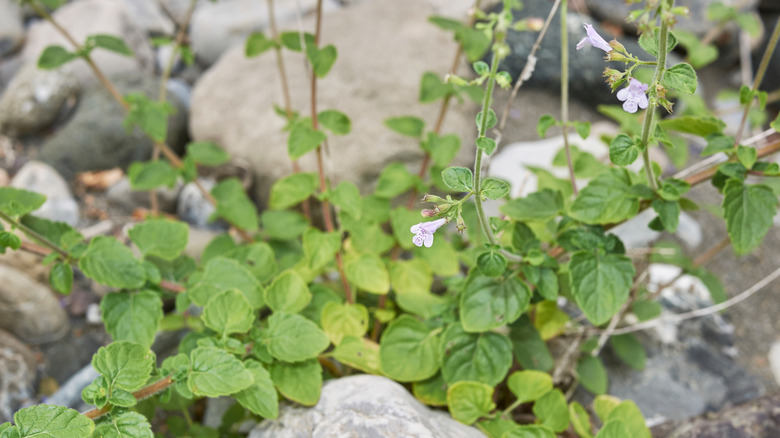
Nepitella may not be easy to find in your local grocery store, but you can easily grow it yourself from seeds, whether you have an outdoor patch or an indoor herb garden. In Italy, where the climate is somewhat dry and arid, the herb grows wild, which helps explain why nepitella is so easy to grow — it just needs soil with good drainage and plenty of light.
Oregano, mint, and basil are some of the easiest herbs to grow in a summer garden, so nepitella is a simple addition, but since it tastes like all three, you can simply replace them all with this one herb. It grows in and produces delicate little purple flowers that attract pollinators like bees, so it not only makes a beautiful addition to your herb garden but also a beneficial one. And those little flowers are also edible, so if you like to add a touch of colorful edible garnish to your food, growing fresh nepitella gives you a splash of light purple at the ready.
Nepitella might still be relatively new to your culinary toolbox but it has been around for centuries, although its uses haven't always focused on creating delicious recipes. In the medieval times it was popular for its medicinal benefits as it was believed to treat insomnia and digestive problems. Thankfully, it has managed to stick around throughout the ages so that modern chefs can turn nepitella's bouquet of flavors into amazing recipes.