

Love Jack Daniel's? Thank This 80-Year-Old Yeast Culture
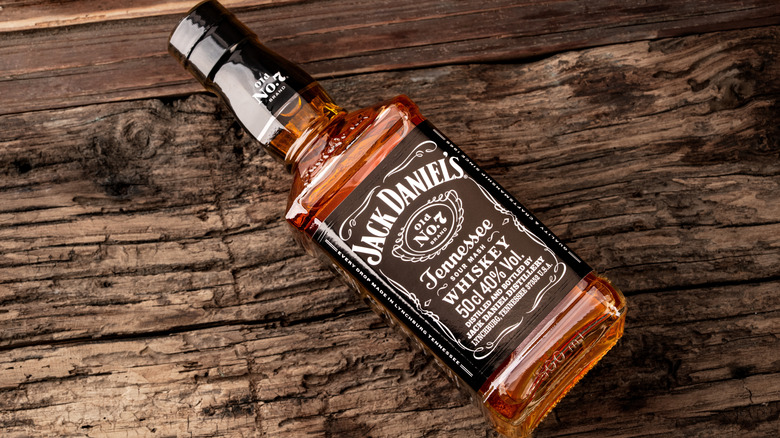
There are several factors involved in creating the specific combination of flavors that make Jack Daniel's Tennessee Whiskey so recognizable to its fans, like the brand's new charred white oak barrels that the liquid sits in during its aging journey, and the mash bill made up of 80% corn, 12% barley, and 8% rye. Even the water, sourced from nearby Cave Spring Hollow in Lynchburg, plays its part. Then there's the yeast. Yes, the proprietary yeast strain the distillery uses in its whiskey is crucial in developing the fruity, banana-meets-pear tasting notes that Jack Daniel's is known for.
Unlike many distilleries that rely on commercial yeast, Jack Daniel's uses a yeast strain that was first harvested locally. Not only is it native to the area, but it's also more than 80 years old, dating back to when the distillery resumed making whiskey in 1938 following the end of Prohibition. A microbiologist oversees this special yeast that helps produce those distinctive flavor notes. During fermentation, the yeast converts sugars into alcohol and carbon dioxide, with the resulting wash containing various compounds including esters such as Isoamyl acetate, which has that banana and pear-like flavor.
How yeast affects whiskey's taste
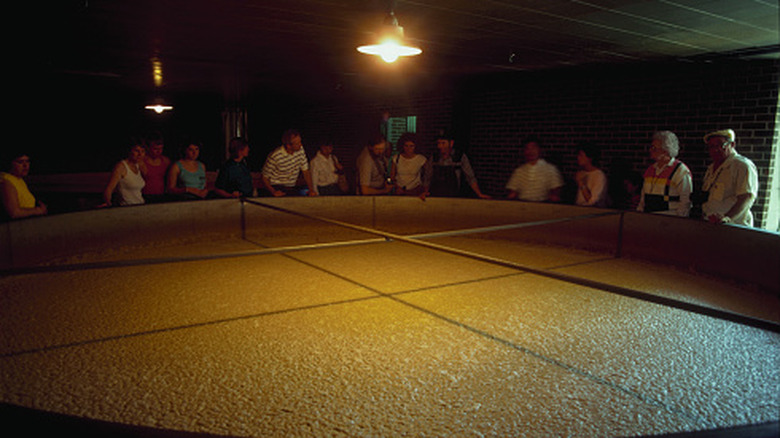
Yeast is a living, single-celled organism, a fungus that in the whiskey-making process converts the sugars in the wort — the liquid left from a mixture of milled and malted grains and hot water — into alcohol. During this process, the yeast also produces amino acids that will later become esters, such as Isoamyl acetate, with the distinctive flavors carried through into the finished product (other esters are also produced during the maturation process). At Jack Daniel's, the distillery uses the sour mash process in which part of the acidic spent mash (or backset) from the previous batch of whiskey is added to the new one, helping to prevent wild yeast from entering, among other advantages.
Sour mashing also helps with consistency, since yeast is still present in the backset. That's just one of many ways Jack Daniel's is able to produce a whiskey that tastes the same batch after batch. Another involves various processes that help keep that very old yeast strain consistent over decades. And while there are other whiskeys to try that have similar taste profiles to Jack Daniel's, it remains singular, thanks in part to its more than 80-year-old yeast strain.