

The Popular Fish You're Better Off Avoiding Due To Severe Overfishing
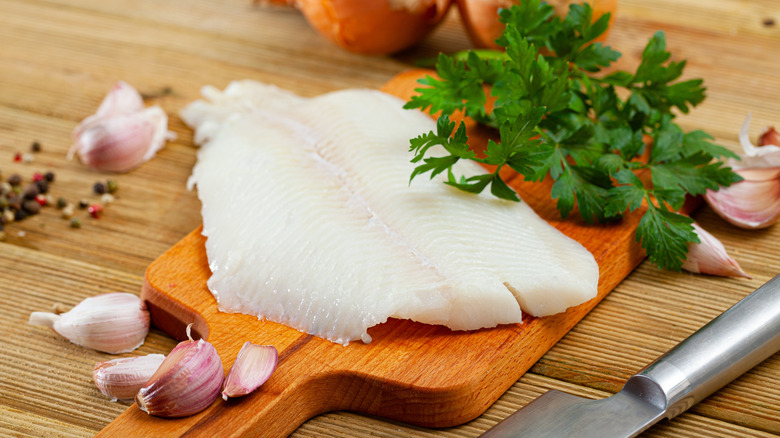
Atlantic halibut is considered a fancy fish: With a mild taste, a hint of sweetness, and a firm texture, you'll often find it on the menu at higher-end restaurants, or generally with a higher price tag if you're looking to buy some to cook at home. But even if price isn't a concern for you, there's a good reason to avoid it: The number of Atlantic halibut in the wild has dwindled (although farmed versions are generally a more sustainable option).
The U.S. government's National Oceanic and Atmospheric Administration considers wild Atlantic halibut to be overfished, while the Monterey Bay Aquarium's Seafood Watch program put it on a list of fish to avoid eating. The problems go back over a century: Some 200 years ago, the fish was considered a nuisance for New England and Maritime Canadian fishers, but that changed in the late 1800s. Atlantic halibut became popular in both Europe and North America, and throughout the 1900s, the fish's population (usually off the eastern U.S. and Canadian coasts) plummeted. In 2010, its population was just 10% of what it was in the 1960s (via CBC).
Halibut can grow to be seriously large fish: The average catch is around 24 pounds and fish over 400 pounds aren't unheard of. But getting big takes them time: Female halibut need ten years just to hit sexual maturity, so if they're getting fished out before that point, they're not reproducing, making it difficult for them to repopulate.
The problems with overfishing, and some alternatives
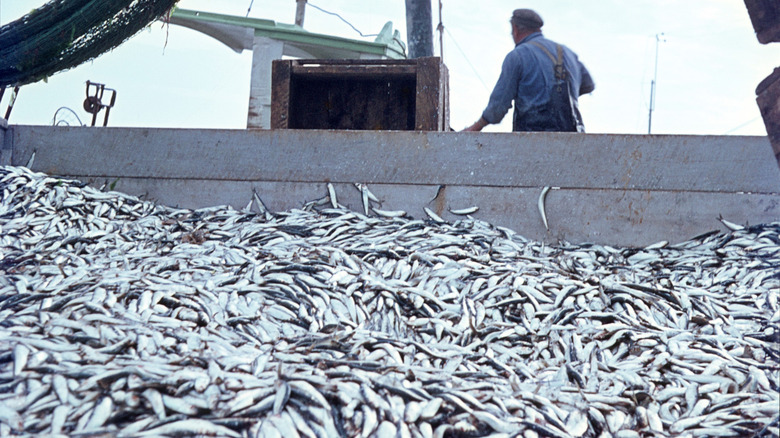
The problems with overfishing go beyond just one type of fish becoming hard to find or even risking extinction. The drastic reduction in population of one fish can have knock-on effects on ecosystems: Other fish that rely on the overfished species can in turn become endangered, or certain fish or plants can overpopulate, as they would normally be eaten by the overfished species. It can also impact people who rely on fishing, causing job losses in the fishing industry and even obliterating communities — when cod were overfished in eastern Canada in the '90s, communities in Newfoundland were torn apart by job losses and economic failure.
So, needless to say, eating an overfished species is perhaps not the most responsible dining decision you can make. (Yes, some argue that Atlantic halibut numbers are recovering, but there's also no shortage of sources saying they're still overfished.)
The good news is that there are alternatives. Arguably the closest option is Pacific halibut: Some say it tastes a bit less fishy, while others suggest the differences are negligible. (And importantly, it's not overfished.) Cod is another good bet, although it has a stronger taste and more flaky texture, which can make some types of cooking more difficult. Haddock is also a decent alternative (and great for fish and chips), with a similar sweetness, although it's also flakier.