

The Common Belief About Cooking With Alcohol That's Actually Wrong
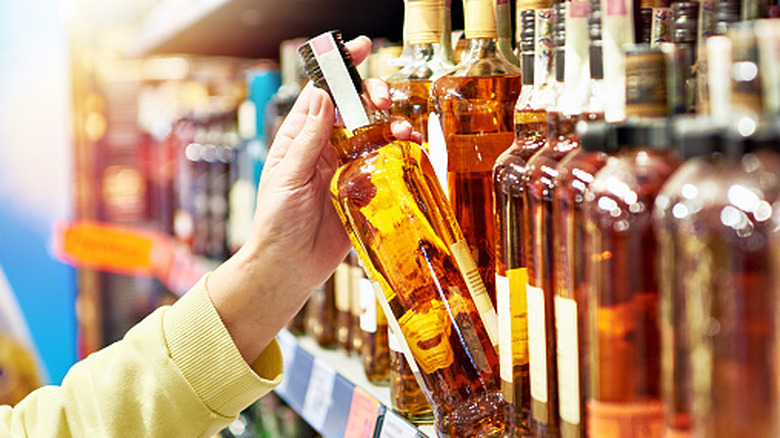
Whether you're using alcohol for baking, sautéing, broiling, or making a sauce, one common cooking myth is that alcohol cooks off; it doesn't, at least not entirely. This is important to know if you're avoiding or limiting alcohol for any reason. Depending on the heat level, cooking utensils, recipe ingredients, and time heated, between 5% and 85% (or more) can remain in your food, according to a study produced by the USDA. This is because alcohol evaporates. Alcohol's boiling point is 173 degrees Fahrenheit, so though it evaporates faster than water, some will stay in your recipe.
The size of your pan affects how much alcohol stays in your dish when you add heat. Larger pans provide more surface area for evaporation, meaning less alcohol remains, while smaller pans tend to retain more. Another factor is the type of spirit you're using and its ABV, or alcohol by volume. While alcohol itself evaporates at the same rate, cooking with a lower-ABV beverage results in less alcohol overall, whereas higher-ABV spirits can leave more behind in your dish.
How cooking with alcohol impacts your recipes
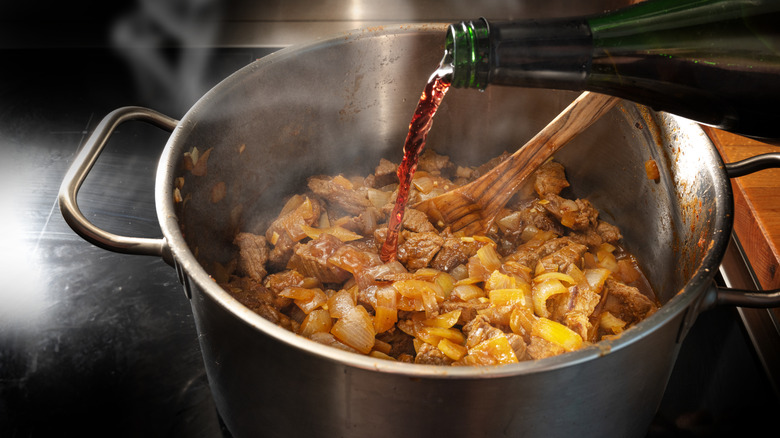
Stirring alcohol into hot liquid when making sauces preserves the highest amount, around 85%, while flambéed dishes like cherries jubilee or baked Alaska retain about 75%. There are also many baked goods that can be infused with liquor to add complexity and depth. For example, rum can enhance banana bread by highlighting its fruity notes, while bourbon or whisky can deepen the spice profile of pecan pie. When baking with alcohol mixed into the batter, the amount that remains depends largely on cooking time. A dish cooked or simmered for about 15 minutes may retain around 40% of its alcohol, while extending the cooking time to an hour can reduce that to about 25%.
One of the key tips when cooking with wine, especially for stews or long-simmered dishes, is to add it at the beginning of the cooking process. This allows more time for the alcohol to evaporate, helps prevent astringent flavors, and typically leaves only about 5% of the alcohol behind.
Cooking with alcohol in a slow cooker can work a little differently. Because the lid traps steam and condensation, evaporated alcohol can drip back into the dish. For best results, it's often recommended to finish cooking with the lid off so excess alcohol can continue to cook off while the flavors develop. If you prefer to avoid alcohol entirely, non-alcoholic spirits, acidic juices, or vinegar can be effective substitutes for adding depth and brightness to recipes.