

Don't Skimp On This Ingredient If You Want Restaurant-Quality Fried Rice
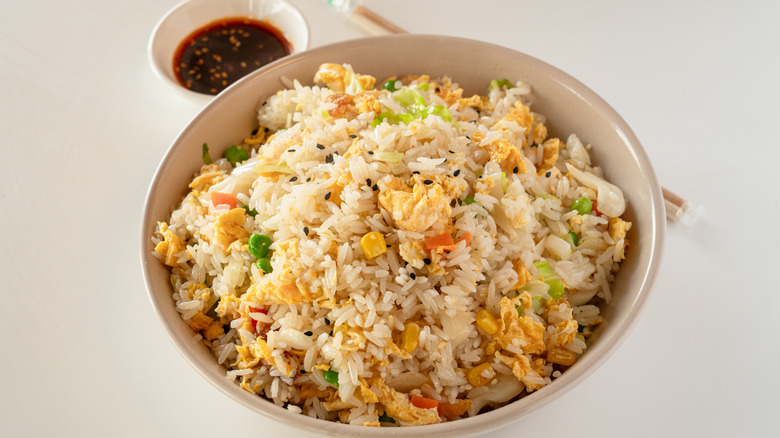
Whipping up a simple fried rice dish seems easy enough to do in your own kitchen. But have you ever tried recreating the same one you've had at a restaurant, only for it to fall short? To make restaurant-worthy fried rice, don't skip this simple mix-in trick: Make sure you add enough oil. After all, it's called fried rice for a reason, so you need this addition to really make a successful batch. Adding enough oil also ensures that nothing sticks to the pan, while giving the rice a seared finish that enhances its mouthfeel. Oil can also help cook all the ingredients uniformly while speeding up the cooking time. If you make fried rice using little-to-no oil, the result would be similar to overly-soft steamed rice, which is the complete opposite of what you'd want.
The sweet spot for how much oil to introduce is around 3 tablespoons per 2 cups of rice. If you go overboard, the outcome will be overly greasy, which can overwhelm the dish and eclipse other ingredients. A great fried rice is balanced but distinct, aromatic, and flavorful.
The type of oil you use in your fried rice can also make or break the dish because some add flavor, and some have smoke points that might not be compatible with your cooking method (smoke points are a big deal in cooking, after all). So before pouring just any kind of oil into the rice, know which one works best for what you're looking for.
What type of oil works best for fried rice?
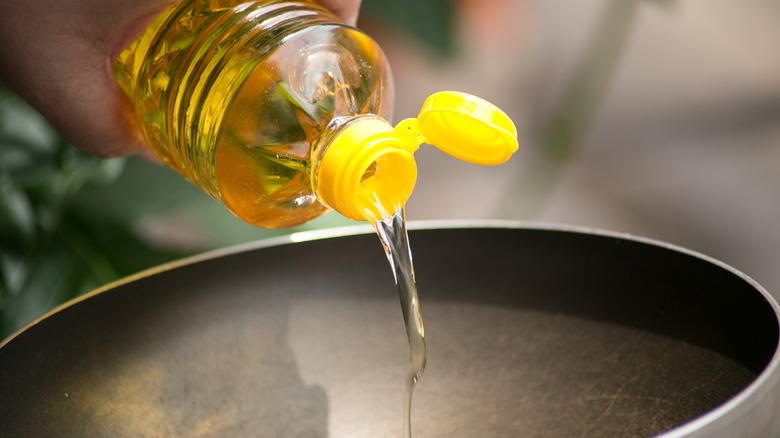
Alongside choosing the best type of rice for fried rice, selecting the right type of oil also plays a huge role in how fried rice turns out — especially if you want it to taste like it came from a restaurant. Usually, oil with a high smoke point is preferred to achieve ideal smokiness in the finished dish. It should also have a neutral taste, so something like olive oil is a no-go if you don't want hints of fruitiness throwing off your fried rice. Avocado oil, which has a 520 degree Fahrenheit smoke point, can work beautifully with its subtle taste. Grapeseed oil, rice bran oil, and even refined vegetable oil also meet the criteria.
That said, when done right, using a non-neutral cooking oil is also possible. It can even make your fried rice better, depending on your weapon of choice. Refined peanut oil, which is known for its nutty flavor, can complement your fried rice, especially if you're creating something Asian-inspired. You can even layer oil for added flavor. For instance, if you want fried rice to taste like something out of a Chinese restaurant, you'd want to use sesame oil. But since it has a low smoke point, it's best added last. Instead, adding a layer of neutral oil beforehand should do the trick, and you might just make the best fried rice you've ever eaten.