

This Wax Paper Move Keeps Stainless Steel Cleaner Longer

For several decades now, stainless steel has remained a popular finish for kitchen appliances. Not only does it make your space look sleek and polished, it's also durable and not prone to developing rust (knowing how to clean rust from a stainless steel sink is still valuable knowledge). However, anyone who's used a kitchen fully loaded with stainless steel appliances will tell you that its shiny finish lasts for about 0.02 seconds before someone touches it and it becomes smudged with handprints, fingerprints, and even the odd paw print if you have curious pets.
While stainless steel's smooth surface makes these smudges fairly easy to wipe away, they often seem to reappear almost instantly, meaning you either have to embrace the mess or spend all day wiping down your fridge, stove, and dishwasher. Luckily, you can also opt for the secret third option — rubbing your appliances with a ball of ordinary waxed paper. In the world of tips and tricks for cleaning stainless steel, this is among the easiest ways to polish your appliances and make that shine last until the next deep clean.
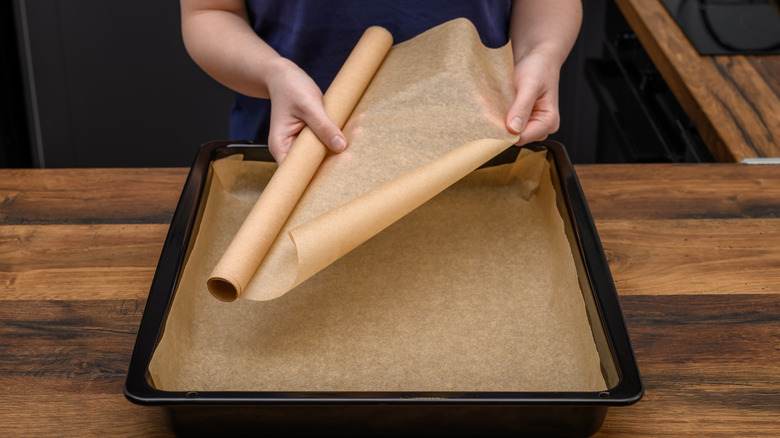
Working quickly in small sections, simply use a crumpled handful of wax paper to buff your appliances after you've cleaned them, rubbing until the surface looks polished and shiny all over. The wax paper leaves a very thin film of wax behind, acting as a barrier between oily fingers and the stainless steel, helping to repel stains from food and spills as well.
Maintaining that streak-free shine the right way
One key factor in mastering this hack is to ensure the surface you're buffing is clean before you start. Since it can be prone to scratching, it's important to avoid wiping down stainless steel with paper towels as the rough fibers can damage your appliances, which can lead to corrosion. The waxy film should help prevent rust by causing water to bead and roll off, but it can't repair scratches, which will only get worse over time. Instead, you'll want to opt for microfiber cloths, which are typically lint-free and not at all abrasive.
It's also best to avoid acidic or abrasive cleaning products, like vinegar or baking soda paste. Ordinary, gentle dish soap mixed with hot water should be strong enough to remove surface grime without damaging the finish or leaving a cloudy residue. Using warm water will also help melt and remove the previous wax film, leaving a squeaky clean surface for you to apply a new one. Applying one layer of wax over another is a bad idea, as waxy buildup can dull shine and attract dust and dirt over time.
Of course, if you don't happen to have wax paper on hand, you can also apply a thin layer of olive oil to protect stainless steel from smudges, or even a touch of WD-40. Be careful when using the latter, as it can make your kitchen smell like an auto repair shop if you use too much of it.