

4 Cleaning Tips And Tricks For Stainless Steel That Shines

Look around your kitchen — what do you see? A fridge, an oven, a microwave. More than likely, at least one of these items is made with stainless steel. Ree Drummond even chose stainless steel for her kitchen island. This shiny, durable material made from rust-resistant iron alloys has become a staple finish in kitchens, and for good reason. It has a modern-yet-classic feel, goes with almost any kitchen decor style, and it's a great material to use for cooking.
It's also a bit difficult to keep clean, and not as stain-resistant as its name implies. In fact, stainless steel can be a mark magnet, picking up smudges from fingerprints and splashes of food and drink, all of which can mess up that perfectly glossed metallic finish. Thankfully, as with most anything in life, there are a few key pointers for cleaning your stainless steel. For example, using the wrong cleaner or scrubber can result in splotches — or worse, damage that permanently alters your stainless steel's finish. With this in mind, we've gathered a list of the most important tips for cleaning your stainless steel.
Go with the grain
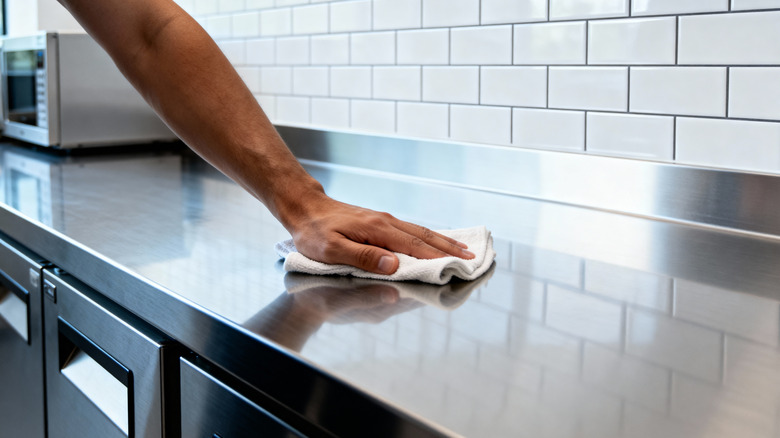
Let's start with the simplest bit of advice: going with — not against — the grain of your stainless steel when cleaning. Like wood, stainless steel has grains, or small lines that run along its surface. These lines can run either horizontally or vertically, and you don't have to worry about them changing direction or getting squiggly on any given piece.
Wiping against the grain can push contaminants, such as dirt or dust, into the surface of your stainless steel, potentially damaging the metal. Work gently, don't scrub aggressively, and move in short motions. You can also buff the surface in circular motions after cleaning to remove excess product.
Use a microfiber cloth
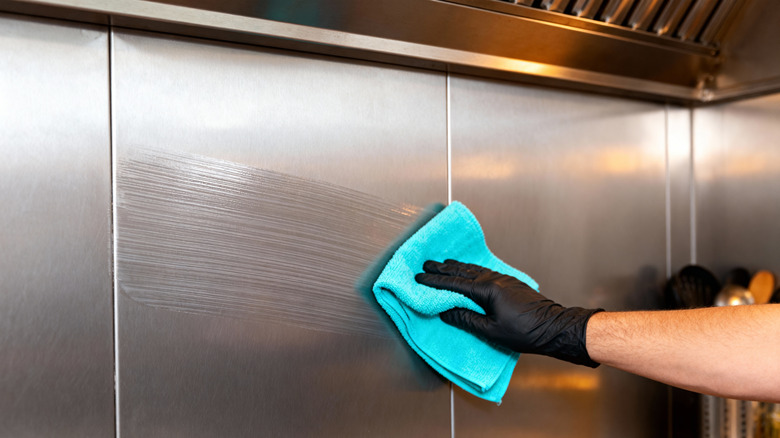
You also need to consider what you use to clean your stainless steel, not just your cleaning method. It's best not to use anything too abrasive, such as steel wool or that go-to Scrub Daddy you might have in your cleaning kit. These items can scratch the surface of your stainless steel, causing irreparable damage. You should also avoid paper towels, which can leave small fibers that mess up the surface of your stainless steel.
Instead, use a softer fabric, such as fine jersey cloth or lint-free cotton. However, if you're looking for a truly lint-free, even cleaning experience, go for microfiber. Since microfiber is made with ultra-fine synthetic fibers, it's less likely to leave stray fibers on the surface and won't scratch or damage it. Plus, its fine fibers make it super absorbent, which means you don't leave behind any damaging moisture. You can also use your microfiber to clean off dust or combine it with a cleaning spray for more intense work.
Be mindful of your cleaner
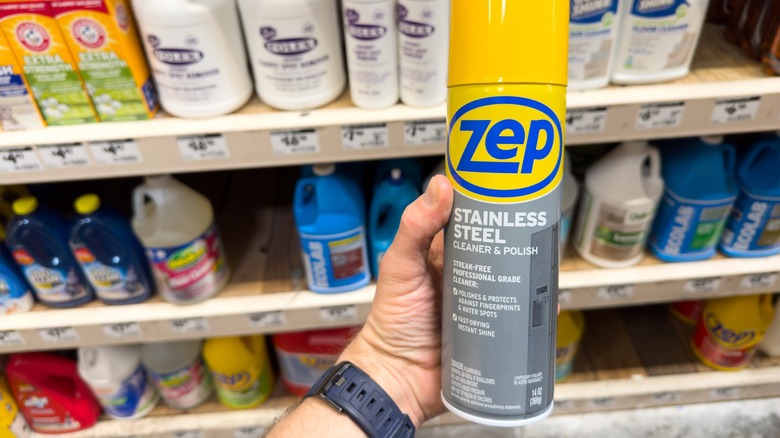
While tools are an important part of stainless steel care, choosing the right cleaner can make the difference between a shiny surface and a smudged mess. Luckily, there are specialized stainless steel cleaners. These often contain alcohol to clean the surface, as well as ingredients that can help prevent corrosion.
If you don't feel like purchasing a specialized cleaner, there are other options lurking in your pantry. Simply mix 2 parts water and 1 part white vinegar in a spray bottle, then spray and wipe dry with your microfiber cloth. The vinegar helps remove any buildup on heavily used surfaces. Make sure to fully wipe clean your surface immediately after applying the vinegar-based cleaner since it can damage the surface if left on for too long. For stuck on food, or heavier spots of grime, you can use baking soda mixed with water as a spot cleaner. However, baking soda is abrasive, so its best to only use it as a spot cleaner.
Polish off with oil
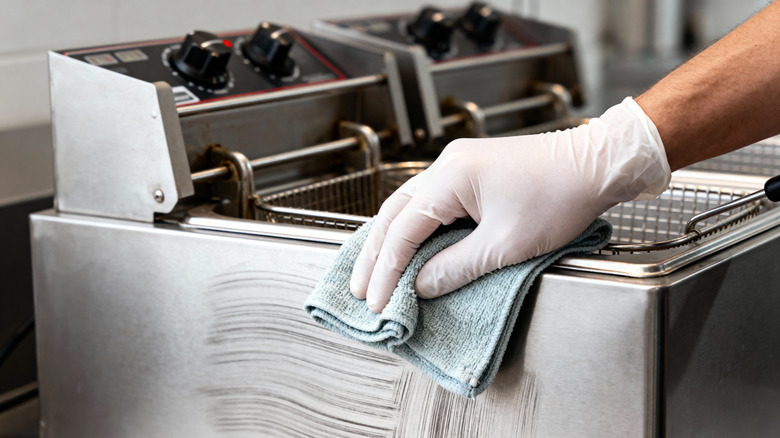
Polishing stainless steel with oil is an essential final step in cleaning since it helps prevent your metal from corroding or rusting. Thankfully, most stainless steel cleaners on the market have mineral oil included in the formula, so further polishing is unnecessary in this case. However, if it doesn't or you're using an alternative cleaner, such as a vinegar solution, oiling is a key final step that brings out the best in your stainless steel. It can also help remove any potentially damaging contaminants from its surface.
Simply dab one or two drops of mineral oil (you don't need a lot) onto a cloth and wipe the clean, dry steel along the grain. You can also use a specialized stainless steel polish in lieu of mineral oil. If you don't want to use commercial polish or mineral oil, there are alternatives. Olive oil, for example, can give your surface a great polish, as can almond oil. Just remember: a little goes a long way, so start with a just a bit dabbed on a cloth.