

3 Reasons To Use A Charcoal Grill Over Gas This BBQ Season
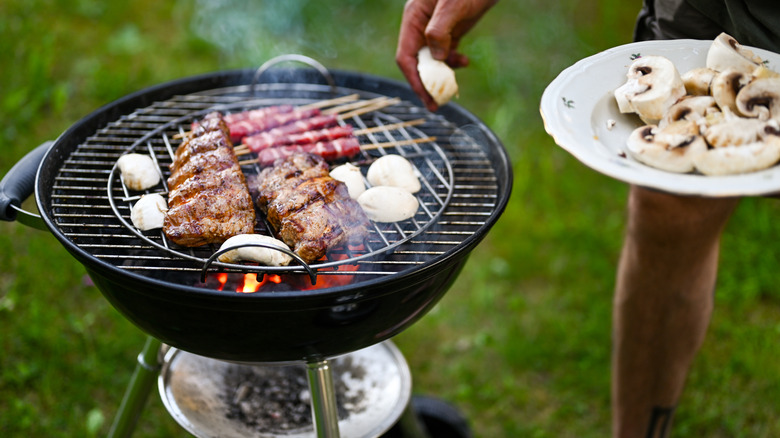
If you're a grilling beginner, it's fair to question the difference between a gas and charcoal grill. When it comes to the best barbecued meats, your grill has a whole lot to do with it — texture, flavor, and sear are all impacted by the type of grill you use. For the best results in all three of these categories, skip the gas grill and opt to cook those meats and veggies over charcoal this summer.
While there are ways to get that melt-in-your-mouth texture from either grill, the flavor from a gas grill doesn't quite cut it. And when you picture that perfect sear, we'll let you in on a secret: You'll want to use charcoal. Another main difference between the two comes down to cost, with charcoal edging out gas up front. Of course, the final decision depends on personal preference, how often you use your grill, and what level of convenience you're looking for (spoiler alert: Gas grills win on convenience), but there are a handful of reasons why you should opt for a charcoal grill for this summer's best barbecue experience.
Charcoal grills are less expensive to purchase
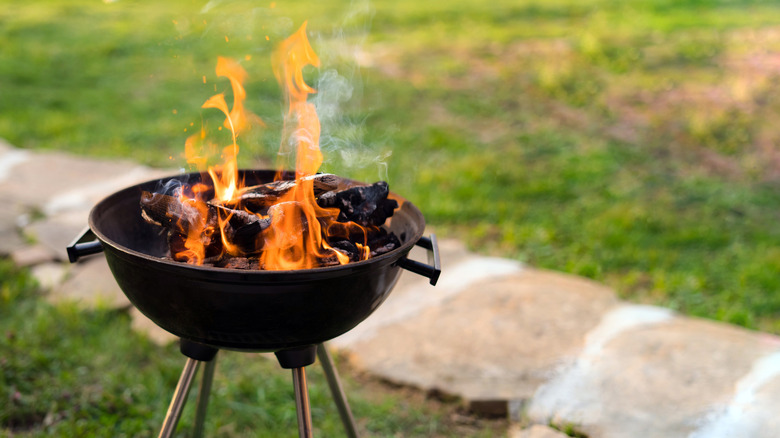
You can find a gas grill within any budget, but if you want a good, long-lasting grill, expect to pay more upfront for gas. Most of the top-selling charcoal grills at Home Depot, for example, fall in the $150 to $250 range (with some costing even less), while most of the top-selling gas options land somewhere between $250 and $550.
Charcoal grills are less expensive to purchase because, generally speaking, they're less complex. Gas grills have pricier components to them — even just the stainless-steel exterior of a large gas grill adds to its cost, as do the elements that allow it to be powered on and emit flames. Charcoal grills are more basic, but one thing to keep in mind is the long-term cost of running either grill. Gas grills will be fairly cheap to maintain as long as gas prices are low, whereas it can cost more to continuously purchase charcoal. Pricewise, the biggest benefit of a charcoal grill is the lower initial investment.
Charcoal grills build more flavor
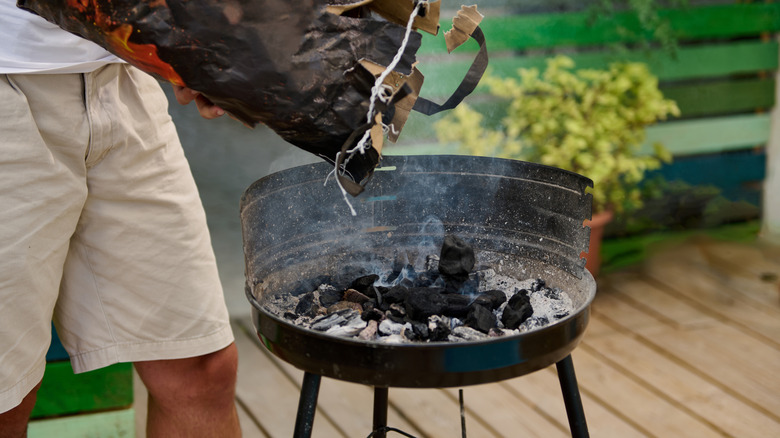
Another major benefit to using a charcoal grill this summer is the flavor it adds to anything you're cooking. When you cook over charcoal, you're not cooking over a gas-made flame, which could impart the same neutral flavor as cooking on your stove. Rather, you're cooking over hot coals, so natural fire and smoke build flavor as they rise up from beneath the grates. The longer the food sits on those grates and absorbs that smoky flavor, the greater impact it will have on the final taste of your grilled meat or veggies.
When cooking on a gas grill, you'll get more of that natural food flavor. That's not necessarily a bad thing, but for a true, authentic barbecue taste, choose charcoal. There are different types of charcoal you can buy depending on your grilling needs, and most charcoal grills allow you to use wood chips, meaning you have more diversity when it comes to what type of flavor you want your meat to take on. (In addition to charcoal, you can build hickory-smoked or mesquite-infused flavor, for example.) Though you can turn any grill into a smoker.
You'll get a better sear with a charcoal grill
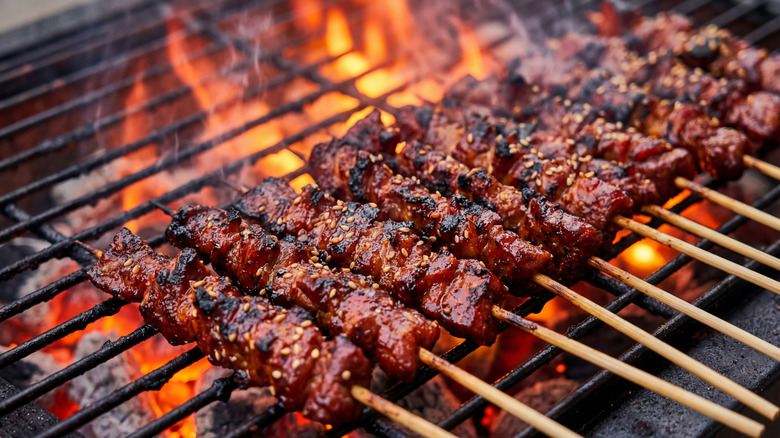
If you're looking for a superior sear on your steak or true blackened grill marks on your chicken, then charcoal is your best choice. That's because, temperature-wise, you'll have a much greater range with a charcoal grill. For all intents and purposes, you can set a charcoal grill to almost any temperature you want. This means that, when you want a perfect sear, you can set the charcoal grill temperature to as high as about 1,200 degrees Fahrenheit, whereas gas grills tend to top out at about 700 degrees Fahrenheit. Charcoal grills come with vents you can adjust for how much oxygen the flames get. (The less oxygen, the smaller the flame, so you can also set the temperature as low as you want.)
Charcoal's ability to provide higher and more direct heat is a big reason why it can sear the exterior of your barbecued meats better than a gas grill. And thanks to charcoal's diversity in temperature settings, if you want something to cook low and slow, charcoal is also a better alternative to gas — it's easier to stack coals and pinpoint heat to cook meats directly or indirectly.
The biggest downside to charcoal grilling: inconvenience
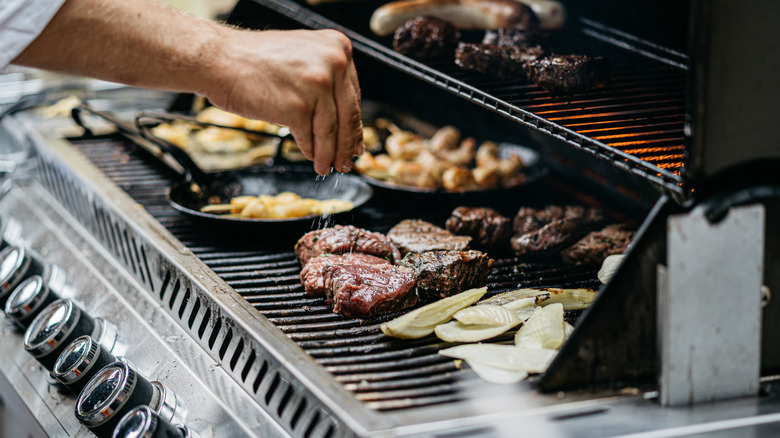
If you want a grill that has a lower upfront cost, builds bigger flavor through true smoke, and has a greater temperature range, then a charcoal grill is your best bet. With that said, it's only fair to mention the one main downside to using charcoal, and most people with grilling experience can attest: It's just not as convenient. Gas is great for cooking foods quickly. It's easy to maintain its temperature and takes no more than 10 minutes to heat and cool, while charcoal can take closer to 30 minutes. And as long as you have gas, you can just power the grill on and off rather than spend time loading the coals just right.
People took to Reddit to debate whether gas or charcoal was better for grilling, and while many people were pro-charcoal, few argued it was easier to use and maintain a gas grill. "I'm pro charcoal and have a kettle, but I don't agree when people try and say charcoal is as convenient. It just isn't. I have a gas grill I use occasionally too. I walked outside and press a button," one Redditor wrote. Another user echoed the same, "Charcoal feels more 'authentic,' but gas just wins on convenience, especially if you're grilling 3–4x a week." Ultimately, the choice comes down to personal preference, but for a true barbecue flavor and experience, it's hard to beat a charcoal grill.