

Cafeterias Were Once A Southern Staple For Families And Communities. What Happened To Them?

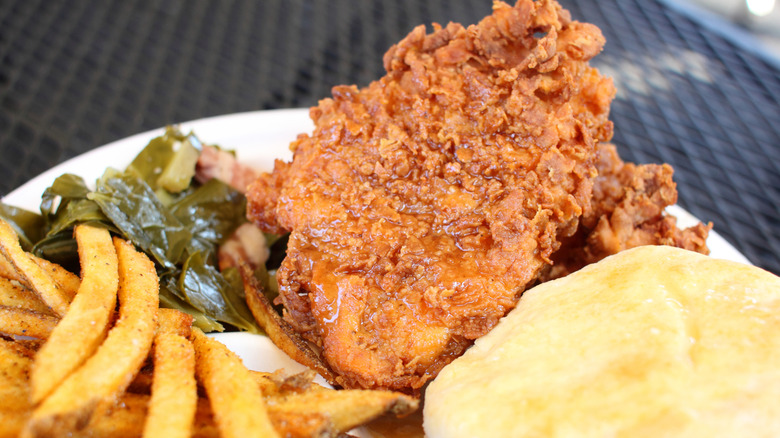
For many people in the American South, cafeterias were once a part of daily life. They were places where people gathered to choose from regional fare like fried chicken, stewed greens, and cornbread. Food was served on trays, quick but not rushed, and you could enjoy a hearty meal without a big bill attached. At their peak in the mid-20th century, cafeterias offered a more homestyle and affordable alternative to full-service restaurants.
Cafeterias sold familiar foods day after day, which meant a lot in a part of the world where identity and tradition are so wrapped up in what you eat; many of the dishes you'd eat in a cafeteria spoke to a larger story about the history of soul food in Southern America. Some beloved Southern establishments like K&W Cafeteria have now closed, though others like Luby's in Texas still remain despite the cafeteria model struggling to keep up with changes in dining habits since the late 20th century.
Why cafeterias started to disappear
While the decline in cafeterias didn't all happen at once, there has been an undeniable shift in the last few decades. Cafeterias began facing increased competition from fast-food chains as early as the 1960s before suffering from the rise of fast-casual chains in the 1990s. Diners began to prefer the speed and convenience these establishments offered. Seeing their numbers drop, and wanting to remain profitable, many cafeterias switched to serving frozen and canned food to lower their costs, which only cost them customers in the long run as people could taste the difference in quality.
There's also something to be said for cultural shifts. While traditional Southern dishes remain well-loved, the way people engage with them has likely changed. Younger diners are more likely to seek out international cuisine or fusion menus. Plus you could argue that people may now simply decide to make dishes like Southern fried cabbage at home instead. While cafeterias haven't disappeared entirely from the American South, their presence has shifted from a common, everyday food option to more of a reminder of a different era.