

The Most Important Questions To Ask Your Fishmonger, According To Andrew Zimmern

Where you source seafood is important if you want guaranteed freshness, but the questions that you raise to the fishmonger can also be quite telling. When Chowhound exclusively spoke with Andrew Zimmern on his best tips for buying fish at the grocery store, he mentioned clarifying before buying: "'When did this arrive?' 'Was it previously frozen?' 'Where was it caught and how?' If they can't answer those, they don't deserve your dollars." Asking them a thing or two shouldn't be an issue (if you're worried about that), and in fact, they usually welcome it. "It's their chance to brag," Zimmern said. This also builds rapport with your fishmonger, which can be helpful, especially if you buy seafood often. They might give you better deals, share insider knowledge, and even grant you dibs on freshly caught seafood.
It can also be helpful if you know exactly what you're looking for, so they can guide you in choosing more wisely, but that's not entirely a requirement. You can leave it all to them and ask for some recommendations. You can even clue them in on what you're planning on having for dinner, so they can point you in the right direction. But of course, asking your fishmonger specific questions is just one side of it. You also need to know what answers to expect, so you can purchase the best bang for your buck.
Things you'd want to hear from your fishmonger
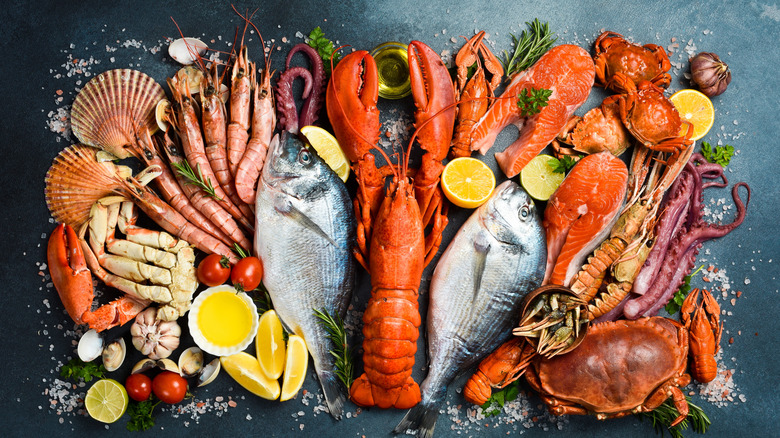
Upon asking the fishmonger when the fresh, never-frozen fish arrived, a good answer would be not more than one to two days ago to be sure it's still good to go. However, if it's frozen seafood, it can last for two to eight months in the freezer, depending on the type of seafood. According to the FDA, it's six to eight months for lean fish and three to six months for shrimp and scallops. That said, the quality will still deteriorate over time, so you might sense changes in taste, texture, succulence, and appearance even if it was frozen. Also keep in mind that a lot of fresh fish is actually previously frozen and thawed, which is why frozen fish can be superior to fresh (hence why you should ask your fishmonger if the fish was previously frozen).
The day of the week is also a great indicator of its freshness; the best days to buy fresh fish at the grocery store are also the busiest, specifically Thursday to Sunday. If there's a quick turnover of products, it's more likely you'll get something fresh. It can vary from one place to another, though, so you're welcome to ask the fishmonger for further details.
If asking when the seafood was caught and how, you'd want it to be caught somewhere not too far away, and it's also good to check whether it was ethically sourced. Traceable seafood can be safer — as issues like contamination can be closely monitored — and it's more sustainable, too, which can help future seafood lovers enjoy it just as much as we do now.