

Think Twice About Cleaning Your Stovetops With This Abrasive Method
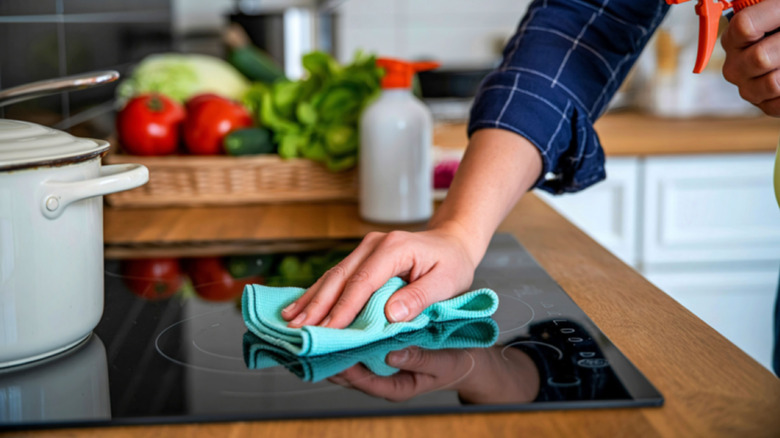
In any household that prioritizes warm, home-cooked meals, the kitchen is the room that sees the most action. Stovetops especially need constant, thorough cleaning, but that doesn't mean an abrasive method can get the job done spotlessly. Chowhound exclusively spoke with Derek Christian, the chief cleaning officer of All Star Cleaning, to find out the dos and don'ts of cleaning with a pumice stone and things to consider before reaching for one.
For burnt-on stovetop stains, Christian said, "Pumice stones are the last thing we try. Manually scouring something is always dangerous, as there may be something in the burnt-on mess which could scratch the surface." Instead, he suggested an alternative: "We start by letting a cleaning agent soak for at least five minutes to give the product time to work. Then we move to scrubbing sponges, blue, then green."
If the stains are still stuck on by the end of it, that's when you can enlist the help of pumice stones. While a pumice stone is an ancient tool that cleans even the grimiest ovens, you might want to hold off on using it for your stovetops to avoid scratching them. To gauge whether your stovetops can handle a pumice stone's rough texture, Christian recommends referencing the Mohs scale and knowing the hardness of the material.
How to clean successfully with a pumice stone
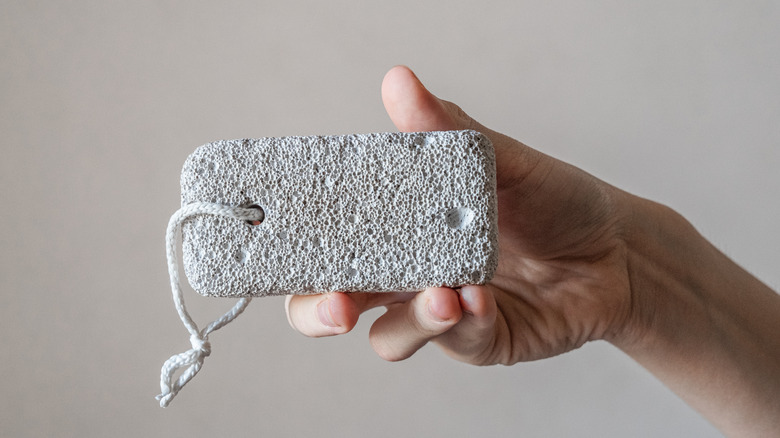
The Mohs hardness scale is used to determine the degree of hardness of minerals and ranks them by scale number. Harder materials, such as diamond and corundum, can scuff those on the lower end of the scale, including fluorite and quartz. This is why, when comparing quartz, marble, and granite, quartz can be the most appealing choice for durability. "Pumice stones have a hardness of 6.0. Enamel and the glass on a stove both have a much higher Mohs rating, so pumice stones are safe to use on it," Derek Christian shared.
It's also important to keep the pumice stone wet while using it for cleaning to minimize the possibility of it scratching your stovetop. Do this by running it under water, and maintain its wetness through any cleaning solution you're using. "It is also important to make sure there is no grit on the surface, as that grit could scratch the surface even if the stone itself will not," Christian added. "The most important thing is to make sure you are working on a safe surface, and you can check that with an internet search on the hardness of the surface you are cleaning. Less than 6, and you should not use it."
Pumice stones have plenty of uses in the kitchen. You can even use this tool instead of a dangerous grill brush, for instance. However, if you still can't tell whether your stovetop is fully scratch-resistant, it's better to leave the pumice stone as a last resort, even if you're scrubbing away at harsh buildup.