

How One Old-School Southern Cooking Method Turns Practically Any Veggie Into A Flavorful Side Dish
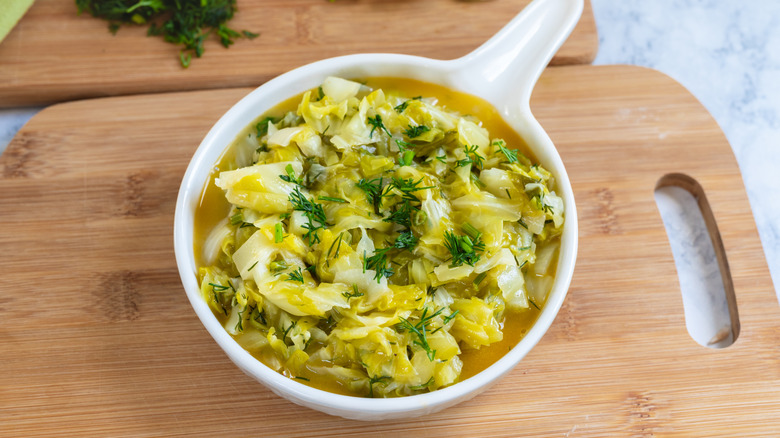
In the American South, vegetables often undergo a cooking process that would shock anyone who's a crunchy crudité purist. Instead of giving veggies a quick blanch or a high-heat roast, many Southern recipes call for a long, slow cooking method called stewing that involves plenty of liquid over a low heat. Historically, these types of cooking techniques were employed to soften tough greens and starchy legumes so that these less traditionally desirable vegetables could feed many mouths. Cooking vegetables low and slow leaves behind what is known as "pot liquor" or "potlikker," a flavorsome broth that is arguably the best part of the meal, especially when you soak it up with a piece of cornbread.
Many recipes will start with a fat source, and while this would traditionally be bacon, salt pork, or ham hock, you can also use butter or oil to adapt to your own requirements. Once the fat has rendered, add water or broth and submerge the vegetables for as long as it takes for them to lose their crunch. The long cooking period turns more bitter plants like cabbage or collard greens mellow and tender.
Perfecting your pot of stewed vegetables
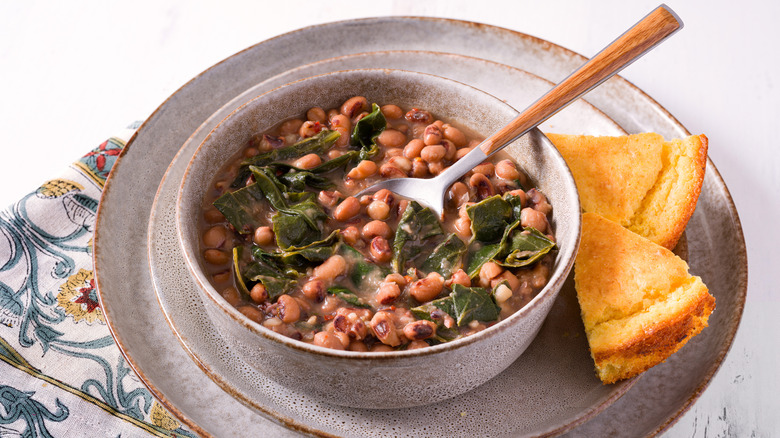
While this is a classic Southern way to make leafy greens like collard greens and kale instantly tastier, the method applies to a surprisingly wide variety of produce. From green beans and tomatoes to okra, and even whatever cabbage is in season, all of these can benefit from a long soak in a seasoned broth. It's actually less about the vegetable in particular and more about giving whatever vegetable you like the time it needs to absorb the smoky notes of the meat (if added) or simply soak in all the herbs and spices of the broth. Depending on the vegetable you're stewing, toward the end of the cooking process, some recipes call for a bit of sugar or a splash of apple cider vinegar to cut through any remaining bitterness.
A successful stewed vegetable dish depends on patience. Some simmer for up to two hours, and you'll need to stick around in case the liquid evaporates so you can add a little splash of water. The resulting vegetables should be soft but not totally disintegrated, full of flavor and much more comforting than just a basic salad.