

Here's How To Choose The Best Live Lobster At Red Lobster
Red Lobster has many great seafood dishes that people order on repeat, but as the name implies, it's known for its lobster. Like many restaurants that serve fresh whole lobster, you can choose your dinner out of the tank, picking the best-looking lobster out of a crowd of crustaceans. You can let the restaurant simply pick for you, but if you know what to look for, you can increase your chances of having a dinner worth remembering by picking the cream of the crop.
To start with, activity is important. Look for a lobster that is lively and active, moving around more than the others. You also want to check out their antennae. If the antennae are nice and long, that's a great sign. If they are short and stubby, that lobster is in trouble. Lobsters will, if hungry enough, eat each other, and a lobster that is missing all or parts of its antennae has probably been in the tank a while and isn't fresh. In other words, missing parts are a dead giveaway to steer clear.
Red Lobster features plenty of lobster on its menu, particularly during the annual Lobsterfest promotion, but despite the 'red' in its name, the lobsters in the tank don't have to be red for you to choose them. The shells naturally range from greenish-brown to greenish-blue, so if the lobsters in the tank fit this color palette, they are likely still very fresh. Dull or slimy shells, on the other hand, could indicate that the lobster has been in the tank far too long, is old, or possibly even ill. Best to steer clear and go for the brighter lobster with long antennae and a fiesty personality.
A few extra tips will help at Red Lobster and beyond
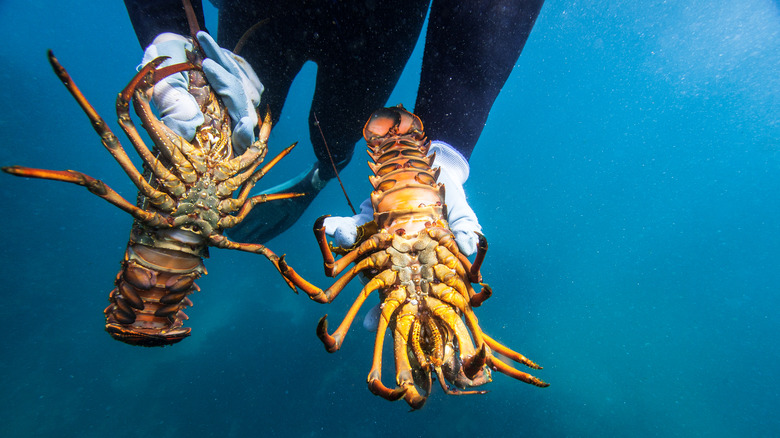
Knowing what to look for isn't just a handy trick for eating out at Red Lobster. If you want to serve up a delicious fresh lobster meal at home, you can use this knowledge when buying lobster at your local grocery store. The concept is the same, since lobster is best when cooked alive. Although it can be frozen and cooked later, there are physiological and chemical reactions that happen when a lobster is cooked alive that give the meat its signature sweetness and tender flesh.
In addition to these reactions, cooking a lobster while it is still alive is key to keeping the shell intact, which helps preserve the juices inside to ensure the meat is tender and succulent. You can carry this over to the lobsters in the tank at Red Lobster. You want a lobster that is juicy, tender, and melts in your mouth like butter, so if you see one with a damaged shell, it's best to avoid it and choose another specimen for your dinner plate.
One last thing to consider is the other lobsters in the tank. While it will be fairly easy to spot the liveliest, friskiest lobsters pretty quickly, you also want to check out the others to decide if maybe you'd rather order the shrimp platter. If you see a lobster that appears to no longer be among the living, you may want to avoid choosing one from the tank altogether. Lobsters are prone to certain bacteria, like vibrio bacteria, which can multiply in the flesh once the lobster dies. Cooking lobster to the proper temperature can mitigate the risk from getting sick from this bacteria, but you may want to avoid the risk altogether.