

'I Ate 10 All At Once': Martha Stewart Can't Stop Eating This Fruit From Her Garden

Martha Stewart's favorite ingredients include standbys like tomatoes and celery, but the chef and media mogul also has a taste for less common produce. One fruit she loves that may not be on your radar is the medlar. Commenting on an Instagram post from her own head gardener, Ryan McCallister, Stewart wrote: "I ate ten all at once." She also wrote about the fruit on her blog, describing its pulpy texture and sweet flavor. The medlar has a notably complex taste, and descriptions of its flavor vary. Stewart compared it to a toffee apple, while others suggest that medlars have elements of citrus, apricot, cinnamon, quince, pear, or even wine.
Medlars were historically popular in Europe, though they've faded in popularity. They're still fairly commonly eaten in areas around where the plant originated, around the Black and Caspian seas in Eastern Europe and western Asia. It's a small fruit, often about 1 inch in diameter (maybe 2 inches for larger varieties). This isn't a fruit you'll pick and eat straight from the tree, as it's hard and bitter when freshly picked. The medlar needs to go through a process called bletting, wherein the fruit's starches start to effectively ferment and sweeten, which gives them a luscious, soft texture and sweetness.
Where to get medlars and what to do with them
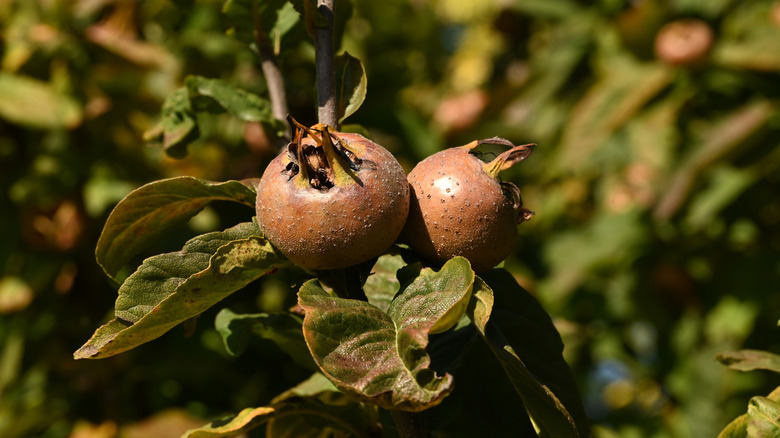
It's pretty easy for Martha Stewart to get her hands on some medlars since she has trees growing them in her own private fruit orchard. However, for the average American consumer, enjoying this rare fruit may be trickier. For gardeners happy to put in the work, medlar trees or seedlings can be found at specialty nurseries; Stewart even sources many of her garden plants from overseas. But if you just want the fruit, you may have to search thoroughly: You could try contacting nurseries that sell the trees to look for leads, or fruit orchards in general.
If you manage to find them, there are a few good options for how to cook (or not cook) them. They're delicious raw, but also work well in jams, jellies, preserves, and fruit cheeses, where their natural pectin helps create structure without much added thickener. Those fruit cheeses, made from juice and pulp thickened and set into a cheese-like block, go well with dairy cheese, especially stronger options like cheddar or blue. They also make a good base for puddings and compotes, or just folded into whipped cream, where their deep, slightly fermented sweetness adds complexity. They're also fairly easy to work with: Because the bletted fruit already has an almost purée-like texture, it can be easily stirred into sauces or spreads.