

The Marble Countertop Myth That's Just Too Good To Be True
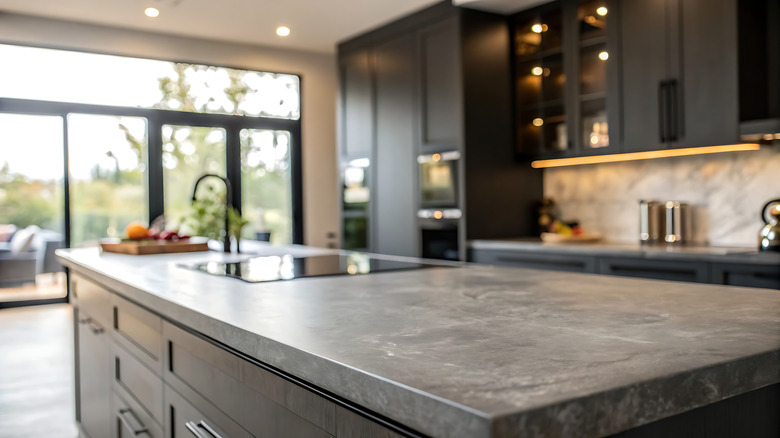
Marble has been a top choice for kitchen countertops for ages. It is stylish, durable, and has solid heat resistance. Despite some unexpected issues you may run into with marble countertops, it's still the countertop material Ina Garten swears by for her kitchen. It's even developed a reputation as a professional pastry chefs favorite, and for good reason. It's just not the reason many believe. And understanding the reality behind marble's popularity for pastry can help you use it more effectively — or save a lot of money on your kitchen remodel if it turns out it's not for you.
Many people, including people who advertise marble, believe marble is naturally cool, making it the perfect surface for pastries that require the ingredients to stay as cold as possible. But its cooling properties are just a myth. Marble isn't a magical cooling device.
As Trung Vu, a pastry and baking arts chef-instructor at New York's Institute of Culinary Education, explains to Chowhound, "Marble is a highly efficient conductor of heat, similar to metal." As with any other object with excellent thermal conductivity, it simply absorbs heat from warmer objects, a job it can't do indefinitely. Marble pulls heat from the dough through heat transfer , which sees heat move from warmer objects to colder objects (but not the other way around). As it absorbs heat, the dough cools slightly, while the marble warms. That's why it feels cold to the touch. It's literally sucking the heat out of your hand. However, marble will eventually warm to the same temperature as the dough and stop helping. Marble can only cool pastry dough if it's cooler than the dough. But you can boost its thermal conductivity power.
Getting the most out of marble in the kitchen comes with a few challenges
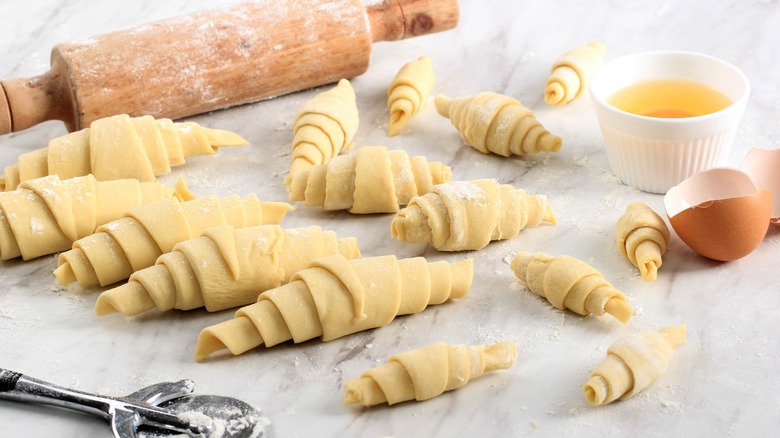
Pastry instructor Trung Vu points out, "Many chefs like to refrigerate or freeze their marble prior to use, and it will make the marble act the way you imagine it will — by remaining cold longer." And a cold marble surface makes working with butter-based doughs much easier, which is essential for achieving those distinct flaky layers and preventing spread. "Marble prolongs the cold-working process, preventing doughs from warming up and becoming difficult to work with," he notes. But room temperature marble won't keep the butter firm long.
So if you have a marble slab, you can chill it. But recipes like pie crust and croissants require large marble slabs (starting at 16-by-20 inches in size) to roll the dough on. And these rarely fit easily in a home freezer. Of course, if you've opted for marble as a bougier alternative to stainless steel countertops, you can't fit that in the freezer at all. You'll have to ice the marble for about 15 minutes prior to use. You can do so by spreading a baking sheet or sealed plastic bags filled with ice over the surface. Marble's density makes it better at staying cold than wood, but it warms up fast, so you'll need to repeat the process. And unless you have a really efficient ice maker, it could be challenging to find enough ice to cover the whole surface completely.
So while marble has its perks (it's nonstick, easy to clean, and unlikely to absorb grease or odors), chilling it isn't very practical — at least not nearly as practical as simply chilling the dough instead.
Keeping the dough chilled is easier than chilling marble
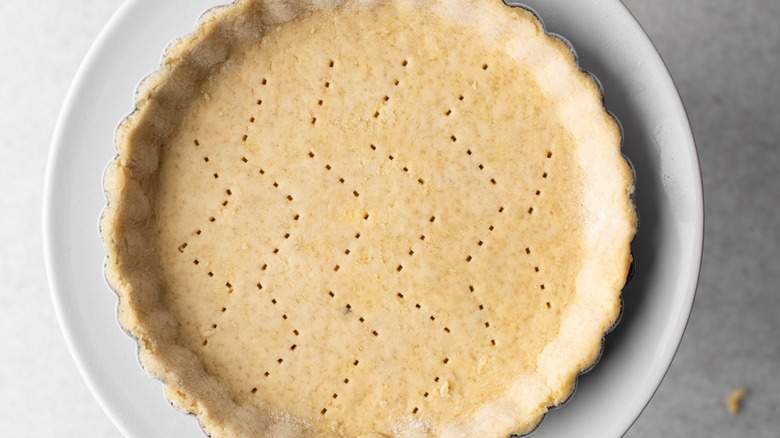
Not only can chilling the entire countertop be incredibly complicated and unnecessary, but it also tackles the wrong issue. It's the dough's temperature that matters, not the countertop's. And since you already need to chill cookie dough or pastry dough to help it maintain its shape, improve its texture and tenderness, and enhance the flavor, it makes more sense to skip chilling the marble. Trung Vu thinks most pros would opt for dough-chilling rather than marble chilling too.
Vu suggests briefly refrigerating the dough for 10 to 20 minutes between steps. This rest period in the fridge solidifies the butter and gives the gluten time to relax, making the dough easier to shape without snapping back. Chilling is particularly important between the lamination procedures for puff pastry and croissants. Once you have rolled the dough to its desired thickness after the final lamination, let it rest in the fridge even longer, for at least two hours or overnight. For unlaminated pastries like pie crust and cutout cookies, do it after mixing and forming discs, then again after you finish shaping. For any dough, put it in the fridge any time you notice the butter getting soft or the dough becoming difficult to work with.
Ultimately, great pastry doesn't require marble, chilled or otherwise. A short rest in the fridge delivers better results. Plus, marble isn't extraordinary. As Vu notes, "Wood, being a poor conductor of heat, can also delay a croissant dough from warming up, as heat doesn't transfer easily between the dough and the wooden countertop or work surface."