

10 Delicious Ways To Use Ramps This Spring, According To An Expert
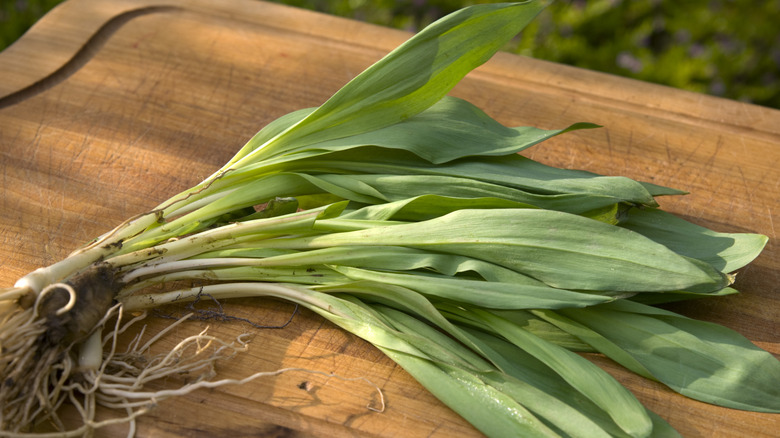
Spring brings with it a bounty of produce. However, if you only think of these offerings as things you can find at the grocery store, you could be missing out on plenty of tasty, locally sourced ingredients still embedded in the natural world, including ramps. If you take a romp through a moist hardwood forest in the early parts of spring, chances are you wouldn't give these small, green leaves springing up from the ground a second look.
However, these alliums, with a flavor that toes the line between garlic and onion, are an absolute treasure. They're also known as wild leeks, and they only grow for a very short period of time around approximately March through May in Eastern North America. Both the small bulb and leaves, which grow from a slightly pink stalk, are edible, making ramps especially great to get your hands on, if you can.
If you are able to find ramps sprouting in a local area, you may want to carefully forage some. It's important to only take a few, as it can take as long as five years or more for these plants to grow. Once you have your few leaves, it's time to figure out how to use this unique crop. Lucky for you, we got some advice from an expert. April Thompson is a wild foods instructor, the author of the upcoming "Falcon Guide Urban Foraging of the Mid-Atlantic," and has even foraged for Michelin-starred restaurants. She shared her top tips for cooking and preparing ramps with us in preparation for their season.
1. Lacto-ferment them
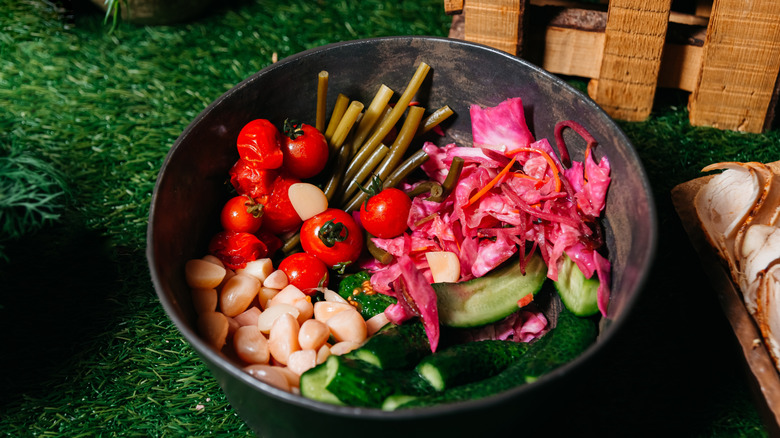
Ramps are often used as a fresh ingredient, thanks to their bright, garlicky flavor and subtle onion undertones. However, an easy way to shift the flavor profile of this springtime delight is by lacto-fermenting them, which wild foods instructor April Thompson recommends.
While it might sound very technical, lacto-fermentation is quite simple. It just involves submerging food in a saltwater brine, which causes the proliferation of salt-tolerant Lactobacillus — the helpful bacteria responsible for converting the sugars into lactic acid (which gives pickled foods their distinct tangy flavor). It's the same process used for certain pickled products, like kimchi, and it's relatively simple to do with ramps. The chopped bulbs can be added to an airtight jar with saltwater and an inoculant (like sauerkraut brine). The jar may need to be shaken and burped (opened) to release pent-up carbon dioxide, depending on the type of lid you have on your jar. After about a week or so, the ramps will be ready to enjoy. But the process can vary.
We recommend using lacto-fermented ramps anywhere you would normally eat pickled onions or pickled red onions. Thompson likes making a ramp ranch dressing with lacto-fermented ramps as well. If you're working with very few ramps — which is understandable, considering that they should be picked sustainably — you can also make a kraut out of them by adding chopped cabbage and salt and letting the mixture sit for a week. These preservation methods are a great way to enjoy ramps months after harvest and in recipes where their flavor would otherwise be too overwhelming.
2. Dry them and mix them with salt
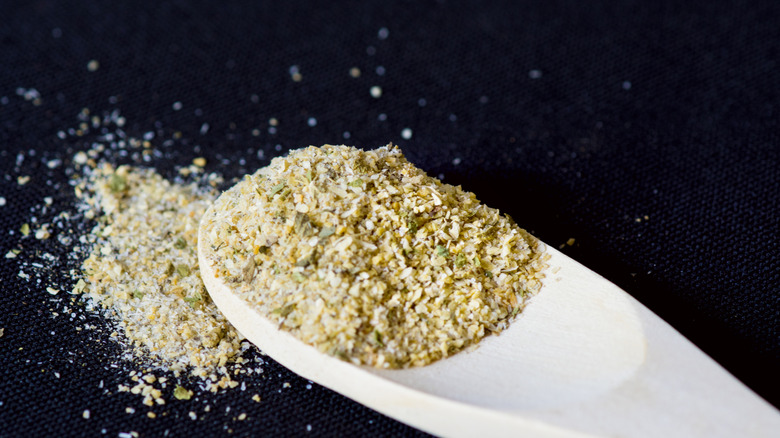
One of the trickiest aspects of working with any new ingredient is working around its shape and form. For example, it may not make sense to try and season a steak with whole ramps, but with ramp salt, you can have a much more accessible way to infuse this allium's flavor into your cut of choice.
April Thompson recommends drying the alliums first. "I personally love using dried ramps, even when I have fresh ones available, as it concentrates and stabilizes the flavors," she says. She shares that she leaves the leaves on her countertop to dry before pulverizing them into a powder. Once they are powdered, they can be mixed into seasoning blends, including ramp salt. Some ramp salt recipes will call for processing the whole ramp leaves in a food processor or high-speed blender until you get a paste, then slowly but surely drying the paste in the oven (or a food dehydrator). You can also try this hack with fermented ramp leaves, which will give you a tangier final product while keeping the same vivid green hue. Thompson appreciates that this method will help preserve what she calls their "fleeting season" — meaning you can use them for months after the harvest has concluded.
Dried ramps can be used in any recipe where you would use dried garlic powder or dried onion powder (or garlic salt and garlic powder, if you plan to mix the herbs with kosher salt). Try it on potatoes, in eggs, or as a finishing salt on your favorite dishes.
3. Infuse them into oil
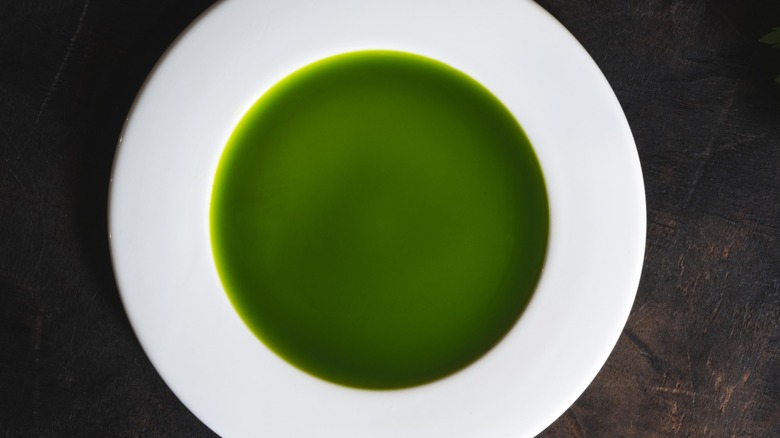
Besides turning ramps into a powder or salt, you can also transform them into a more usable form by infusing them into oil. The ramp's flavor and color are very vivid and bright, so we'd recommend using this oil for finishing dishes, rather than cooking as you would vegetable or corn oil.
"It is [as] simple as blanching the leaves, blending with oil and salt, and then putting [them] through [a] cheesecloth," says April Thompson. Blanching is an important step here, as it will ensure the color stays ultra vibrant and helps the allium blend into the oil (we recommend using avocado oil). It only takes a couple of extra minutes to dunk the leaves in boiling water before shocking them with ice water — and the payoff is huge. Since ramps can be pretty chunky (and blenders don't always get the perfect puree), we also recommend straining it a few times until your oil is as runny as possible. She shares that the resulting oil can be stored in the fridge. It will last for about a week at most.
Thompson also offered her favorite ways to use this oil. "The color is gorgeous for drizzling on soups or plating, like liquid gemstone," she says. Try drizzling it on a homemade cast iron focaccia; the green oil will soak through the dimples, coloring the bread underneath and leaving an allium-forward flavor behind. It would also make an excellent sauce to dunk bread into.
4. Mix them into a salad
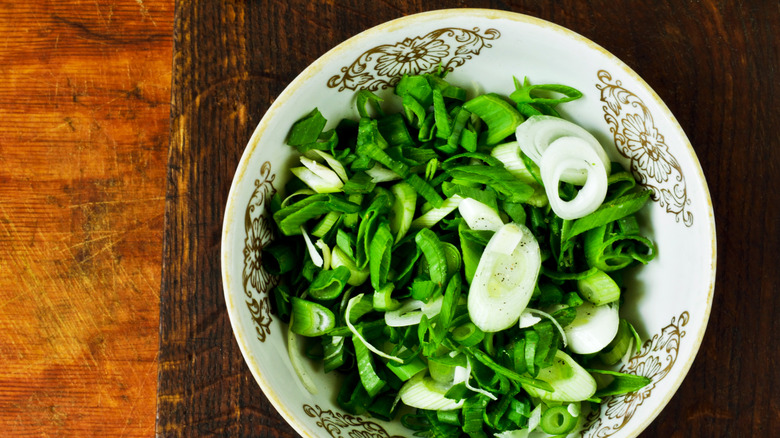
Springtime greens are no strangers to salads, which is why adding ramps to yours is an ingenious idea. As you may already know, "salad" is a big class, encompassing not only green salads, but also pasta salads, potato salads, and more. That being said, ramps can have a place in all of them. You'll want to first think about what ingredients and salad components pair well with ramps. Luckily, April Thompson did the hard work for us: "Ramps pair well with spring vegetables like peas and asparagus, and play well with other mild herbs too, like parsley and dill." A simple pasta salad with fresh chopped ramps (or a ramp oil vinaigrette), roasted asparagus, springtime peas, and Parmesan (for complementary umami flavor) would be the perfect recipe for a spring picnic.
Thinking in terms of salad themes can also be helpful. If you're looking to use other foraged produce, Thompson has you covered. "Given how ephemeral the ramp season is, I think a ramp dressing is a great accompaniment to a wild spring salad (something as simple as dandelion greens, chickweed and violets — leaves and flowers)," she says. Indeed, if you don't like crunching on the raw flavor of ramp bulbs, you can try turning it into a dressing; Thompson recommends a ranch or green goddess dressing.
5. Turn them into a sauce
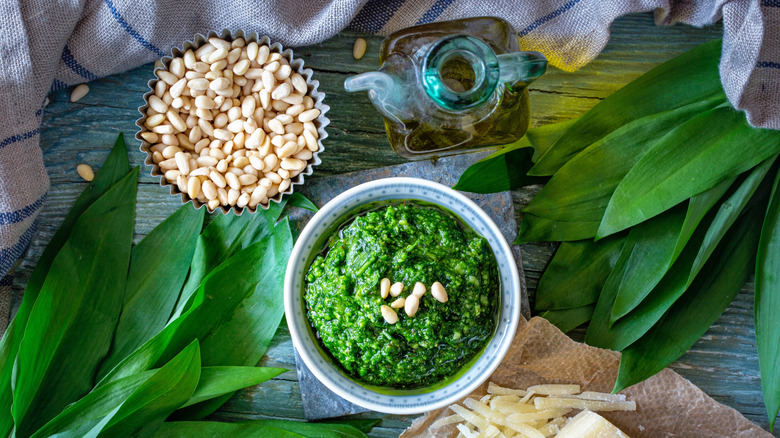
Ramps are stellar additions to sauces and spreads because their flavor is familiar — garlicky yet still approachable. As such, you can easily add the leaves to any sauces that you would normally add garlic to. Case in point? Pesto. This Italian sauce is known for its gentle basil flavor, accompanied by nutty pine nuts, umami Parmesan, and flavorful olive oil. It's easy enough to swap out the garlic for ramp bulbs and make a ramp pesto with them. Eat it anywhere you would standard basil pesto, including on sandwiches, on pasta, and more.
Although ramps love playing the starring role in a sauce, they can also provide a springtime accent to other well-known favorites. April Thompson suggests trying a garden Alfredo. You could even double up the flavor of the ramps by adding the pureed herbs to your favorite homemade pasta recipe. Not only will you get a pastel green pasta, but also an oniony flavor that pairs well with a decadent cream sauce (store-bought Alfredo is fine here, we might add).
If you are feeling pizza, take Thompson's suggestion and add ramps to your favorite red or white sauce. Their sharp allium flavor would easily wake up the flavor of a gourmet prosciutto, asparagus, and Parmesan pie; add a drizzle of ramp oil after baking for extra decadence.
6. Transform them into a compound butter
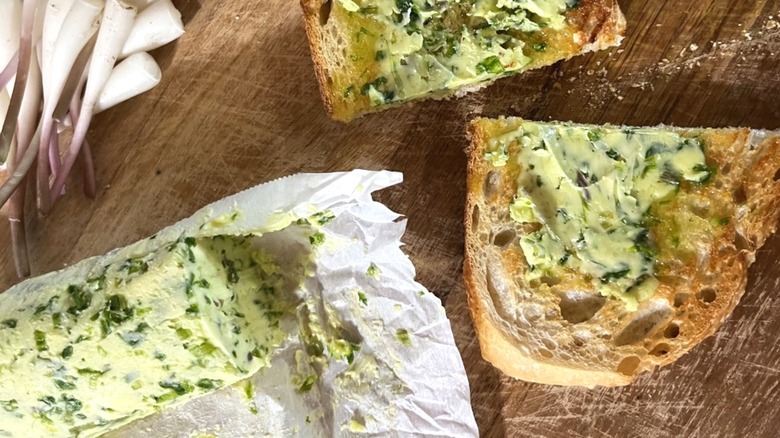
If you are just experimenting with ramps for the first time, we would recommend trying to whip up a simple compound butter. For one, the work required to make a compound butter is very, very minimal. Blanch the bulbs and leaves, slice them as thinly as you can, and add them to a stand mixer with softened butter (softened is the key here, as it will help disperse the ramps in the butter). From there, you can easily transfer it to a container and store it in the fridge. This recipe is easy to scale up or down depending on how much you need — though considering how tasty and useful this compound butter is, you may want to stock up on a couple of extra pounds of butter in preparation.
"You'll never go back to garlic butter again after making a compound ramp butter — the flavor is so smooth, but the color also makes for such a vibrant table spread," says April Thompson. Sure, you can stick to just adding a swipe to toast or serving it with your favorite store-bought dinner rolls for an upgraded side, but this is far from what it's capable of. A fresh steak straight off the grill, topped with a slab of garlicky, ramp compound butter, sounds like our version of a good time. Starchy mashed potatoes (or a baked potato) or roasted asparagus could also benefit from the bright and dynamic flavor of this compound butter.
7. Add them to your favorite egg dish
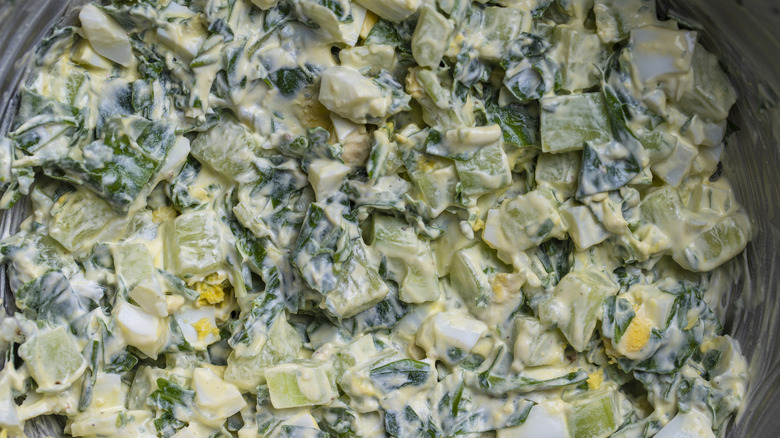
The better question here might be: What doesn't pair well with eggs? Ramps certainly do, and April Thompson was not shy about offering some excellent suggestions for using ramps to elevate egg dishes. She mentions frittata with ramps and other spring veggies (think asparagus and spinach), as well as an unexpected North African suggestion: shakshuka. "If I had unlimited ramps to work with, they'd work great in a shakshuka (my weekend breakfast workhorse), but given the strong flavors in ras el hanout, I'd personally opt for a simpler use of ramps, where their stellar flavors are the solo and not a [big] part," she says. This is where pairing and thinking of other ingredients comes in handy. As such, you may want to serve a ramp compound butter on a slice of toast alongside the shakshuka rather than forcing it to fight for your attention.
You don't just have to think gourmet here, either. Even a basic plate of scrambled eggs could use a ramp upgrade. Grate in some creamy cheese, like cheddar or Gruyère, and watch the garlicky flavor pop even more. You don't want to dull the flavor of the ramps by cooking it way too long, either. "If using the bulbs and the leaves, the bulbs will require a bit more cooking time," says Thompson. Fresh egg dishes, like egg salad, could also benefit from its flavor.
8. Integrate them into deviled eggs

We didn't think that deviled eggs could be improved upon, but here we are. "I love playing around with deviled egg toppings and could see ramps being great blended into the filling and/or a beautiful dusting of the powder on top," says April Thompson. The garlicky bite of the ramps would be an excellent complement to both the creamy center and the color palette of white and yellow. Skip the scallions and add a sprinkle of chopped ramp leaves to the top of your eggs before serving, or take Thompson's previous suggestion and dry and crush the leaves for a colorful garnish.
Ramps can do a lot of the heavy lifting for your recipe, but they are far from the only upgrade worth adding. If you really want to give your deviled eggs an upgrade, spoon some fish roe or caviar on top of the eggs. You can also add a little bit of separation between the filling and the eggs by creating a ramp puree (or just use a ramp pesto or chimichurri instead) and layering it in the wells with the classic deviled egg filling. This springtime variation would be excellent served at a brunch or for an upscale garden party where you want that pop of color and a classic springtime appetizer.
9. Use them in scallion pancakes

Scallion pancakes are far from the fluffy, maple syrup-topped short stack you eat for breakfast, but they are nonetheless delicious. Instead, these Asian-inspired, thin, crepe-like rounds are savory and excellent eaten on their own or with soy sauce. As their name suggests, green onions usually make an appearance here, but ramps would make an even more flavorful addition, per April Thompson's suggestion. You'll want to chop up the whole ramps and add them to the pancakes when you are doing your rolling. Once the dough has been rolled up like a jelly roll, you can cut slices and roll them out again until they resemble flat pancakes.
Scallion (or ramp) pancakes aren't enough to constitute a whole dinner, but they are excellent as a starter or a side. If you are looking for other Asian-inspired dishes to use ramps in, take Thompson's advice and top a bowl of ramen with sliced ramps or add them to okonomiyaki — a Japanese cabbage pancake.
10. Flavor your favorite soups with them

Ramps have a beautifully light, allium flavor, making them a compelling addition to soups. April Thompson suggests adding them to a potato leek soup or substituting them for the leeks. The flavor of the two is similar, though we would argue that ramps have a slightly more garlicky flavor than onion flavor — which is the case for adding them both to your recipe. This soup is hearty, warm, and comforting, and can be made with or without cream, depending on how decadent you want it to be. The cooked ramps will blend well with the starchy spuds, seasonings, and broth, resulting in a tasty soup that's sure to become a regular in your mealtime rotation. Some folks will even try adding bacon to their potato leek soup to make it even more robust. Regardless of what you add to it, just make sure not to overcook the ramps. "Ramps require far less cooking time than something hefty like leeks, so they can be added relatively late in the cooking process," says Thompson.
Potato leek soup isn't the only place where ramps can shine. Instead of adding a sprinkle of chopped chives or green onions to your simple roasted butternut squash soup, reach for ramps instead. They'll provide not only a bright color contrast but also a pop of garlicky flavor that contrasts the otherwise sweet, hearty, and creamy broth.