

Fruit Fly Eggs Are Hiding In Your Bananas: Do This To Avoid Them
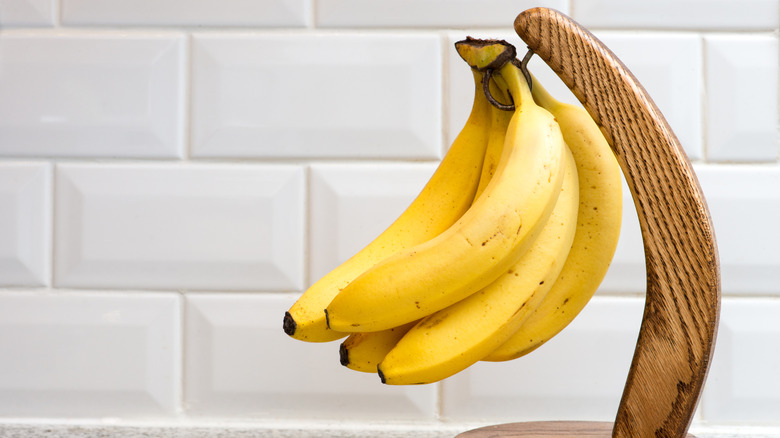
Sitting on your counter, in a fruit bowl or hanging from a hanger, bananas usually look nothing but delicious. Truth is, they often arrive in your home with more than just a few bruises on them — fruit fries can lay eggs on the surface of fruit long before you pick any up at the store. Speaking with Chowhound, Isaac Rockwell, an entomologist and pest expert with Aptive Pest Control, explained that this issue isn't just limited to one specific spot on the banana either. "Fruit flies lay their eggs on the surface of fruits, typically close to areas that are rotting or fermenting." So, even a bunch of bananas that look fresh from the outside could be carrying eggs if there is any softening happening under the skin.
In these discussions about fruit flies, you often hear about banana stems. Rockwell confirms that "torn banana stems provide a rough, jagged surface that's hard to clean effectively" so they can become an easy spot for eggs to stick to even after being cleaned. Cutting the stems off then becomes standard advice, but it doesn't necessarily solve the problem — if fruit flies are already present, a freshly cut stem can actually invite new eggs. More important than cutting off the stems, it's actually better to wash the fruit around the stem area in order to rid your kitchen of fruit flies, and washing the fruit as soon as you get home is key to stopping fruit fly eggs from hatching.
Stop the cycle before it starts
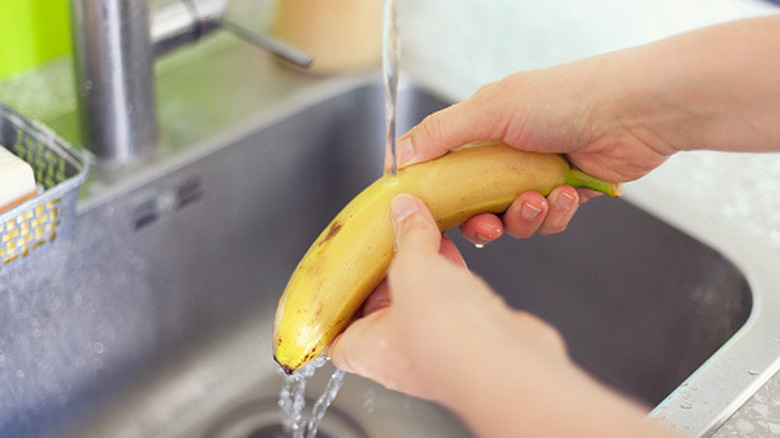
While bananas may be the vehicle fruit flies use to arrive in your home, once they're in, fruit flies move around quickly. They are attracted to any food that smells sweet or fermented. Even without fresh fruit sitting around, Isaac Rockwell points out they can live on "kitchen scraps, sink traps, dirty garbage disposal pipes, and the odd forgotten potato." David Joles, COO of Purcor Pest Solutions, supports this approach, agreeing that cutting stems "can potentially reduce fruit flies." However, it's leftover food and other produce lying around that keeps them present in your home.
So, keeping a clean kitchen is key. Move fruit to the fridge to slow down ripening, and as soon as anything tips past its peak, discard it quickly. It's also good advice to keep the trash sealed, wipe down counters after every use, and focus on the spots in your kitchen people tend to forget to clean. If a few flies are already hovering around, setting DIY fruit fly traps can help catch what's already there. However, deeper cleans, including cleaning the fruit, is what prevents new arrivals from setting up camp.