

The Best Place To Proof Bread May Not Be In Your Kitchen After All
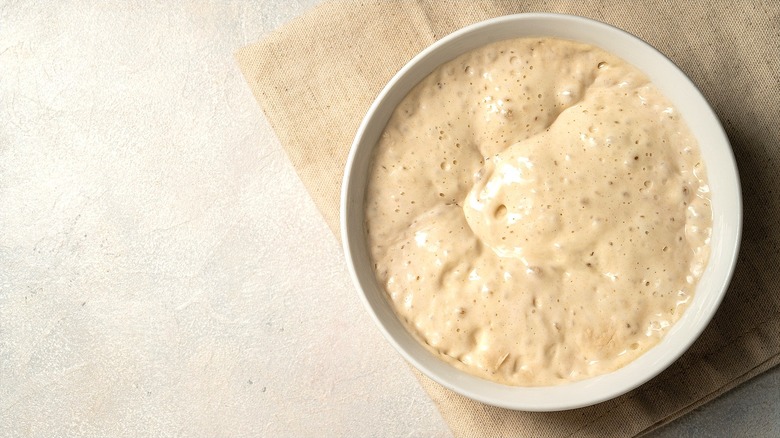
Whether you're making copycat Texas Roadhouse rolls or your favorite sandwich bread, proofing your dough is a vital step in the breadmaking process. However, proofing can be a finicky process and sometimes takes longer than expected if your kitchen sits cooler than 75 degrees Fahrenheit. While your oven is typically the best place to proof bread in your kitchen, there is another useful spot you may be overlooking. The next time you need to proof bread, head to your laundry room and use your clothes dryer.
Just like the inside of your oven, a conventional dryer gives you the exact conditions you're looking for in an optimal proofing spot: draft-free, dark, and tepid. Better yet, you can tailor your dryer's temperature to make it warmer if you desire. Securing an ideal proofing environment is necessary for homemade bread that's perfectly buoyant and soft. Scientifically, proofing activates yeast which eats the sugars and carbohydrates in your dough. Moreover, through this slow-moving process, carbon dioxide gets released and trapped as your dough rises and expands, giving it a light, airy texture.
In order to tackle this crucial step with your dryer, first run it for a few minutes to heat the internal chamber. Then, turn it off and place a bowl of covered dough inside. The residual warmth from your dryer kickstarts the proofing process and gives the dough a substantial rise in no time.
Tips for successfully proofing dough in a conventional dryer
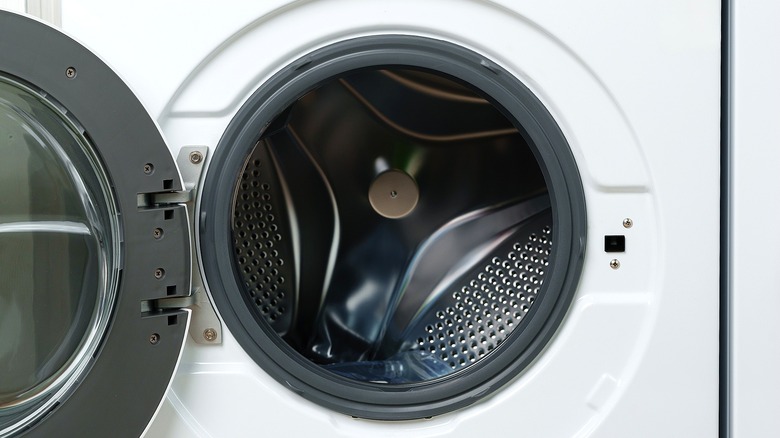
For starters, you can tackle two chores back-to-back by timing your laundry so it coincides with the proofing process. Once your last load of clothes has been removed and your dryer is still warm, simply place your bowl of dough inside and close the door. If your dryer has a round drum, you can even nest the dough in your pile of warm clothes, which will keep your dough extra snug and make the base of your bowl more stable.
Just make sure to cover your bowl with well-oiled plastic wrap before placing it inside the chamber. Given the fact that a dryer has ideal conditions for proofing, prepared dough may rise taller than expected and the last thing you want is for it to spill over the edges of your bowl. On that note, once your dough is tucked safely inside to proof, make sure to turn the knob of your dryer all the way to the "off" setting and place a note on the outside of the dryer door. This way, if anyone else in your home plans to do laundry that day, they won't open the door and throw clothes in without looking.
Lastly, make sure to check on your dough periodically to avoid overproofing. To simplify the proofing process, press one finger into your dough and wait for it to bounce back slowly before moving on to the next step.