

Onions Practically Peel Themselves With This Simple Technique
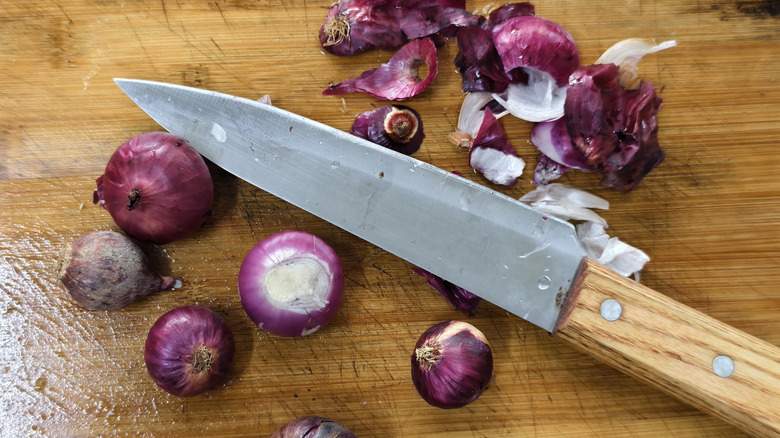
I don't know about anyone else, but I used to have a little pang of dread right before cutting into an onion. Between the papery, clingy skin and the tears that would pool in my eyes, I started avoiding the process altogether, skipping fresh onions for onion powder instead. But once I learned this simple onion peeling trick from a professional chef, everything changed.
Instead of picking the skin at random places, the trick is to first cut off the top and bottom ends of the onion so there are two flat surfaces. Then make a shallow cut from the top to the bottom, slicing through only the outer layer of the skin. And that's it. From there, the peel will basically slide right off with no fuss. This trick works across all varieties of onion, whether you're using red, yellow, or white, and from experience, it has a pretty perfect success rate. It cuts prep time down considerably and can be used as part of other methods to deal with onions without crying, as the less you "damage" the onion, the less the tear-causing compounds are released.
Why this makes peeling easier
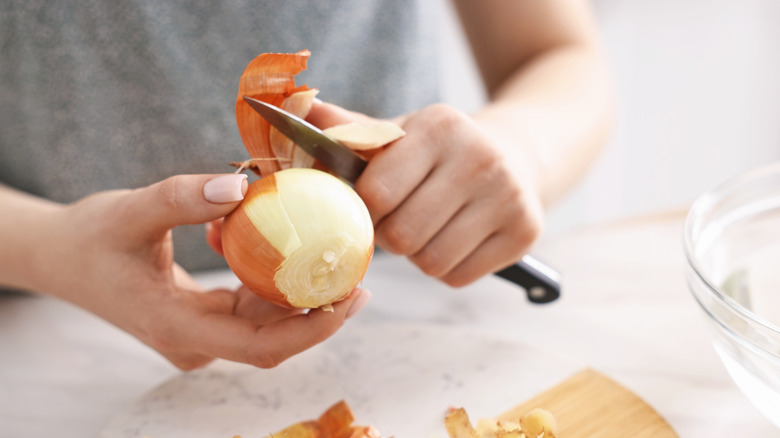
The reason this trick works is as simple as the process itself. The outer layer of the onion's skin is already somewhat separated from the rest of the allium, as onions are made of concentric layers with the outermost layer being dried leaves that cover the whole thing. So this outer layer of papery skin isn't built in so much as it is wrapped around, and once you make a shallow incision through it, you've given it a way to slip right off. With a cleanly exposed onion, even recipes that require a lot of slicing, like homemade blooming onions, will feel like slightly less of a chore.
If you feel tempted to skip the part where you cut off both ends of the onion first — don't. It is actually doing more work than you realise because the onion's concentric layers are compactly held together at those ends. If you leave them intact, the peel won't be able to fall away, and I say this from experience, you'll end up with papery fragments that don't slip off cleanly. By removing those ends, the entire structure loosens and then the shallow slit down the side gives the skin a clear path off in one smooth motion. And perhaps it goes without saying but once you start cutting, you'll be even more grateful for those flat ends. They keep the onion steady on the chopping board and make slicing safer and easier to navigate. In fact, many onion cutting hacks advocate for slicing the top and tail off before you start chopping.