

Swap Water With This Southern Staple For A Flakier, More Tender Pie Crust
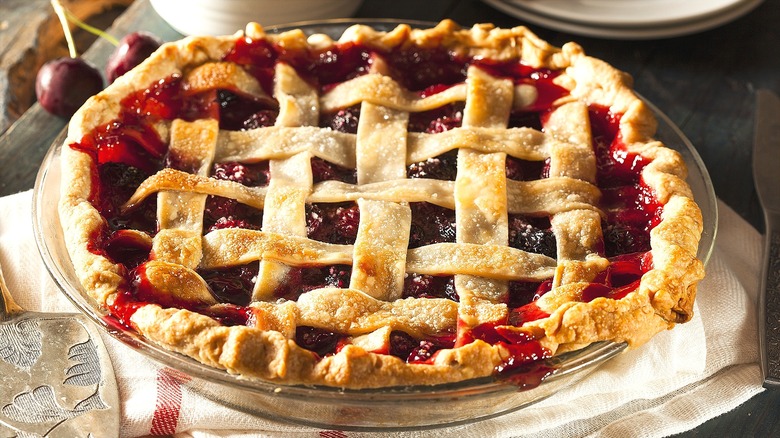
If you're a dessert lover who prefers bakery-worthy blueberry pie over extra chewy chocolate chip cookies, you already know the significance of a tender and flaky pie crust. But to ensure all your homemade pies turn just as soft and delicious in the oven, use buttermilk instead of water. Whether you follow your own recipe or use the 3-2-1 rule for making pie crust, which is 3 parts flour, 2 parts butter, and 1 part water, exchanging water for buttermilk is a straightforward yet impactful swap. Unlike water, buttermilk contains fat, sugar, and protein, which, in the end, makes for a more flavorful and tender crust.
This rich dairy product also contains lactic acid bacteria, which makes it thicker, tangier, and more flavorful than water. Not to mention, when incorporated into butter and flour, the bacteria in buttermilk help reduce the flour's glutenous proteins. This ultimately helps you produce a pie crust that's easier to cut upon baking. The additional fat in buttermilk also makes for a softer crust. Lastly, since buttermilk contains natural sugars, your pie crust will caramelize more during baking, giving the end result a better overall texture and a deeper, golden brown hue.
To upgrade your preferred pie crust recipe, swap the water for buttermilk, and then add a little more buttermilk than your recipe suggests. Since buttermilk is significantly thicker than water, you may need one or two extra tablespoons to make the consistency of your dough malleable enough to shape and bake. If you don't have any buttermilk on hand, combine regular whole milk with a small amount of vinegar for a workable substitute.
Useful tips for preparing flaky homemade pie crust with buttermilk
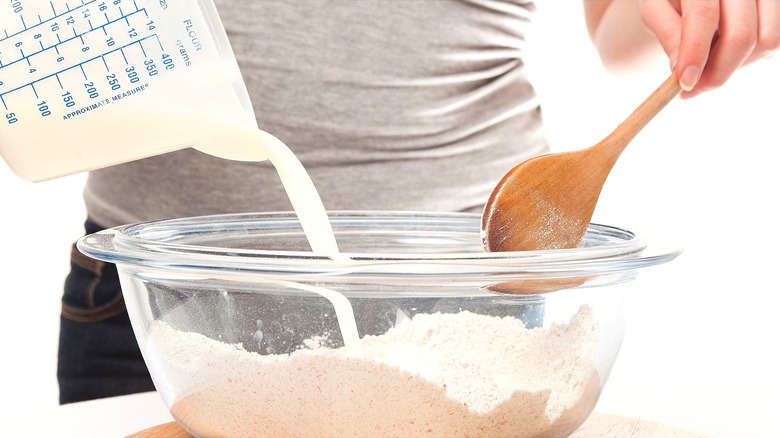
Besides adding more buttermilk than water to your favorite recipe, make sure that your buttermilk is extra cold before using. Especially when you consider common expert tips for perfect pie dough, using ice-cold water or buttermilk ensures the butter in your pastry won't melt before entering the oven. This way, as the butter melts during baking, pockets of steam are created, leading to an extra flaky crust. Also, when preparing your dough, avoid over-mixing the ingredients, which can also melt the butter and create a chewier crust.
On another note, given the fact that the lactic acid bacteria in buttermilk prevent proteins in flour from forming and bonding together, you may find that you can roll out your pie crust as soon as you prepare your recipe. However, keep in mind that chilling your dough before rolling and baking produces the best results. Not only will a proper rest time give the butter in your pastry more time to firm up, but the moisture from the buttermilk will also distribute more evenly throughout your dough. Therefore, after you prepare your buttermilk pie crust, pop it in the fridge for at least one hour before baking.