

How To Tell If Your Dry-Aged Steak Is Actually Safe To Eat
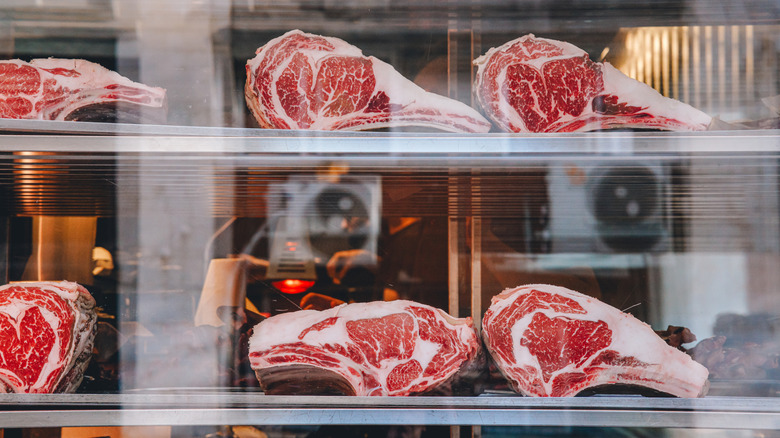
Dry aging steak means decomposing beef slightly in a temperature- and humidity-controlled environment with regulated air circulation. As the meat's connective tissues break down, the steak becomes more tender. But the meat often develops patches of mold on the outside, along with a crusty layer, or pellicle. Though this is usually trimmed off before being handed to the consumer. So, how do you know if your dry-aged steak is safe to eat? We asked Katie Flannery, COO of Flannery Beef, to break it down for us in an exclusive chat.
"If your dry-aged beef has been kept at proper temperatures throughout the entire process, from aging through storage to when it reaches your kitchen, you're starting from a place of safety," she says. The key is to purchase your meat from a reputable source — ideally someone who specializes in dry-aged beef. If you're still in doubt, there are a few specifics to check, starting with smell. "Dry aged beef will have a nutty, funky smell that's distinctly different from fresh meat," Flannery explains. These smells carry over to the flavor as well, which is often described as umami, caramelly, nutty, and blue cheese-like. (In fact, you can mimic the flavor of dry-aged beef with a marinade of blue cheese, mushrooms, and fish sauce.) So don't be put off if you notice a funky aroma with your meat; let it breathe for half an hour, then reassess. If the meat has spoiled, it will have an acrid odor. "It's hard to describe smells in words, but your nose will know if something has actually gone bad," Flannery says.
Other dry-aged steak safety signs to look for
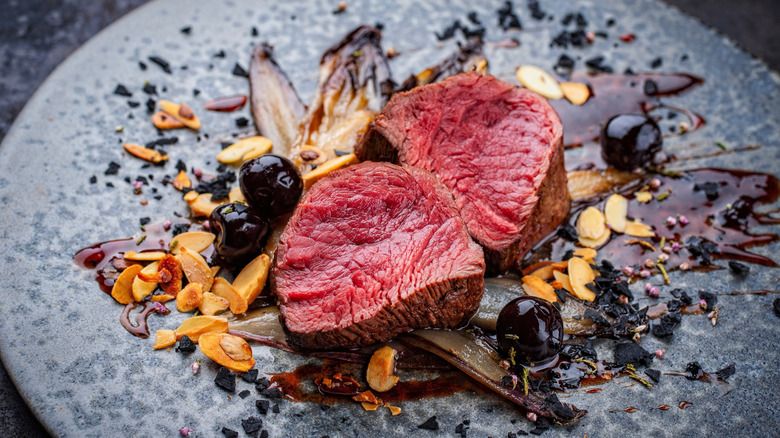
Lengthy aging creates a firmer piece of meat, Katie Flannery says. (The length of the dry-aging process can also affect the flavor.) One factor you shouldn't rely on, though, is color. "Dry-aged beef can sometimes have a darker hue than fresh beef, and that's completely normal," Flannery explains. In this case, depend on your nose rather than your eyes.
But if you notice mold on your dry-aged beef, Flannery advises not to panic. If your meat comes from a reputable source, any lingering mold just means the butcher didn't trim it thoroughly. "[This] is more of a quality conversation than a safety one," she explains. If needed, let your butcher know how exactly you prefer your beef prepared. But the mold may be less about being unsightly and more about how it affects the overall flavor. "The exterior of a dry-aged cut has a much more intense flavor profile and a very different texture than the interior," Flannery says. "Too much of it and the flavor becomes overpowering. Too little and you've trimmed away some of that funky complexity you paid for."
Because of the complexity involved in dry-aging steak, this isn't necessarily a process you'd want to try at home; leave it to the experts. But you can certainly cook a dry-aged steak at home. Keep in mind you may want to prepare dry-aged steak differently than you would others, letting the funky flavors shine rather than covering them up via a traditional marinade. Dry-aged steaks also cook faster than other steaks due to moisture loss during the aging process, so be aware of that as well.