

What Happens When You Run A Microwave Empty?
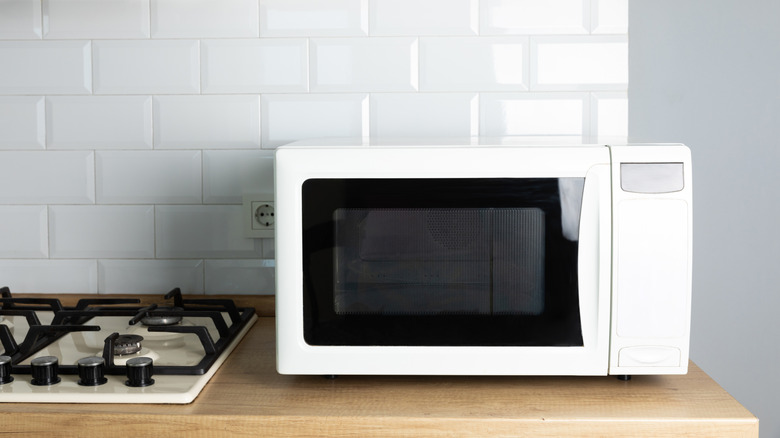
This might sound like a riddle, but it turns out that something you should never heat up in the microwave is ... nothing. That's right, running your microwave without anything in it is not only a common microwave mistake, it can be dangerous and potentially cause it to catch on fire (or just break down entirely). This is because when you leave a microwave empty as it runs, there's nothing to absorb its energy except itself — specifically, the magnetron, which emits the radiation that powers the microwave. As they heat up, microwave ovens generate invisible waves that cause the food's water molecules to vibrate, creating friction. Without food or water, the heat and friction waves just bounce off the metal walls and go straight back at the magnetron itself.
Many modern microwaves have sensors that prevent the magnetron from melting, so if you accidentally microwave nothing for a bit, it's likely you'll be okay. However, doing so will often still produce an odd smell. For peace of mind, you could run an easy test by placing a small glass of water in the microwave and running it for a bit. If it heats up, you're good. Basically, if the microwave generally still seems to work properly, you're probably in the clear as long as you don't repeat your mistake. Regardless, it's important to always refer to the instruction manual of your particular microwave in this situation, as products can vary.
Other common microwave dangers and best practices
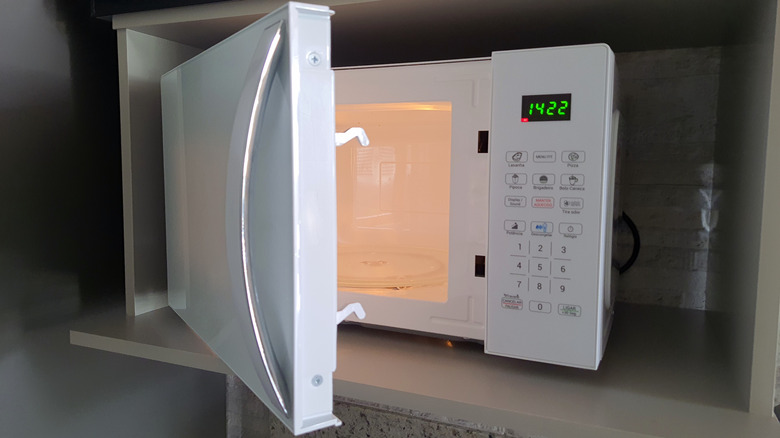
When used properly, microwaves can be a lifesaver for quick meals. When mishandled, though, you could be looking at situations similar to that magnetron debacle. There are plenty of other things you should think twice about before putting in the microwave, and some of them might be news to you (like rice). Paper towels are popular for covering food as it heats up in the microwave, which is usually fine but comes with some rules, like not using them dry, and cooking in short intervals to avoid causing a fire.
To ensure your microwave continues working correctly, it's also important to clean it regularly or it will lose its efficiency. Food spills can house bacteria, should they be left in the microwave for long periods of time, and can also cause potential cross-contamination. They could even lead to a possible fire. Additionally, microwaves don't last forever — usually around eight years (though this varies depending on brand and usage). There are signs to look out for that can alert you to when it's time to replace your microwave, such as when your food starts taking too long to cook or the door isn't staying closed. Of course, making sure not to run your microwave when it's empty should help it last longer, too.