

This Is Where Unsold Girl Scout Cookies End Up
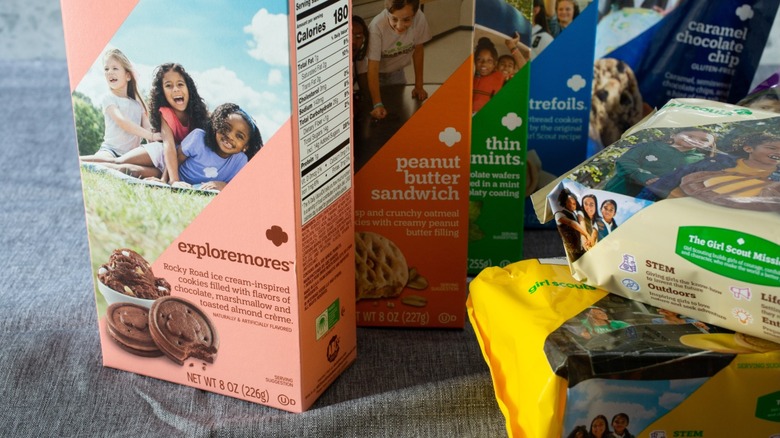
Six-year-old Pim Neill from Pittsburgh made national headlines in February 2026 after selling over a record-breaking 75,000 boxes of Girl Scout cookies, climbing on to an even more impressive 120,000 boxes in March. With those kinds of sales numbers, Neill is likely the most successful individual hawker of Girl Scout cookies since they first hit the market in 1917. That's a nice chunk of the 200 million boxes said to be sold annually by the Girl Scouts of the USA every year, but what about the cookies that don't get sold?
No, as dismaying as it may be to any prospective Girl Scouts or their parents, the girls and their families don't just get to keep the unsold cookies and enjoy free desserts. The rules can and do vary between different troops and their respective regional councils, but, for the most part, Girl Scouts with excess cookie stock need to find a way to get rid of them (besides just eating them) or they'll find themselves on the hook for the cost. That typically entails either redistributing the extra cookies to other Girl Scouts or donating them.
Girl Scout cookies have been supplied by Keebler since 1934, and the traditional selling model involved troops ordering specific amounts of cookies and then going door-to-door or going to businesses to sell the packages directly. The door-to-door days have largely dwindled, with parents reporting safety concerns and people just not answering their doors to strangers. But troops and individual girls still place initial orders ahead of selling, which means the risk of winding up with leftover cookies remains.
Extra cookies may be donated or transferred to other troops
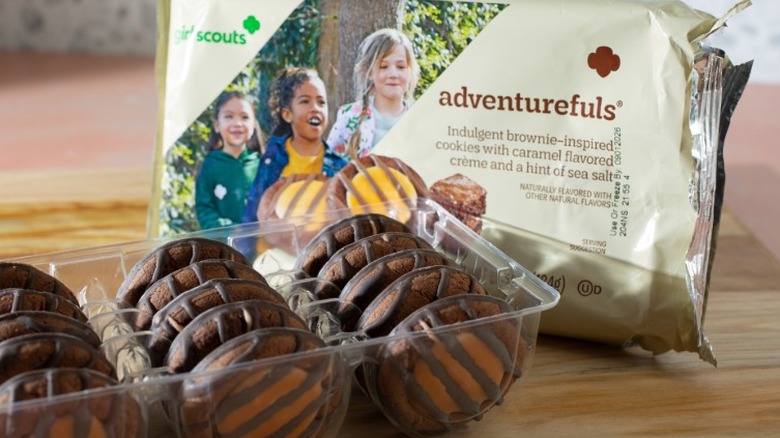
Girl Scout cookie season only lasts a few months, though you can make the cookies last longer with a few clever storage methods. But what if you're a Girl Scout family with too many left? Options vary from council to council, but the general rule is that whoever accepted the cookie packages is financially on the hook. For example, the Girl Scouts of Southeastern Michigan provide a cookie manager guide to troop leaders that states each troop is "financially responsible for any unsold product" and that the council will not pursue payment from individuals on behalf of the troop.
Still, there may be other avenues if a troop or family can't pay for the leftover cookies. According to the Girl Scouts of Northern California website, there are three ways Girl Scouts and their families can deal with unsold cookies: continue trying to sell them through the end of the national selling season, purchase the remaining packages for personal enjoyment or donation, or try to recoup losses by filling out an ACH credit form for reimbursement. The Girl Scouts of Northeast Idaho likewise have an exchange program where troops can transfer cookies to other troops if they've wound up with too many. Nevertheless, a look at the r/GirlScouts Reddit forum shows that the most common avenue appears to be parents and troop leaders just eating the cost and finding a place to donate the excess boxes.
Digital ordering may help decrease the amount of unsold Girl Scout cookies
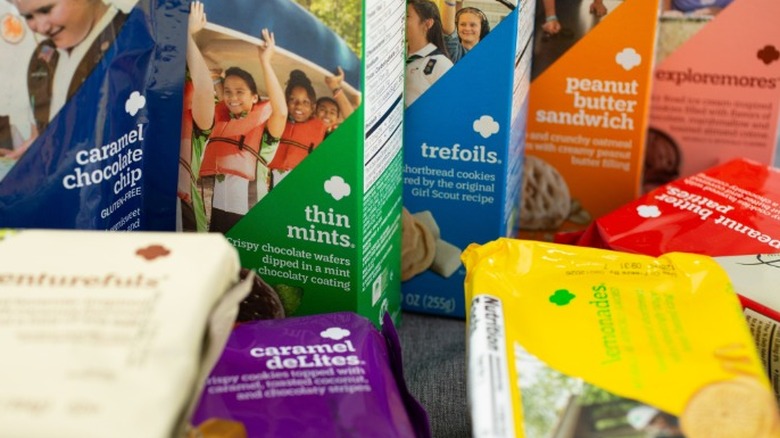
Arguing over which Girl Scout cookie is the best is practically an annual tradition and has been since childhood for many people. But while Thin Mints, Trefoils, and Caramel deLites haven't changed much since their inception decades ago, what has changed is the way they're sold. It may come as no surprise that, in the modern age where much of life is online, Girl Scout cookie sales have gone digital as well.
The organization debuted its national Digital Cookie platform in 2015, enabling individual scouts to build their own websites for direct sales. The exact details here can vary by local council, but this platform enables customers to order cookies and have them delivered directly rather than in-person through their local Girl Scouts, thereby helping to reduce unsold packages from piling up. Considering power-seller Pim Neill has now sold Girl Scout cookies across all 50 states with the help of social media, the bulk of her cookie sales have likely never seen the inside of her family's home.
Nevertheless, if Girl Scout pop-up tables at your local grocery store are any indicator, traditional in-person sales aren't going away anytime soon. There are a lot of conversations within the r/GirlScouts Reddit forum about figuring out how much to order for in-person sales as well as posts on how to handle unsold cookies. As one troop leader said in a 2024 post, "If you don't sell them, you have to pay for them."