

This Grocery Store Chicken Label Usually Hints At Better Flavor
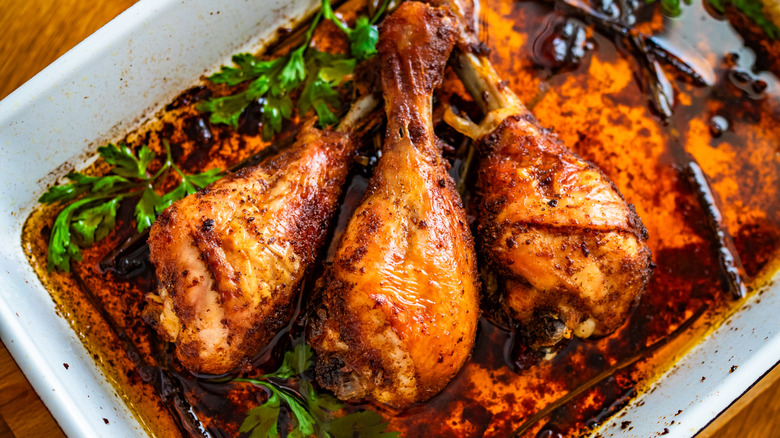
Grocery store meat often has tons of packaging labels that help determine its quality, though some are less meaningful than others. When buying a pack of chicken, you might look for antibiotic-free, free-range, hormone-free, or other wording that helps you grab the best chicken at the store. One label you've probably overlooked is air-chilled — and it can impact the chicken's flavor.
Joanne Gallagher, co-founder and recipe developer at Inspired Taste, told Chowhound that the air-chilled label is "the most reliable sign the chicken was cooled without being submerged in water." The benefits of air-chilling chicken show through in its flavor and texture. "You'll find the meat stays more concentrated and 'chicken-y,'" Gallagher said, "and cooks up a little drier on the surface." A dryer surface means less moisture, so it's great when you're looking for a crispy, golden exterior while maintaining a juicy interior.
Other phrases like "no retained water" and "no added water" are good to look for if the product doesn't directly say that it's air-chilled. Bell & Evans is a popular brand that carries the air-chilled label. However, it should be noted that air-chilled chicken tends to cost a little more than water-chilled chicken. While prices vary by brand and location, air-chilled chicken thighs, for example, might cost around $1.50 more per pound than non-air-chilled varieties.
When does it make sense to buy air-chilled chicken?
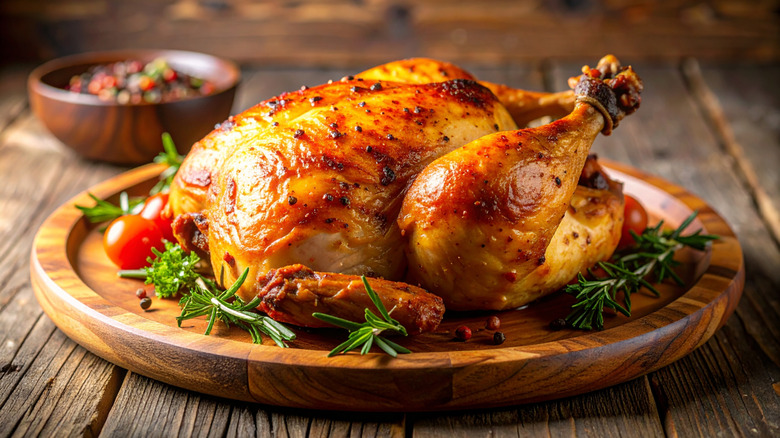
While it's great to always buy air-chilled chicken for better flavor, it's not always feasible in the grocery budget. If you can't buy it every time, Joanne Gallagher suggested splurging when you're making a meal where chicken is the most noticeable ingredient. "If chicken is the star of your dish, where you're really going to notice its flavor and texture, go for air-chilled. For a good sear or golden skin, air-chilled makes that process easier and more reliable." With that said, Gallagher notes that, for dishes where the flavor and texture aren't as obvious, such as stews, soups, or meals with a lot of sauce, it's fine to use water-chilled chicken.
If you want to mimic the air-chilled process at home with chicken that is less expensive, you can dry it out as much as possible beforehand. "Pat it down with paper towels and let it sit in the fridge uncovered for just a few hours," Gallagher said. Ideally, the chicken should stay in the refrigerator overnight, but if you're in a time crunch and don't even have a few hours, you can also add a pinch of salt to its surface — or go for a full dry brine for a juicier roast chicken – to help draw the water out faster.