

The Smartest Side Dishes Use This Time-Saving Trick
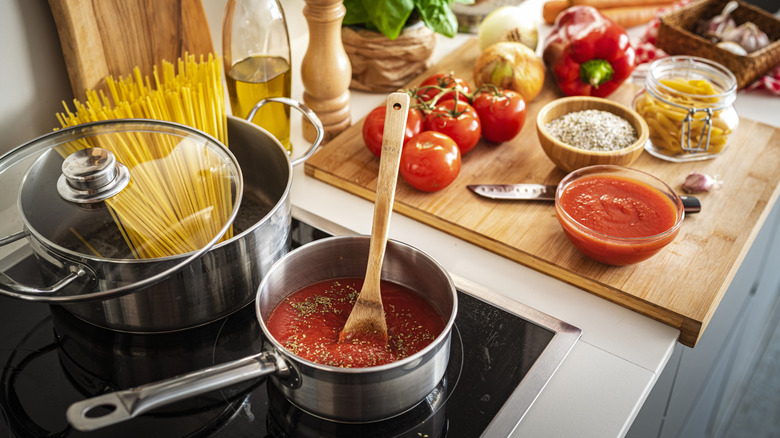
All most home cooks want is a delicious dinner that doesn't dirty too many dishes or take the whole evening to prepare. Considering how convoluted and time consuming even some supposedly easy weeknight dinners can be, that's often easier said than done. Plenty of one pot meals do keep things compact, but their prep and cook time can amount the same as a coursed feast. So it can often be just as easy to whip up a simple main with a side or two. And cooking them concurrently can save you a few precious minutes every night, with barely a modicum of advance planning.
Getting into the habit of more or less making your items all at the same time instead of staggering them will not only cut your time in the kitchen, it'll help you serve everything while it's still fresh and hot. It might sound fairly obvious until you remember all the times you forgot to toast your bread while the pasta was simmering, or you were scrambling to keep your veggies warm while your protein came up to temp. Make timing your sides with your mains a part of your meal plan to save time making your meal.
Getting into the concurrent cooking groove
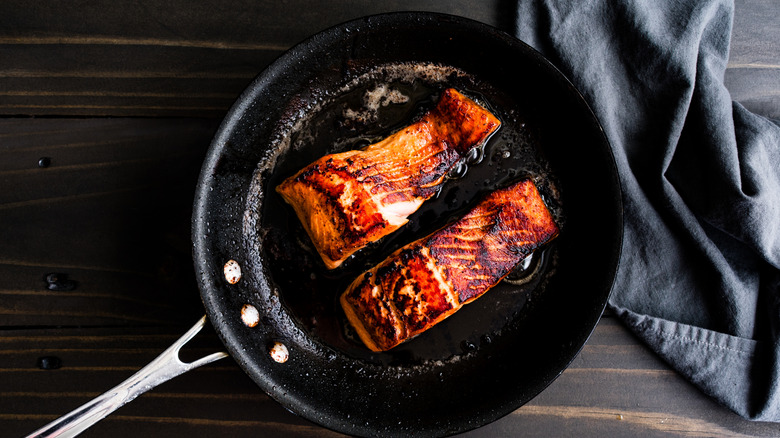
First, think about the dinners you already have high in rotation. Maybe you make something like salmon, rice, and broccoli once a week. Begin by putting your water on for the rice first, remove the fish from the refrigerator to pat dry, and give your broccoli a quick trim — this way, the rice will steam while you're roasting the broccoli in the oven and sauteing the fillets on the stovetop, all finishing in about half an hour.
There are, of course variations to this plan; maybe you just want to give the broccoli a quick blanch, which will only take a few minutes once the water's boiling, or perhaps you prefer any one of the many terrific ways you can bake salmon. You really just want to consider the time it takes to prepare each of your elements from beginning to end and make sure to use that liminal space efficiently.
This can be easier to compartmentalize if you're using different parts of your range for each preparation. The rice is passive enough in the above example; you'll quickly lower its burner, cover, and handle other matters until it's ready to fluff. Popping the veggie in the oven lets you focus on the protein elsewhere on the stovetop, rather than having all three dishes firing in plain sight at once. It also keeps you from having to negotiate disparate temperatures like you might with a de facto sheet pan dinner, although those are still among some of the top time savers in the book.