

8 American Snacks Totally Forbidden In Europe
American snacks have a way of, well...capturing attention, from their bold colors to their ultra-sweet flavors. But if you've ever traveled abroad (or gone down a social media rabbit hole), you've probably noticed some of these treats don't look the same, or even exist, in Europe. We've talked before about foods that are banned in Europe but not the U.S., and much of that comes down to a fundamental difference in how American and EU regulations work. In the U.S., ingredients are generally allowed unless there's clear evidence that they're harmful. Europe, however, tends to take a more precautionary approach, restricting or banning additives if there's a credible concern that they could pose a health risk.
This difference helps explain why so many American products don't make it overseas – or if they do, why they have different recipes. In most cases, it's not that a specific product is banned, it's that certain ingredients, often artificial dyes, preservatives, or emulsifiers, don't adhere to European health and safety standards. Companies often respond by reformulating their products for the European market, swapping ingredients for those that meet local regulations.
There's also a cultural layer to all of this; European consumers are often more skeptical of highly processed foods, especially snacks with long ingredient lists or synthetic additives. This, in turn, influences what a company chooses to sell. Worried you might not find your favorite snack abroad? We've rounded up some well-known American snacks that don't quite translate across the Atlantic, so you know what to stock up on.
1. Froot Loops
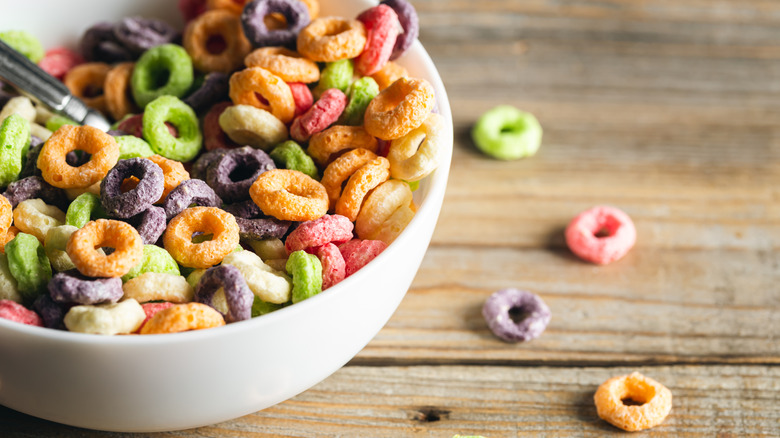
When you look at a bowl of American Froot Loops compared to the European ones, the difference is obvious at first glance. American Froot Loops are much brighter, but that's because they use synthetic dyes, including Red 40, Yellow 5, Yellow 6, and Blue 1 to achieve their vivid hues. These dyes are often derived from petroleum, and are used for visual appeal, not for flavor...especially since Froot Loops all taste the same, regardless of color.
In Europe, however, these dyes are much more tightly regulated than they are in America. While not all of them are universally banned across the EU, products containing certain dyes are required to have warning labels about potential effects on things like children's behavior and attention. To avoid this, many manufacturers choose to avoid these dyes altogether. As a result, the version of Froot Loops you find in some European grocers is reformulated to use natural colorings derived from ingredients like fruits and vegetables. That's why European Froot Loops look more muted. You'll even notice certain colors missing, like blue, which is hard to replicate naturally. Thanks to the differences in American and European food laws, you'll notice that Froot Loops are just one of many snacks totally reformulated for the European market.
2. Jolly Ranchers
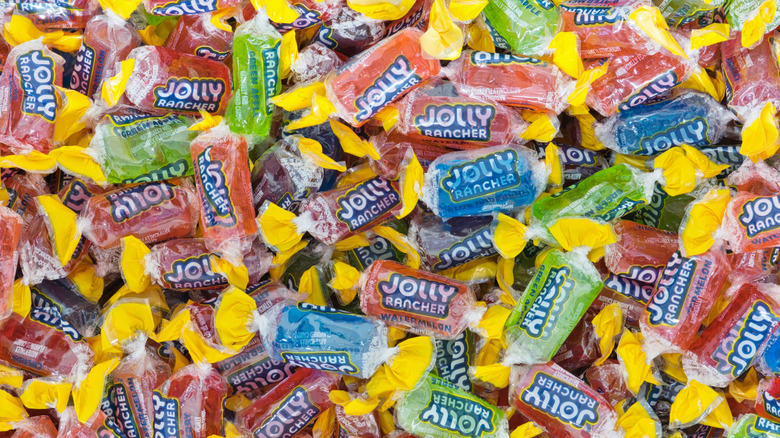
While several snacks are reformulated to meet European standards, Jolly Ranchers are not one of them. The colorful candies have been facing pretty intense scrutiny as of late, especially in the U.K., where certain versions have been yanked from the shelves. This has nothing to do with additives for flavor or color, like with most products on this list, but instead, because of certain substances used during Jolly Rancher production.
Specifically, some Jolly Rancher products have been flagged for containing something called mineral oil hydrocarbons, which are compounds derived from crude oil. These include mineral oil aromatic hydrocarbons (MOAH) and mineral oil saturated hydrocarbons (MOSH), which are used as processing aids to prevent the candy from sticking together and make it look shinier.
European and U.K. regulators are way stricter on these substances than American agencies. The U.S. still allows certain mineral oil uses under the FDA's "generally recognized as safe" (GRAS) classification, which gives manufacturers more leeway in determining how safe an ingredient is and how much to use. However, the U.K.'s Food Standards Agency (FSA) has identified MOAH in particular as a potential carcinogenic risk, meaning it could damage DNA and increase the risk of cancer over time. Due to this classification, the U.K. began removing affected Jolly Rancher candies from shelves in mid-2025, though the same candies are still widely available in America.
3. M&Ms
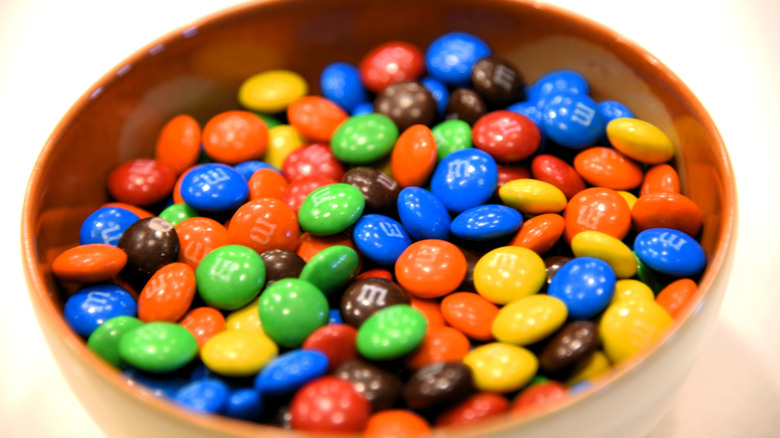
M&Ms all look pretty similar across the world, but the dyes coloring those classic candy shells vary depending on where you buy them. American M&Ms contain artificial dyes like Red 40, Yellow 5, Yellow 6, Blue 1, and Blue 2. If these sound familiar, they're basically the same dyes used in Froot Loops and many other brightly-colored treats in America.
In Europe, however, Mars does things a little differently. The company reformulates M&Ms sold in the EU to use more natural color sources, like plant extracts and concentrates, rather than relying heavily on artificial dyes. In fact, the only artificial dye both products use is Blue 1 (remember, we said natural blue dye is hard to find?). Mars knows that it can't really sell American M&Ms overseas, because European regulations (and consumer expectations) mean they need to avoid certain artificial additives. And as we mentioned before, products that carry specific synthetic dyes are required to have warning labels about potential behavioral effects on children.
It's not just the coloring that sets American M&Ms apart from those abroad. Slight recipe differences can lead to the inside chocolate tasting a little different as well. Of course, this varies depending on the specific M&M flavors you're trying (Mars, please bring back the crispy ones!).
4. Mountain Dew
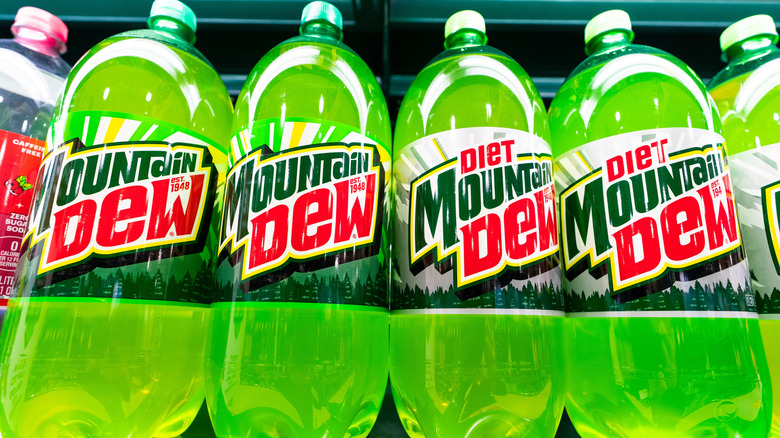
Now, I'm a Diet Coke girl myself, but even I can admit that few American sodas are quite as instantly recognizable as Mountain Dew, a drink beloved in Appalachia and across the country. However, if you're planning to "do the Dew" abroad, your soda is going to taste a little different. That's because the version sold in the U.S. includes a few ingredients that are no-nos in the U.K. and parts of Europe: calcium disodium EDTA and Yellow 5.
Calcium disodium EDTA is a preservative used to stabilize flavor and prevent discoloration. And while it can be used in certain foods, the U.K. bans it in beverages. The ingredient acts as a chelating agent, binding metal ions to help maintain color and flavor stability, but animal studies have raised concerns about potential developmental and reproductive side effects, which is why the U.K. has tightened restrictions in certain applications. Then there's Yellow 5, which is used to give Mountain Dew its signature neon color. We've mentioned it a few times so far; it's an artificial dye that isn't outright banned in Europe, but requires a warning label. Most manufacturers would rather reformulate their products than have that warning, and Mountain Dew and the Pepsi company are no exception.
It's also worth noting that American Mountain Dew reformulated a few years ago to remove brominated vegetable oil (BVO), an additive that had already been banned in the U.K. for over a decade before it was banned in the U.S. As a result, overseas versions of the drink have been different for a while.
5. Ritz crackers
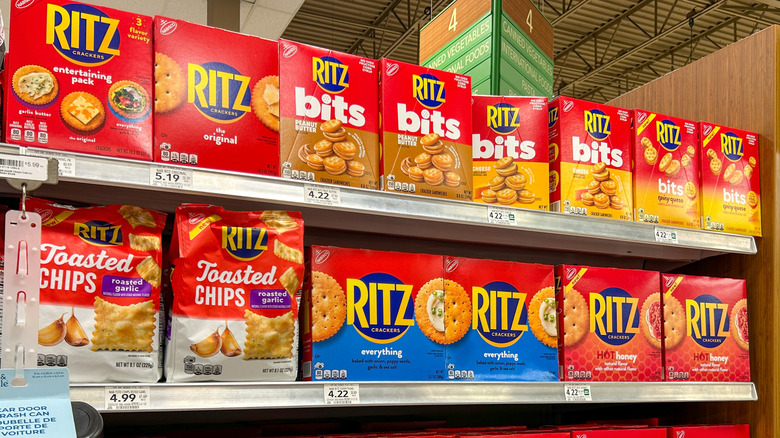
Ritz Crackers may be a pantry staple in the U.S., but in parts of Europe, the classic American snack has raised enough red flags to keep it off shelves. This is due to two ingredients in particular: partially hydrogenated oils and potassium bromate.
Partially hydrogenated cottonseed oil has historically been used to create that flaky, buttery texture Ritz crackers are known for, as well as to extend the shelf life of the crackers. And while this is great for texture, partially hydrogenated oils are a primary source of artificial trans fats, which have long been linked to an increased risk of heart disease. Because of these risks, trans fats have been heavily restricted or effectively banned in European countries, and as a result, products containing them don't meet local food safety standards. Then there's the potassium bromate, a flour treatment agent used to strengthen dough and improve texture in baked goods. While it's still permitted in the U.S. under certain conditions, potassium bromate is classified as a possible carcinogen, leading to bans or strict limitations in most of the EU. For example, countries like Norway, Austria, and Switzerland don't allow products containing it.
While you can still find Ritz Crackers in these countries, you're not going to find the American version. Instead, similar crackers are sold in Europe without these controversial additives, often using fats or dough conditioners to taste more like the original.
6. Nestlé Drumsticks
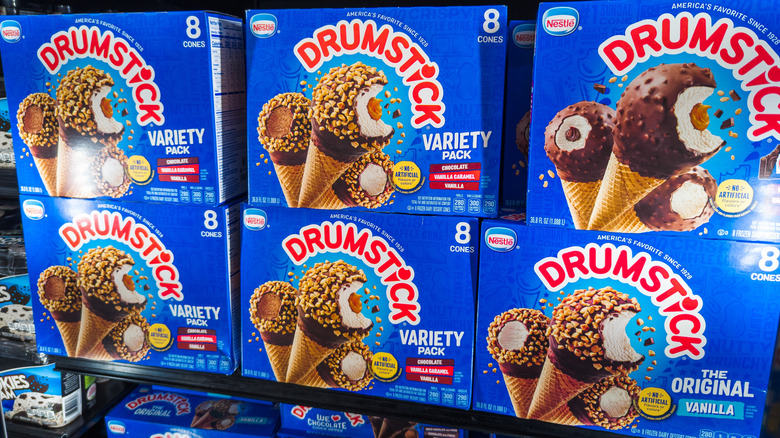
No matter how you feel about Nestlé, you have to admit that its Drumsticks – the ice cream treats with a chocolate-lined cone and shell of chocolate on top – are a great summer treat. It's hard to imagine why they might be banned in Europe, but with Nestlé, there's always something (after all, it's responsible for one of the biggest food recalls in U.S. history). In this case, it's an ingredient called carrageenan.
Carrageenan is a food additive that comes from red seaweed, and it's commonly used as a stabilizer and thickener in dairy products. In Drumsticks, Nestlé uses it to help maintain the ice cream's creamy texture and prevent ingredients from separating. From the outside, it seems like a pretty useful ingredient, especially in frozen desserts that melt and lose their structure over time.
Unfortunately, studies have found that certain forms of carrageenan may cause digestive problems, like bloating, diarrhea, and gas, and may even cause insulin sensitivity. As a result, the European Food Safety Authority (EFSA) has put restrictions on the use of carrageenan and banned it in certain products, like infant formula. That doesn't mean you won't find drumstick-style ice cream cones in Europe, but like many products on this list, the formulation may differ. Manufacturers often adjust stabilizers and emulsifiers in their products to meet EU standards, so if you try one of these across the pond, the texture or taste may be a little different.
7. Skittles
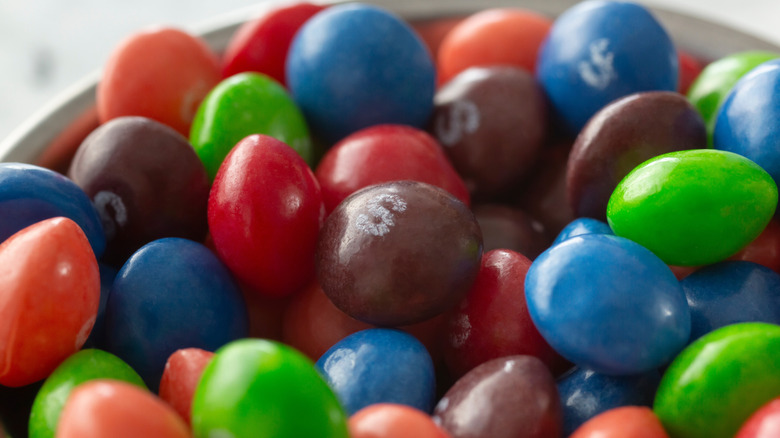
To be clear, you can still "taste the rainbow" in Europe...but it's going to be a little different than what you get in America. Like M&Ms, Skittles aren't outright banned across the EU, but the American recipe isn't sold there due to its use of additives, mainly artificial dyes.
In the U.S., Skittles get their bright colors from synthetic dyes like Red 40, Yellow 5, Yellow 6, and Blue 1. That should sound familiar, since both Froot Loops and M&Ms use these – they're pretty common since they're vibrant, shelf-stable, and cost-effective. But as we've mentioned, in Europe, they're more tightly regulated, and products with these dyes need to carry warning labels about their potential effects on children's behavior and attention.
So, like they do with M&Ms, Mars reformulates its Skittles for the European market, using natural colorings like paprika extract for reddish-orange tones and black carrot juice for purple shades. The end product is still colorful, but usually has slightly muted tones compared to the American version. It's another clear example of a brand adapting its iconic candy to different markets. It does bring up the question of, if it's so easy to swap out colors, why not change the options in the U.S., too? But hey, at least Skittles are one of the many candies that are gluten-free!
8. Twinkies
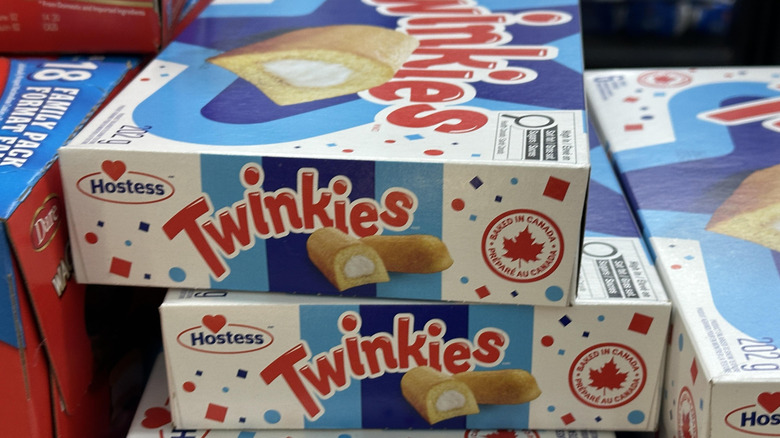
Whether you're personally a fan of Twinkies or just enjoyed watching Woody Harrelson cross a zombie wasteland to find some, you can admit that Twinkies are a pretty iconic American snack. Emphasis on American, though -– they're far from a common sight on European shelves. And they're not alone, as you're unlikely to see similar treats like Swiss Cake Rolls overseas either, and often for the same reason: ingredients that don't mesh with European regulations.
The biggest sticking point is artificial coloring, and for Twinkies, Yellow 5 in particular. Also known as Tartazine, this dye gives Twinkies their rich golden hue. In the U.S., we don't have country-wide regulations on Yellow 5, though some states have their own bans, and the FDA is working to phase it out. But as we've mentioned, Europe takes a stricter approach. Countries like Austria and Europe have tight restrictions on certain synthetic dyes due to concerns about potential links to hyperactivity in kids. And even where it isn't banned outright, products with Yellow 5 must contain a warning label, which leads many manufacturers to change their recipe or avoid that market outright.
As a result, Twinkies and similar snack cakes aren't commonly stocked in regular European grocery stores. In fact, some Redditors in Norway say they can't even find the reformulated version in stores, though you might get lucky ordering online or near borders where international products are easier to find.