

America's Largest Family-Owned Retail Coffee Brand Has Southern Roots Dating Back A Century
Growing up in Louisiana, Community Coffee was the go-to brand in our house, especially for coffee with chicory, a pleasantly bitter and nutty root with a long history of being used in New Oreans coffee. The brand has its own extensive history dating back to 1919 when Henry "Cap" Saurage began selling his own coffee blend in his Baton Rouge grocery store. Soon his coffee, which he dubbed Community for its ability to bring folks together, outgrew the grocery store.
By 1924, it was the Saurage family's main business and rose to become a major player in the South. Over the years Community Coffee has faced many challenges, including competition from bigger coffee brands, but through it all, it has remained in the Saurage family. Today, it's the largest family-owned retail coffee brand in the U.S.
In the 1990s, the company opened its own coffee shops, CC's Coffee House, where we could go enjoy a cup of the brand's coffee in a communal atmosphere. The Saurage family still owns the coffee shops in the region, but as a separate company from the coffee business.
Community Coffee today
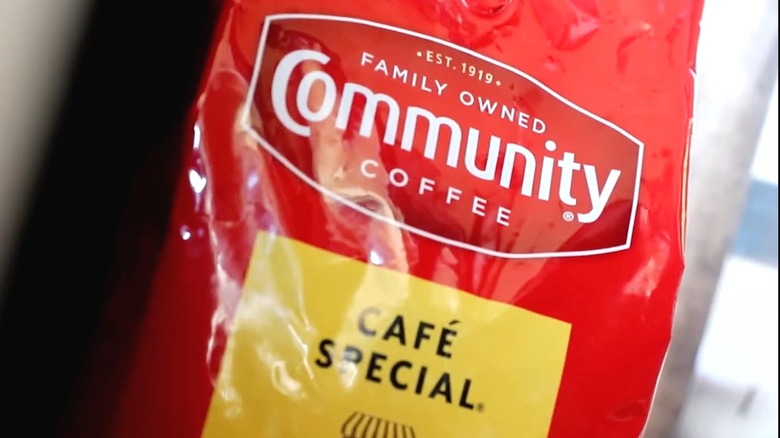
What started as grocery-store coffee in Baton Rouge more than 100 years ago has grown into a multimillion-dollar business with an expanding presence in the U.S. The company employs more than 1,000 people across 26 states and its products are available nationwide. Estimates on the company's revenue are as high as $500 million under the leadership of Matt Saurage, the fourth-generation owner. Community Coffee has grown to the point where it's the brand of coffee you'll be sipping when flying on Southwest Airlines. Likewise, CC's Coffee House has expanded beyond Louisiana's borders into Mississippi and Texas.
Community Coffee also has become involved in helping ensure the longevity and sustainability of coffee farming by ethically sourcing its beans and through its involvement as a founding member of the nonprofit World Coffee Research. The organization funds research and fosters sustainability initiatives in the industry. The company also gives back to the community — about 2.5% of its pre-tax profits — through various initiatives, from disaster relief to school programs.
Back when Community Coffee wasn't as widely available, after I moved from Louisiana, I'd pack my suitcase with this coffee on family visits to take back with me. It was a taste of home that, thankfully, I can now get locally. Now, if I could just get beignets, Louisiana's official donut that isn't technically a donut, I'd be all set.