

Yes, Canned Tuna Is Cooked: Here's How It's Made
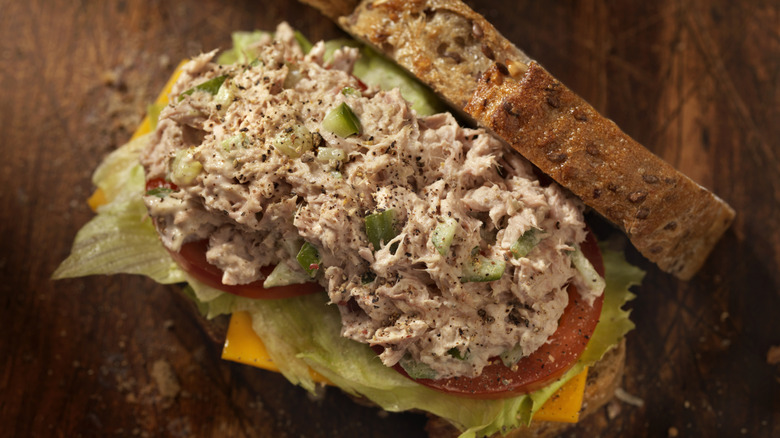
The humble can of tuna is the unsung hero of many a kitchen. From the nostalgic taste of tuna noodle casserole to elevated tuna salad sandwiches, canned tuna is versatile, convenient, and a pantry staple for many. Many of us have never given a ton of thought to exactly how a massive tuna becomes the cooked, flaky goodness you have at the ready in your pantry. While all canned tuna is cooked, much of the stuff you find on grocery store shelves has actually been cooked twice.
While the tuna cooking process can certainly differ from one facility to another, it seems that most tuna processing plants follow the same general steps. First, tuna are cleaned and then pressure-cooked using steam. This first stage of the cooking process isn't just to cook the tuna — it also makes it easier for processors to remove skin and bones. Once the tuna is cooked and fully cleaned, the canning process begins. The high heat used during canning and sealing cooks the tuna a second time, which also sterilizes the cans. From there, cans of tuna are shipped to grocery stores and eventually make their way to your cart and your kitchen, where you can use them to create a bright, fresh, herby dill-infused tuna salad or a no-cook addition to elevate your favorite weeknight pasta.
Does once-cooked canned tuna taste different from twice-cooked?
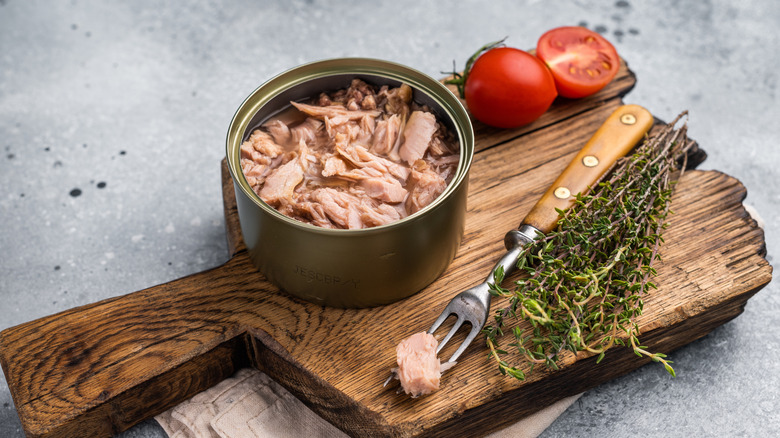
Some people prefer the taste of tuna that's been cooked once as opposed to twice. If you're interested in giving once-cooked tuna a try, you'll need to put in a little bit of extra effort to find it. Brands like Genuine American Tuna cook the fish only once, and one of the biggest differences you'll notice is that you don't have to drain away any liquid. As soon as you open the can, it's ready to eat.
Some say that tuna that's cooked once has a more natural texture and flavor. When twice-cooked tuna is processed, liquid is added in the form of broth, water, or oil. When tuna is cooked once, steam from the naturally-occurring moisture in the fish allows it to cook, which can help the fish retain its firmness. Another bonus when it comes to purchasing once-cooked tuna: You're not paying for water or oil, so you're getting more fish in each can. Whether you choose once-cooked or twice-cooked tuna, there are a ton of ways to upgrade canned tuna, making it a great fit for stocking up your pantry and creating simple, cost-effective, high-protein meals.