

Why Martha Stewart Thinks You Should Be Planting This Vegetable In Your Garden

Whether you are new to gardening or simply looking to diversify what you know, there is one vegetable Martha Stewart has picked as the most rewarding to grow. It is none other than the humble lettuce. On a video on her YouTube channel, Stewart called lettuce "a great vegetable to grow," highlighting how adaptable and low-maintenance it is, especially compared to most other vegetables that require months of care or very specific conditions to thrive. Lettuce grows incredibly quickly and doesn't need much space either, so it's a great choice for total newbies or experienced growers alike.
Lettuce is often praised for having one of the easiest harvesting processes of any crop, allowing you to either pick individual leaves that then grow back (a method called cut-and-come-again) or cut off the entire head in one go. Its low-maintenance nature makes lettuce one of the easiest vegetables to grow indoors as well as outdoors, whether you have a large garden bed to fill or just a sunny kitchen windowsill you want to take advantage of. Plus, one of the best things about lettuce is the sheer variety of it, with Stewart pointing out there are "hundreds" of types of lettuce — from leaves that are soft and buttery like butterhead lettuce to firm and sweet like romaine. So you can grow what you like to cater to your exact preferences.
Lettuce grows fast and fits into everyday meals
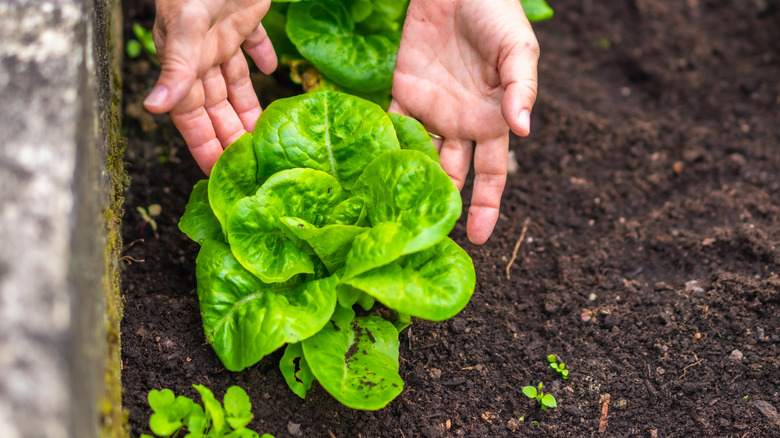
Lettuce is one of the vegetables to plant in early spring because despite being an easy going and generous grower, it does prefer cooler temperatures. In fact, when it gets too warm, lettuce runs the risk of bolting, which makes it taste bitter. So if you're adding lettuce to your line up this year, make sure it's one of the first vegetables that you plant. Lettuce grows quickly, too — it'll usually only take four to eight weeks until it's ready to harvest, which makes it a great vegetable if you want quick results. Because of this, the best way to keep lettuce going all season is to plant it in batches (a process called succession planting) so that you have a steady supply growing at different stages as opposed to suddenly having a load of lettuce that you need to eat at once.
Speaking of eating lettuce, don't be put off by the idea of it having no purpose outside of salads. Lettuce is an incredibly versatile vegetable that can add crunch to a variety of dishes as well as being grilled on the barbecue or served as an alternative to bread in things like lettuce-wrapped burgers and tuna salad lettuce wraps. Nothing quite beats the taste of homegrown lettuce, either, and it's got way more nutrients than the store-bought versions. So if you weren't a big "lettuce head" before, you will be once you've savoured some leaves that you grew all by yourself.