

Cook Skirt Steak Perfectly Every Time With These Expert-Approved Tips And Tricks
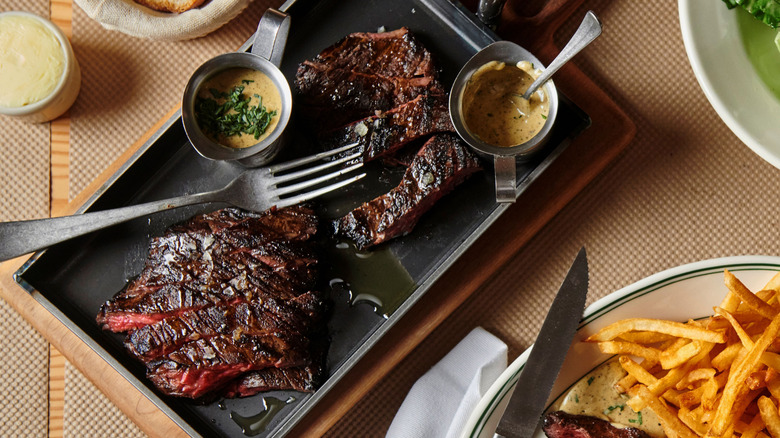
Skirt steak is an intensely flavored cut that most people in the U.S. likely associate — whether by name, sight, or taste — with Mexican cuisine. Chances are fairly high that your last beef fajita arrived on a sizzling hotplate heaped with the stuff, and as far as steaks go, that's a pretty high calling. Nobody has ever studied whether it's possible to hear that sound without smiling, but that's probably because we all know it's not.
We're not here suggesting that there are better uses for it. But we are interested in exploring the full spectrum of skirt steak's potential. A long, flat cut of beef that hails from the "plate" (the chest area between the brisket and the flank), it has a somewhat proletarian reputation, as though its relative affordability somehow diminishes its merits. Chef Laurent Tourondel would likely disagree.
Michelin star recipient, Bon Appétit Restaurateur of the Year, and proprietor of the much-lauded single-item concept Skirt Steak in New York City (and all over TikTok), Tourondel appreciates the cut enough to have created an entire restaurant around it. This works because it's prepared one way: Perfectly. Below are his tips, tricks, and guiding philosophies for preparing your own perfectly realized skirt steak.
You don't need to tenderize
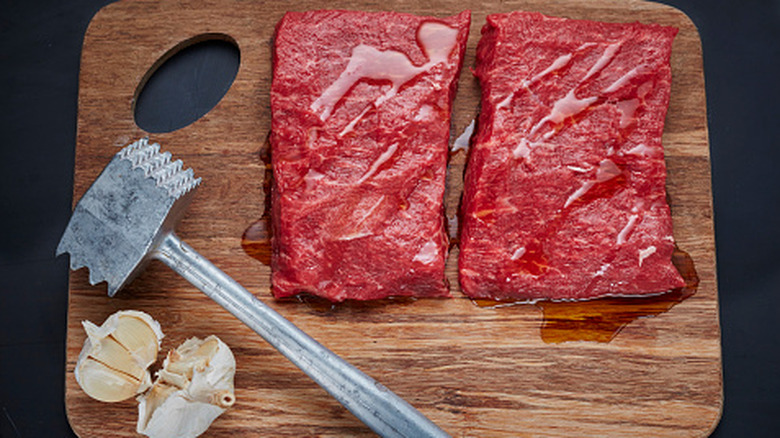
Ok, don't go throwing out the spiky hammer just yet. There's a bit of a caveat here. You shouldn't need to tenderize skirt steak, but you might be inclined to do so if the cut you bought isn't exactly what you'd call prime beef. That said, while skirt steak is known for flavor and not tenderness, various cooking methods can help release a bit of that toughness.
Meat mallets may help to break down the connective tissue that tends to result in jaw fatigue, but they also erode the integrity of the cut, and it's hard to argue that you've prepared something perfectly if it's been partially desecrated. Skirt Steak (the restaurant) centers around U.S. wagyu, and for that, pre-cook mastication is wholly unnecessary.
"No tenderization," chef Laurent Tourondel says. "I like the natural texture of prime meat as it is. When you start with a good-quality skirt steak, it already has the right bite and character."
Trim off excess fat
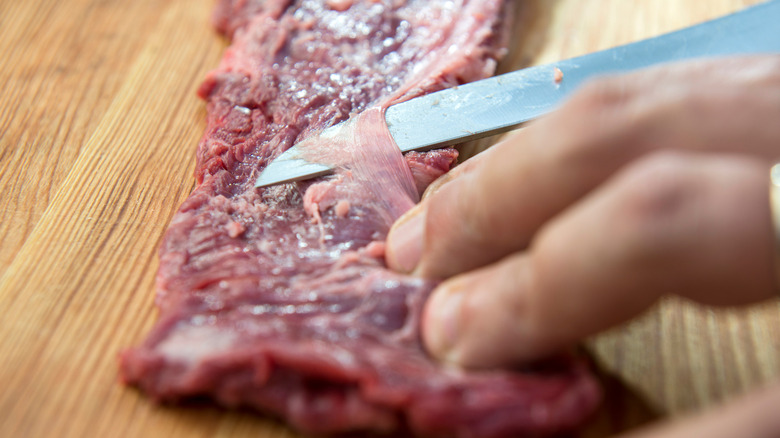
There are two types of skirt steak: Inside and outside. It's easy to remember which is which, because when you go out to eat, you're generally getting an outside skirt steak, whereas the cut you buy from the butcher to cook at home tends to be inside skirt steak.
Outside skirt steak is covered in a thick membrane, while the inside variety is generally sold with the membrane removed. Outside skirt is highly sought after as a comparatively thicker, more tender cut. If you happen to get your hands on an outside skirt that hasn't been snatched up by a restaurant, trimming the membrane is absolutely non-negotiable. In the much more likely scenario that you wind up with an inside skirt steak, you still might need to trim some if the butcher didn't remove the excess fat, as we won't be cooking it long enough to render it enjoyably soft (this is foreshadowing). Just be careful not to go overboard.
"I trim it a little bit," says chef Laurent Tourondel. "You want to keep some fat for flavor, but you should remove most of the excess fat."
Don't just stick with fajitas
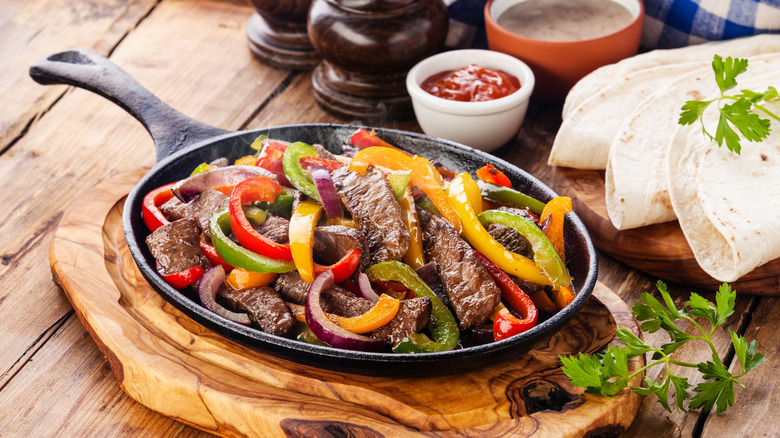
Skirt steak is widely associated with fajitas, and is one of the best cuts of steak for the dish. But it's possible that, much like an actor who has been type-cast into a singular role their entire career, we're missing out on a wider world of possibilities for using a skirt steak beyond fajitas.
Skirt Steak, NYC is seeking to rectify this inequity by giving the cut the traditional French steak frites treatment (and you can, too). Generally associated with more uptown cuts like ribeye or sirloin, steak frites is a highbrow, meat-and-potatoes dish generally consisting of steak and crispy fries, finished with a rich sauce or compound butter. Skirt Steak opts for a peppercorn béarnaise, and by all accounts, it works.
"There's no specific cuisine—it's more about the preparation," chef Laurent Tourondel says. "I like to serve it with seasonal vegetables and, of course, french fries. Like most meats, it pairs well with potatoes, grilled vegetables, mashed potatoes, and other classic sides."
Cook it whole
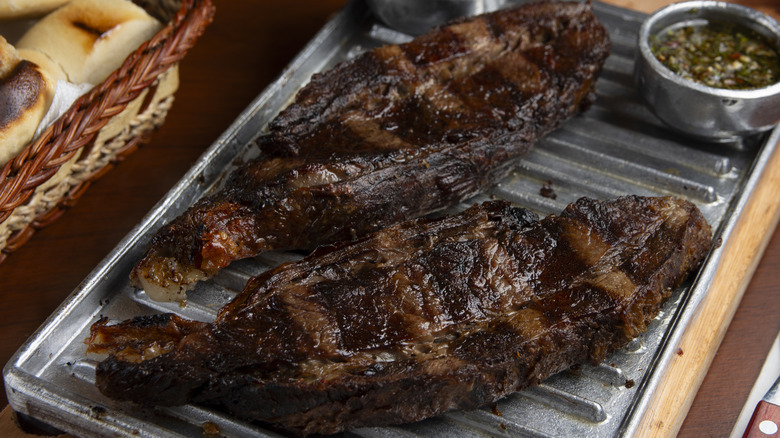
Recipes abound that will tell you it's acceptable to slice a skirt steak before cooking it. They claim that it'll help the meat absorb your marinade or dry rub. That it will arrive upon your plate more tender and flavorful. The claims sound truthful enough, but could it be that slicing the meat up before bringing it to the skillet is participating in the self-fulfilling prophecy of an inexpensive cut resulting in a cheap experience?
Anyone can post a recipe on the internet. Not everyone can create a successful restaurant around a single dish. So where does chef Laurent Tourondel stand? "Always cook it whole," he says. "Slice it only after it has rested."
The fact is that whole steaks sear better, cook more evenly, and retain more juices. As for the claim that a sliced steak will absorb more marinade? That's entirely unnecessary. Skirt steaks have a bit of a loose structure, and naturally retain the flavor of whatever you're throwing at it pretty well. The generous fat that runs between the muscle grain will help carry that flavor all the way home.
Use a marinade or dry rub
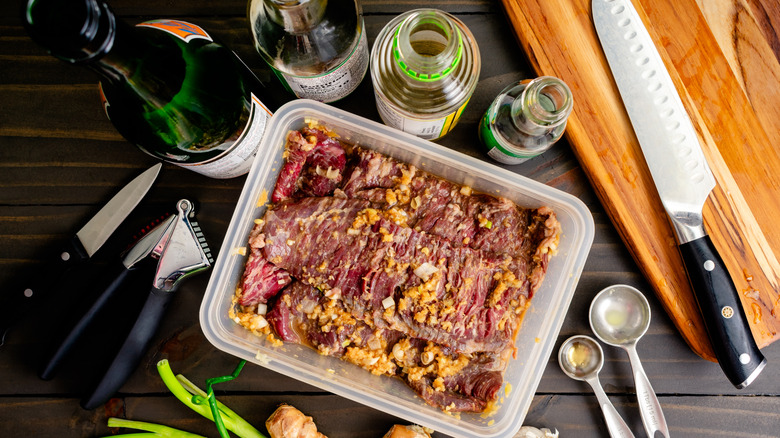
There are two primary methods for imparting flavor into a grilled steak: Wet marinades and dry rubs. You might even see some enterprising cooks call their own concoction a "dry marinade" or a "wet rub," mostly because words are, like food, fun to play with. The latter both generally refer to a thick spice paste that sort of splits the difference between a wet marinade and a dry rub.
When it comes to marinade vs. dry rub, opinions are violently split as to which is preferable, and the truth is that it probably depends on how exactly you're serving your steak. Marinades are widely regarded as preferable for thinner, tougher cuts that want the added moisture, with some going so far as to claim they enhance tenderness. Dry rubs, meanwhile, facilitate the Maillard reaction and sear up beautifully.
Chef Laurent Tourondel isn't sure there's a significant textural difference between the two, and says both work well. "In the restaurant, I usually use a wet marinade, but at home I often do a dry rub." Try both. And next time some cantankerous clout chaser on social media poses the bad faith question of "marinade or dry rub?" just to bait an argument, you can confidently reply, "yes."
Sear it hot and fast
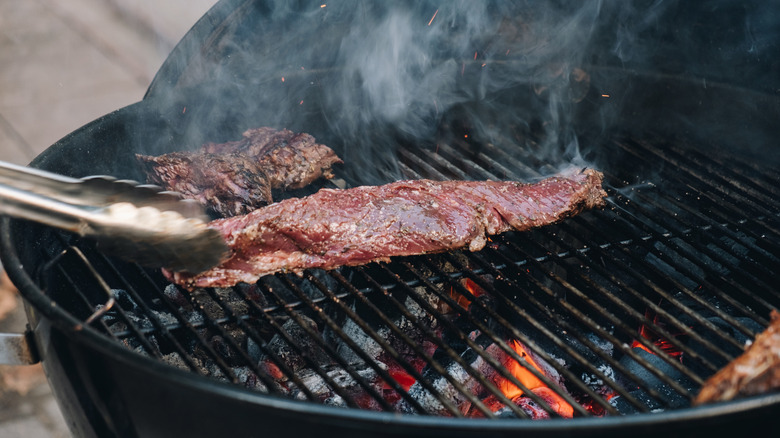
We had initially asked chef Laurent Tourondel whether it was better to cook skirt steak hot and fast or slow and low, but this turned out to be unnecessary. He answered it in response to nearly every other question he was sent. The answer? Hot and fast. As hot as you possibly can.
The one thing you should never do? "Never overcook it. Because the cut is thin, it will become tough and dry very quickly if you cook it too long." The one thing you should always do? "Always cook it on very high heat and slice it properly after resting, ideally against the grain, to keep the texture tender." Tourondel says the cut is suited well to a broiler, a ripping hot cast iron pan, or a blazing grill. Basically, so long as it burns with the fires of the underworld, you're good to go. Not only will this keep it from drying out, but it will also create a char, adding both depth of flavor and that satisfying crispness to the exterior.
"But wait, what about braising?" you might be asking. Certainly, that wouldn't dry the thing out. Fair point. It's exceedingly unlikely that braising would dry out anything. But, you're not really showcasing this cut, are you? There are many wonderful things to say about beef braised down into soft, richly flavored, half-liquid, protein shreds, but "perfectly cooked" isn't generally one of them.
Use a fat when cooking it
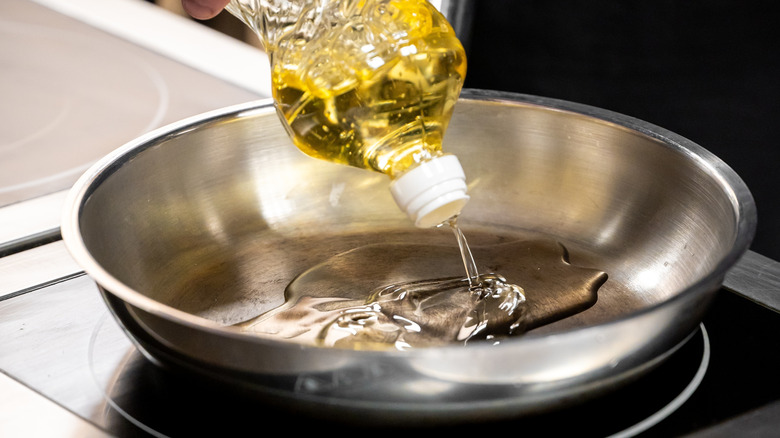
Skirt steaks are not burgers, which is to say they won't be rendering enough fat to facilitate their own searing during their brief, infernal relationship with your cooking surface. Chef Laurent Tourondel says that "vegetable oil, olive oil, and butter all work," so it's just a matter of picking your proverbial poison.
There are a few things to consider here, and the smoke point of the fat is one of them. A high smoke point is preferable. Olive oil, for example, has a fairly low smoke point and is only really recommended for use around 350-410 degrees Fahrenheit, but can go a bit higher if its refined. Vegetable oil can tend to live comfortably in the 450 degrees range, while refined avocado oil can rip up over 500 degrees. These workhorse oils do not, however, possess the flavor of other fats like, for example, French butter. Clarified butter, on the other hand, has a much higher heat tolerance, and is an excellent alternative, even if you intend to finish the steak with a healthy knob of the high-end cultured stuff (and you should).
Finish it with butter
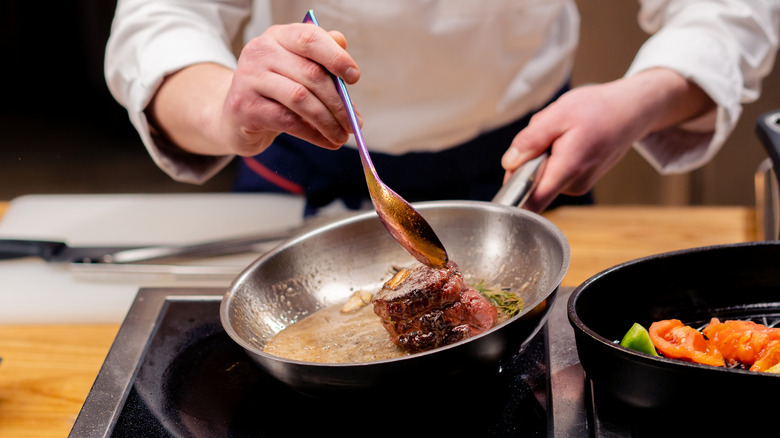
You've probably seen footage of haggard grill cooks in chef's whites compulsively spooning liquid from the bottom of an angled pan over what appears to be a perfectly cooked steak. That liquid is butter, and it's your steak's best friend. By using butter as a finish rather than as a cooking fat, you sidestep the hazards of butter's low smoke point and tendency to separate, delivering all of the flavor with none of the risk. For a truly elevated finish, add fresh herbs and garlic to your finishing butter; it will absorb the flavor quickly and marry it with that of your steak.
This is the restaurant trick that tends to set their dinner experience apart from your dining room table, and chef Laurent Tourondel subscribes to it wholeheartedly. "One great technique is finishing the steak in a hot pan with butter," he says. "At the end, add garlic and parsley and baste the steak with the butter — arroser in French — for about two minutes. This gives the meat a beautiful flavor and finish."
Let it rest
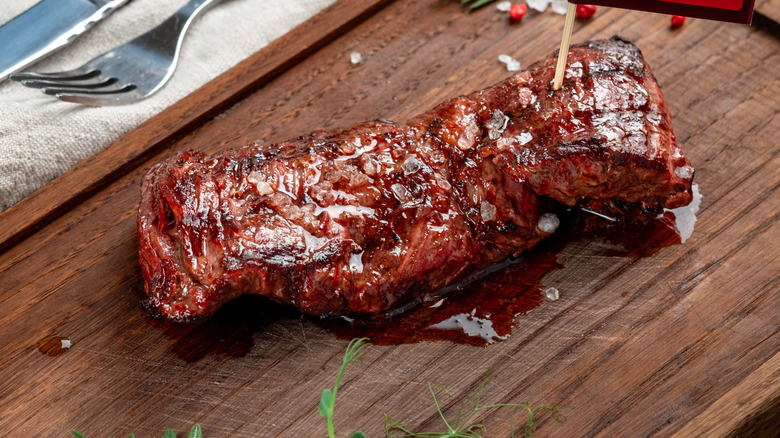
Resting is what it sounds like; once it's finished in the pan, you remove your steak from the heat and just ... let it sit there. There are various schools of thought as to how long a steak should rest after cooking. Some say half the amount of time it took to cook. Others say five minutes per inch of thickness, but those people clearly aren't cooking skirt steak. Most folks tend to give more general guidelines for the type of steak in question, and chef Laurent Tourondel is one of them (he says 3 to 4 minutes should do the trick).
The point here is that nobody worth taking seriously will tell you to skip the process. Resting a steak allows the muscle fibers to relax as they cool, which in turn retains moisture and redistributes it evenly. The result is, predictably, a juicier steak. Foregoing this critical step will invariably result in a dry slab of meat; your trimming, marinade, perfect sear, and butter finish all in vain. The cow already died once. Don't let impatience kill it again.
Slice it against the grain and serve it with sauce
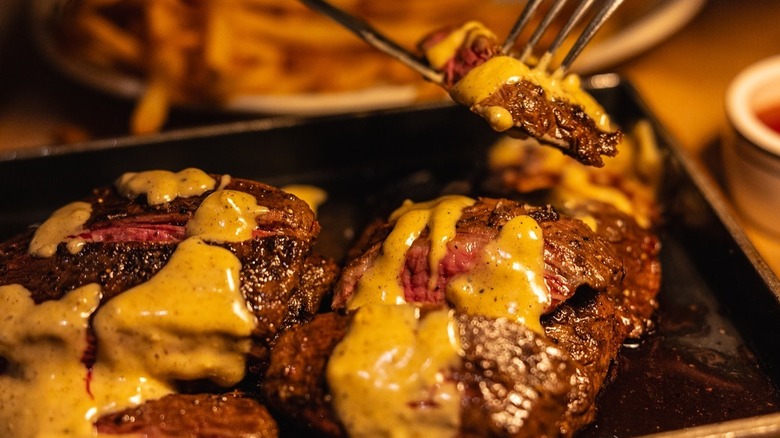
This is conventional wisdom that applies to every kind of meat, and for good reason: When you don't cut against the grain, you end up with long, chewy muscle fibers that produce a more laborious dining experience. The venerable ritualistic traditions of crab legs and unshelled nuts aside, nobody wants to work harder for their food once it's arrived on their plate. And, this is especially true of skirt steak, which already has a rep among jawbones for being a little on the demanding side. This isn't an "any way you slice it" situation; there really is a right way to cut skirt steak.
Once sliced, there's just the little matter of the finishing touch: Sauce. What type of sauce is entirely up to you, and depends upon the specific cuisine you're exploring (though at Skirt Steak the preferred adornment is a perfectly executed peppercorn béarnaise). It's been said that soups and sauces set great chefs apart from good ones, and there's really no reason to question the maxim. A good sauce really does elevate everything it touches. It's kind of like icing a cake: It's not the entire point of the thing, but it certainly makes it a bit more special. Skirt steak deserves to feel special.