

The Difference Between A Pub And A Tavern
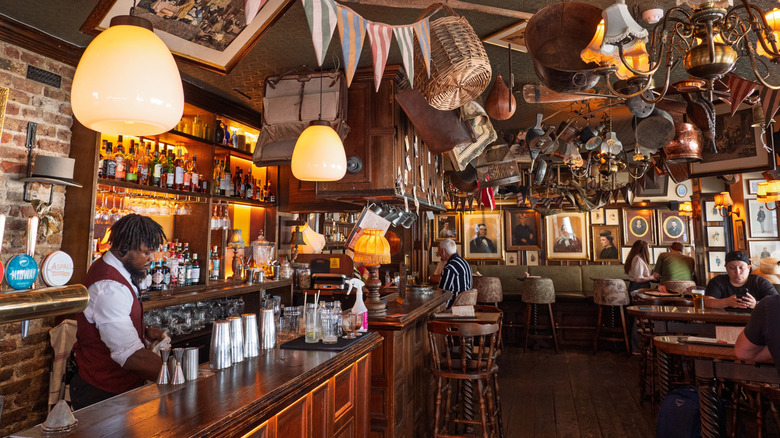
In today's world, between the endless choices of bars, beer halls, restaurants, and clubs, it makes sense if it's a bit of a mystery as to what the difference is between a pub and a tavern — especially when the terms are pretty much interchangeable in modern society. If you're enjoying beer, lively conversation, and a meal in a rustic atmosphere of dark wood, does the label of pub or tavern really mean anything? Not anymore.
However, back in the day, pubs and taverns were somewhat different types of places to gather for a drink. The beers may have been the same, but the menus weren't. Also, whether you frequented a pub or a tavern had a lot to do with your geographic location, such as if you were a local in a British village or a traveler just passing through. One thing you could count on at both establishments: lot's of drinking. That said, let's break down the differences that once defined these two types of meeting spots.
What makes a pub?
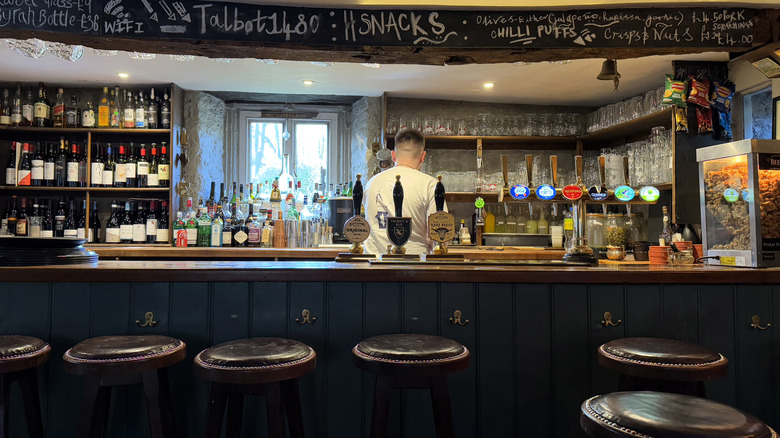
Short for public house, pubs have traditionally been more of a neighborhood spot, playing a large role in British and Irish daily life. It grew out of the concept of a relaxing place for locals to gather to enjoy a drink, socialize, and eat a hearty meal. Historic pubs didn't offer lodging, but they did tend to offer a more extensive menu than a tavern, and emphasized the menu part as heavily as grabbing a drink with neighbors.
Pub fare leans heavily on traditional English dishes — all the better to pair with beer and ale. For example, the Lamb & Flag in London dates back to 1772, but is still a classic example of what pub fare looks like, both historically and today. Some quintessential dishes include Scotch eggs (boiled eggs wrapped in sausage and fried in breadcrumbs) and, of course, you can't forget classic fish and chips (just ignore the ketchup; malt vinegar is the standard condiment for fish and chips). Other classic pub recipes include bangers and mash and steak and ale pie. Many pubs also still offer a Sunday roast to this day, a traditional hearty meal meant to be eaten after church. It consists of roasted meats, veggies, potatoes in gravy, and a Yorkshire pudding. All of the meals were meant to be enjoyed with family and friends.
What makes a tavern?
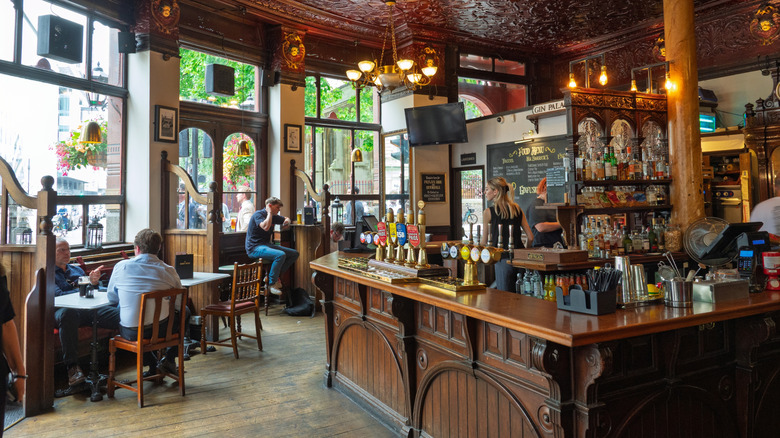
While frequenting the pub within your community is a major part of British and Irish tradition, taverns played a large part in early American culture. In fact, Philadelphia's oldest tavern has been serving up brews since Lincoln was elected. Colonial taverns were hubs for debating politics and current events, including the D.C. tavern known for classic American eats and political lore.
Taverns were a multipurpose venue for meetings, celebrations, and conducting business while grabbing a beer and a warm meal. Unlike pubs, taverns played the role of what would be today's hotel with a restaurant and bar. If you were a traveler passing through, you could stop at a tavern for a drink, a warm meal, and a bed for the evening.
Like a pub, taverns served beer and ale and plenty of it. However, the typical tavern menu differed from classic pub fare. The meals were generally more basic; visitors frequenting a tavern for the night might find themselves being offered up simple, hearty dishes that could be made in large quantities and served to those just passing through. The menu might include stews, bread, in-season vegetables, and, for taverns located on the coast, plenty of fish dishes. While pubs were all about comforting, hearty classics, tavern food was more focused on being practical to feed large crowds.