

Why Irish Bacon Looks Raw Even When It's Fully Cooked
We may receive a commission on purchases made from links.
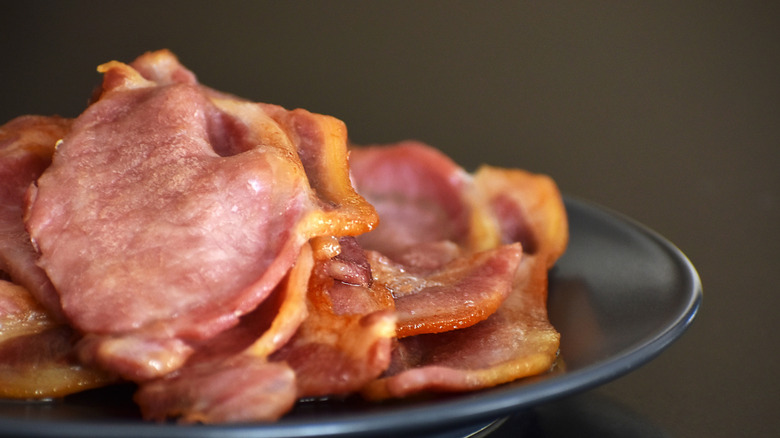
Bacon lovers can agree on one thing: it's a culinary gift. But not even bacon lovers are always aware of how many different kinds there are, or how different they can be. Irish bacon is a great example. If you haven't heard of it, you may know it by another name it commonly goes by: back bacon. In Ireland, it's also known as "rashers." It's not the most common bacon in America, quite possibly because of the high price — Donnelly Irish Back Bacon can go for as much as $25 per pound, for example.
Irish bacon is taken from the back portion of the pig, where the meat is leaner. It's typically roundish, with a strip of fat for flavor rather than peppered throughout with fat. While it's served fully cooked, it isn't served crispy like American bacon often is. For anyone who grew up with the fatty, pork belly-based bacon Americans are used to, this difference in appearances might lead you to think that Irish bacon, when cooked, is more on the raw side than the cooked side.
What to do with Irish bacon
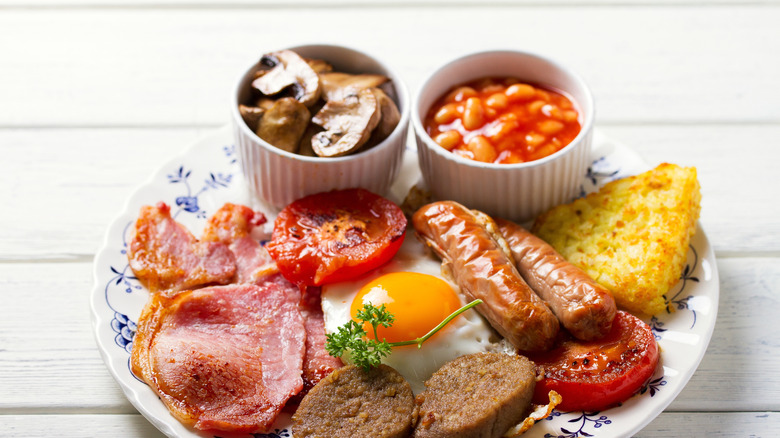
Apart from the novelty of bacon that looks different than what you find in a typical American breakfast, Irish bacon has some great culinary uses. Cook it just like you would American bacon, or more specifically, the Canadian bacon that it's more similar to. If you're turned off by the fact that Irish bacon tends to look undercooked, you can cook it until it's crispy, but it isn't necessary.
Though this delicious meat is often included in a traditional full Irish breakfast, the notion that bacon is a breakfast meat is a bit of a myth. From a good BLT (with or without the avocado) to a bowl of creamy bacon mashed potatoes, bacon has much more to offer. It can be added to an Irish colcannon (a traditional dish made with mashed potatoes and cooked cabbage) to add deep flavor and color, for example. Other traditional Irish dishes, such as Irish bacon and cabbage with mustard (a hearty comfort food often served on St. Patrick's Day), are a great use for this all-purpose meat that highlights its flavor and ability to blend beautifully with other ingredients.